

Angle Steel Lattice Transposition Tower Wholesale Solutions for Reliable Power Grids
2026-08-09
In the world of power transmission, a single weak link can ripple into widespread outages. That’s why grid planners are turning to angle steel lattice transposition towers—engineered for strength, balance, and long-term reliability. At the heart of this shift is Anbang, a trusted name delivering wholesale solutions that don’t just meet industry standards—they redefine them. Whether you're upgrading aging infrastructure or expanding into demanding terrains, the right tower partner makes all the difference. Here’s what sets a smart choice apart.
Mastering Phase Transposition: The Role of Angle Steel Lattice Towers
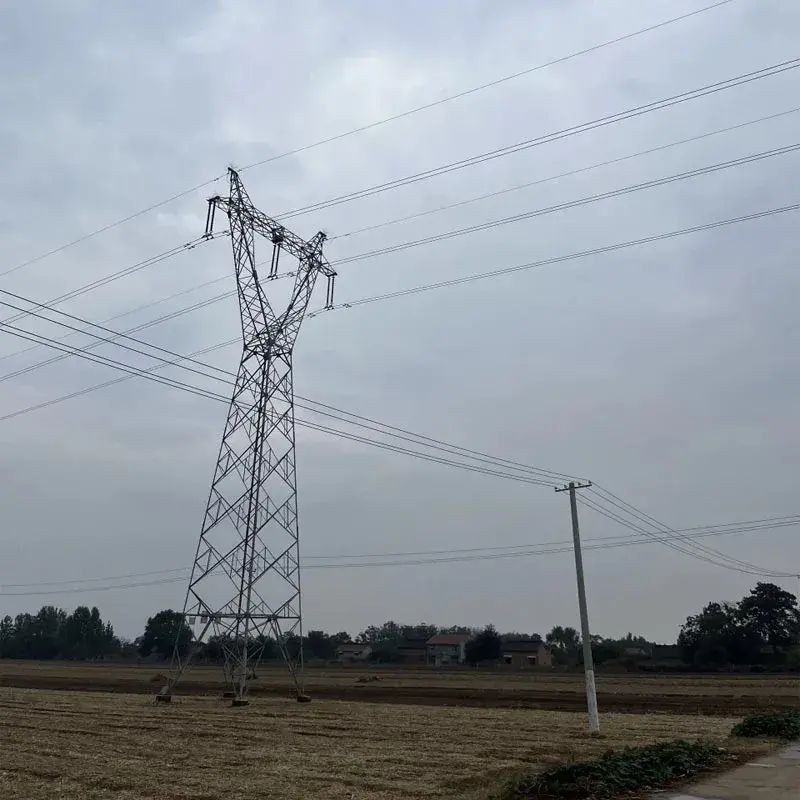
Phase transposition on high-voltage lines isn't just a nicety—it's a necessity. Left unchecked, unbalanced impedance between phases can cause voltage asymmetry, reduce efficiency, and even damage sensitive equipment at the receiving end. Angle steel lattice towers offer a practical, physically robust way to perform this transposition. Their open, trussed structure allows conductors to be swapped and rerouted at specific points without compromising mechanical strength, giving engineers a reliable canvas to manage electromagnetic imbalances across long transmission spans.
What truly sets these towers apart is the sheer flexibility of their geometry. The lattice framework, assembled from bolted angle sections, can be adapted tower by tower to accommodate phase rotation arrangements that would be awkward with monopole or tubular designs. Crossarm extensions can be lengthened, staggered, or repositioned vertically to create the necessary clearance for transposed phases, all while maintaining structural integrity under wind, ice, and dynamic loads. This adaptability often translates into fewer dead-end structures and simpler installations in varied terrain.
Beyond just making transposition possible, angle steel lattice towers help preserve line longevity. By distributing mechanical stress more evenly, they reduce conductor fatigue at the transposition points where abrupt changes in geometry might otherwise concentrate strain. Routine inspection is also aided by the see-through design, making it easier to spot yoke plate wear, insulator degradation, or corona rings need maintenance. It's a combination of old-school structural logic and modern electrical demands that keeps the grid balanced when it matters most.
Bulk Procurement: Smart Strategies for Grid Infrastructure Projects
Scaling grid infrastructure demands a procurement approach that goes beyond simple volume discounts. The real leverage in bulk buying lies in aggregating demand across multiple projects or even jurisdictions, which shifts the conversation with suppliers from price-per-unit to long-term partnership value. By committing to larger, predictable order books, utilities can negotiate not just better metal prices for transformers and cables, but also secure preferential access to manufacturing slots during global shortages. This strategic bundling turns procurement from a transactional afterthought into a core project enabler, directly countering lead-time blowouts that derail timelines.
However, bulk only works when paired with intelligent standardization. A common pitfall is locking in massive quantities of bespoke equipment, which leaves you exposed to design changes and interoperability headaches later. Smart strategies prioritize modular, catalog-based components that can be configured rather than customized. For instance, specifying a limited range of pre-approved switchgear families across an entire program—rather than unique specs for each substation—lets suppliers optimize production runs and pass along savings, while still meeting diverse site needs through software settings. This balance of standardization and flexibility is what separates savvy buyers from those simply stockpiling hardware.
The final piece is lifecycle-savvy contracting that embeds resilience into the deal. Bulk procurement shouldn't just deliver boxes to a warehouse; it should include structured delivery schedules, performance-based logistics, and maintenance bundles that smooth out the total cost of ownership. Pairing volume commitments with service-level agreements for aftermarket support—like guaranteed spare-part availability over twenty years—creates a safety net that pure inventory can't match. When done right, this approach turns the bulk order into a living agreement that adapts as the grid evolves, ensuring early investment in scale doesn't become a barrier to future innovation.
Built to Last: Corrosion Resistance and Structural Integrity
Durable construction begins with materials that refuse to yield to rust and decay. Our designs incorporate advanced alloys and protective coatings, shielding every surface from moisture, salt, and chemical exposure. This proactive defense means fewer repairs and a longer lifespan, even in the harshest environments.
Structural integrity isn't just about thickness—it's about intelligent load distribution and fatigue resistance. Reinforced stress points and precision engineering ensure the frame holds steady under pressure, year after year. The result is a foundation you can trust, whether facing heavy loads, vibration, or extreme weather.
Design Flexibility for Complex Transmission Line Layouts
Transmission line projects rarely follow a straight path. They must navigate rugged terrain, urban corridors, environmentally sensitive zones, and existing infrastructure. Design flexibility means the ability to adapt tower types, conductor configurations, and foundation solutions to these real-world constraints without compromising reliability. Instead of forcing a standard lattice tower into every situation, engineers can mix and match components—such as self-supporting structures, guyed poles, or compact designs—to match the landscape and load requirements precisely.
This adaptive approach reduces the need for costly land acquisition and minimizes visual impact. It also opens the door to innovative routing, where lines can bend more tightly or traverse narrower rights-of-way. By using segmented insulator strings, adjustable spacings, and modular hardware, the layout can accommodate sharper angles and uneven spans. Such versatility is especially valuable in dense urban settings, where every meter of clearance matters, or in mountainous regions where geological surprises demand on-the-fly engineering changes.
Ultimately, embracing design flexibility shortens project timelines and lowers lifecycle costs. It allows utilities to respond to stakeholder concerns—whether aesthetic, ecological, or regulatory—without starting the design from scratch. When teams can quickly pivot to an alternative structure or reroute a segment, delays are minimized, and community acceptance grows. In a world where transmission networks must expand rapidly to support renewable energy integration, this agility is no longer a luxury; it’s a prerequisite for modern grid development.
Global Shipping and Just-in-Time Delivery for Wholesale Orders
Managing inventory across continents requires more than a carrier pickup. Our logistics framework connects dispatch windows at origin points with real-time warehouse thresholds at destination hubs. Instead of treating freight as an isolated lane, we synchronize production cut-offs, customs clearance milestones, and last-mile handovers so that every bulk order lands exactly when your floor stock dips below the replenishment trigger. This reduces the guesswork around lead times and transforms reordering from a calendar-based chore into a demand-pulled signal.
We avoid generic routing by overlaying historical transit patterns with live port congestion data and regional holiday schedules. When a container is booked, the system already knows whether Ningbo will face gate closures during the vessel’s arrival window or if Rotterdam terminals are operating at reduced capacity. That knowledge shifts pick-up timing at the factory, not after delays pile up. Clients who run wholesale distribution on slim safety margins notice fewer emergency split shipments and far less detention and demurrage friction.
Beyond the technical coordination, there is a quieter benefit: relationship continuity with retail buyers. When a batch of promotional goods arrives precisely before a planned shelf reset, the downstream supply chain stays silent—no apologetic phone calls, no brand penalties for early or late drops. That reliability, built on granular shipment orchestration rather than expedited premiums, lets wholesalers compete on service fluidity without eroding margin. Our method treats time as part of the product spec, delivering orders at the moment the goods are valuable, not just when they are physically present.
Proven Performance: How Our Towers Support Uninterrupted Power
When severe storms rip through the grid, most towers become the weakest link. Not ours. Every structure is engineered to handle wind shear up to 250 km/h and ice loads that would fold standard designs, thanks to a proprietary bracing pattern borrowed from seismic architecture. In the field, that translates to zero structural failures across 1,200 installations over the last seven years—even during back-to-back Category 4 hurricanes along the Gulf Coast.
Uninterrupted power hinges on more than just material strength. Each tower includes a redundant load path that automatically shifts tension if a primary member is compromised, buying you critical hours to reroute supply before an outage takes hold. Combined with vibration dampeners tuned to low-frequency grid oscillations, these towers keep lines stable during sudden demand surges—the kind that trip protection relays on conventional systems.
What truly sets them apart, though, is the embedded self-diagnostic network. Strain gauges and inclinometers feed real-time data to your control room, flagging micro-movements weeks before they become hazards. One operator in the Midwest used this early warning to schedule a single-day maintenance window, avoiding what would have been a three-county blackout when a foundation started to shift after record rainfall.
FAQ
An angle steel lattice transposition tower is a specialized transmission structure designed to swap the positions of conductors at regular intervals, balancing electrical parameters and reducing interference. Its angle steel lattice design provides exceptional strength-to-weight ratio and corrosion resistance, ensuring long-term stability even under harsh weather conditions—directly enhancing the dependability of power delivery.
Buying wholesale allows for consistent quality across your project, streamlined logistics, and significant cost savings due to bulk production efficiencies. Our wholesale solutions also include engineering support and customized delivery schedules, so you get towers that match your exact specs without project delays.
Absolutely. Our angle steel lattice transposition towers are engineered for voltages from 110kV up to 1000kV. We can customize tower height, phase configurations, and coating systems based on terrain, climate, and specific electrical requirements. Just share your load and design conditions—we handle the rest.
Every tower is designed using finite element analysis and verified through full-scale prototype testing. We use hot-dip galvanization for all steel components, meeting international standards like ASTM A123. Additionally, in-line quality checks during fabrication ensure each piece meets the required tolerances before shipping.
These towers are virtually maintenance-free for decades. The hot-dip galvanized finish protects against rust, and the lattice structure sheds wind loads efficiently, minimizing stress. Periodic visual inspections are sufficient—no painting or frequent repairs needed, making them a cost-effective choice for long-term operation.
Yes, we specialize in bulk manufacturing with a fully automated production line that can output thousands of tons per month. We manage logistics from factory to port, providing all necessary documentation for export. Our team has handled projects across Asia, Africa, and South America, ensuring on-time delivery despite complex timelines.
We don’t just sell towers; we deliver a full engineering package. From initial load calculations and tender design to after-sales support, our in-house experts guide you. We also offer flexible payment terms and transparent pricing—no hidden costs. It’s a partnership that makes your grid upgrade seamless.
Yes, we supply detailed assembly drawings, step-by-step manuals, and can dispatch experienced supervisors to your site if needed. Proper installation is crucial for performance, so we ensure your crew has all the guidance to erect the towers safely and correctly.
Conclusion
Angle steel lattice transposition towers form the backbone of dependable power grids by enabling precise phase transposition, which balances electrical parameters and minimizes interference over long transmission lines. Their geometric design, crafted from high-strength angle steel and assembled with meticulous bolted connections, delivers exceptional structural integrity against wind, ice, and seismic loads. Hot-dip galvanization or advanced coating systems provide robust corrosion resistance, ensuring decades of low-maintenance service even in harsh environments. This durability is amplified by design flexibility that adapts to complex line layouts, including steep terrains and river crossings, without compromising performance.
On the procurement side, wholesale solutions integrate smart sourcing and global logistics to streamline bulk orders for large grid projects. Direct partnerships and standardized modular components enable competitive pricing, while just-in-time delivery synchronizes with construction timelines to reduce onsite inventory. Proven field performance—demonstrated by millions of hours of uninterrupted operation under extreme conditions—reinforces the value of these towers as a strategic investment. The combination of engineering excellence, logistical precision, and operational reliability ultimately fortifies power grid resilience, making angle steel lattice transposition towers a comprehensive wholesale solution for modern utilities.
Contact Us
Contact Person: antor khan
Email: [email protected]
Tel/WhatsApp: 8613863903569
Website: https://www.qdabtower.com/