

Anti-Theft Nuts Manufacturer Provides Reliable Tamper-Proof Solutions
2026-11-02
A missing wheel or a loosened panel isn’t just an inconvenience—it can be a security risk. Peak Fasten builds anti-theft nuts that make targeted disassembly nearly impossible, so your assets stay where they belong. Here’s why tamper-proof fastening is becoming a baseline requirement for modern equipment protection.
The Weakest Link in Your Security Is Probably a Hex Bolt
Most security discussions focus on encryption, access control, or surveillance cameras. Yet the actual hardware holding your valuable equipment in place often gets overlooked. That ordinary hex bolt on a server rack, a safe, or an outdoor enclosure is a glaring invitation. A crescent wrench from any hardware store can remove it in seconds, bypassing whatever digital defenses you've layered on top.
Think about the last time you checked the fasteners on your locked cabinet or GPS tracker mount. Chances are, they're standard off-the-shelf bolts with no tamper resistance. Thieves know this. They aren't going to brute-force your password when they can simply unbolt the entire device and walk away. The same applies to license plates, catalytic converters, or even public EV charging stations—hex bolts make disassembly fast and quiet.
Replacing those bolts with security variants like pin-in-torx, one-way screws, or breakaway nuts costs almost nothing compared to the loss you're preventing. Add a dab of threadlocker to slow down removal. Physical security isn't glamorous, but ignoring a common hex bolt is like locking your front door and leaving the hinges on the outside.
Anti-Theft Nuts That Turn Vandalism Into a Wasted Effort
Removing a standard nut is usually a matter of seconds with the right socket, but these anti-theft fasteners turn that familiar motion into a dead end. Each nut features a free-spinning outer collar that slips under any gripping tool, while the actual thread engagement hides beneath a uniquely patterned face. Without the matching key, a would-be thief or vandal is left scraping metal, rounding corners, and burning time on a piece that never loosens.
This design shines in places where equipment is exposed and unattended—road signs, solar arrays, street furniture, and utility boxes. Instead of a quick smash-and-grab, an attacker faces minute after minute of noisy, awkward effort that produces nothing but scratches. Many give up long before causing real damage, and even a determined attempt rarely leaves the fixture vulnerable, because the nut simply refuses to budge under conventional tools.
The real payoff is not just the saved hardware; it is the shift in risk and reward. Vandalism stops being a low-cost thrill when every target demands specialized tools and patience. Maintenance crews, on the other hand, keep the single key on a controlled ring and swap out damaged components in minutes. Over time, the repeated frustration teaches a simple lesson: this target is not worth the trouble.
Precision Manufacturing for Tamper-Proof Fastening in Harsh Environments
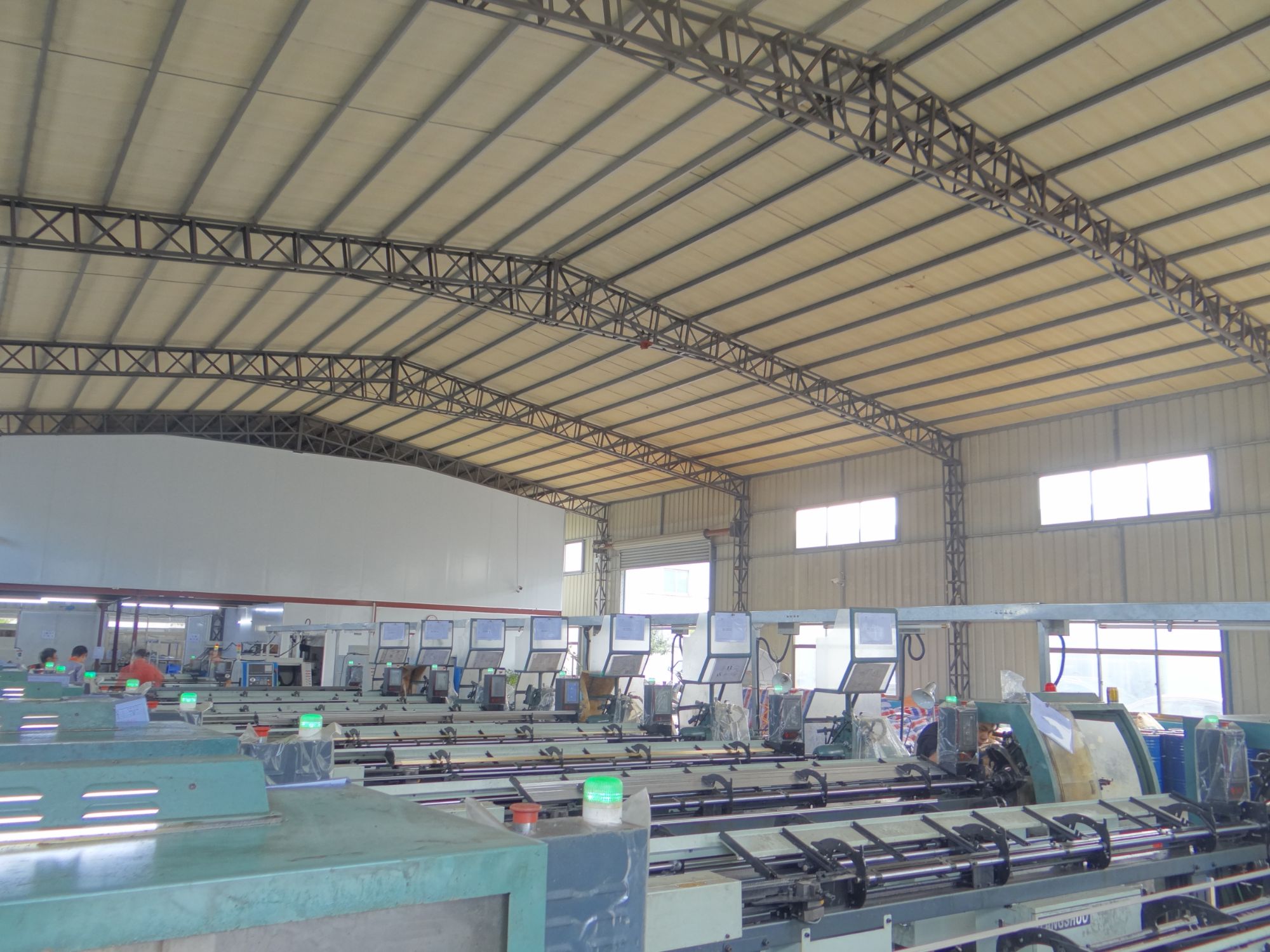
Achieving a reliable tamper-proof fastener for harsh environments begins with tolerances that go well beyond standard hardware. Every thread, undercut, and bearing surface is machined or cold-formed to micron-level consistency so that mating components seat perfectly even after thermal cycling between sub-zero and high-heat conditions. The choice of material plays an equally critical role: nickel-based superalloys, duplex stainless steels, and titanium grades are selected not only for their corrosion resistance in salt spray or chemical exposure but also for their ability to maintain yield strength when temperatures swing dramatically. A precision-ground drive recess, unique to the application, prevents ordinary tools from gaining purchase without sacrificing the exact engagement needed for authorized installation.
Integrating anti-tamper geometry into a fastener while preserving dimensional accuracy demands a different approach to tooling and QA. The non-standard drive features—such as offset pin patterns, tri-lobular recesses, or breakaway heads—are produced using wire EDM and specialized broaches, then inspected with optical comparators and coordinate measuring machines rather than simple go/no-go gauges. This ensures that the security feature does not introduce weak points where corrosion or fatigue could start. In offshore platforms, mining equipment, and aerospace actuators, a loosely fitting tamper-resistant bolt would quickly become a liability, so every batch must pass a combination of hydrogen embrittlement relief, passivation, and torque-angle verification before it leaves the floor.
What separates high-end manufacturers in this niche is the willingness to treat each fastener as a small precision component rather than a commodity. Prototype runs are tested under accelerated life conditions—cyclic salt fog, vibration at resonant frequencies, and repeated installation/removal with the matching security driver—to confirm that thread locking features and anti-corrosion coatings do not degrade after the first use. The result is a fastener that remains both tamper-evident and structurally sound over a service life measured in decades, even when exposed to chlorides, UV, and constant mechanical stress. For engineers specifying hardware in critical infrastructure, that combination of precise geometry and environmental resilience is not a luxury; it is the only way to prevent unauthorized access without compromising joint integrity.
Custom Drive Designs Keep Your Assets Off the Open Market
A drive built to a one-off specification doesn't have a secondhand shelf to land on. The connector pinout, the firmware signature, the thermal envelope—each detail ties it to a particular machine. Without a catalog match, there's no easy resale listing, no drop-in replacement market waiting to absorb it.
That mismatch is exactly what keeps assets from drifting. Generic drives move quickly through resellers and liquidation lots because they fit hundreds of systems. A custom design fits one. When it leaves service, it tends to follow the original owner's disposal path, not the open market's bidding floor.
There's also a quieter benefit: competitors can't simply buy your surplus to reverse-engineer the drive's role in your infrastructure. The custom geometry, board layout, or locking mechanism stays out of public circulation, so your hardware choices don't become a free lesson for anyone browsing used parts.
From Power Grids to Public Transit: Securing What Can't Be Replaced
A winter storm can knock out a substation in minutes, but the cascade that follows—hospitals going dark, water pumps stalling, cell towers fading—lasts for weeks. Power grids are not just wires and transformers; they are the bloodstream of every other critical system. Hardening them means more than replacing aging breakers. It means mapping dependencies down to individual neighborhoods, so a single fault doesn't become a regional blackout. It also means accepting that some components, like large power transformers built to order, cannot be swapped out overnight. Protecting them requires layered redundancy and physical security that often goes unnoticed until something fails.
Public transit faces a quieter version of the same problem. A subway control room may look modern, but underneath are signaling relays and switch motors installed decades ago, maintained by a shrinking pool of technicians who know their quirks. When a ransomware attack hits a fare collection system or a track switch controller, the immediate cost is delay; the hidden cost is eroding public trust in the one system that keeps a city moving without adding more cars to the road. Securing transit isn't just about firewalls—it's about preserving the institutional knowledge of the people who can still operate trains manually when the network goes down.
What ties these sectors together is the uncomfortable fact that replacement is not a realistic strategy. You can't buy a new grid or a new subway line after a disaster; you have to keep the old one running while upgrading it under live conditions. That requires a different mindset from the tech industry's move-fast-and-replace approach. It favors boring, continuous work: inspecting cables before they crack, cross-training operators on legacy and digital systems, and designing failure modes that degrade gracefully rather than all at once. The goal is not perfect security but a system that can absorb shocks and still get people home.
Why Off-the-Shelf Fasteners Invite Theft—and What to Use Instead
Standard hex-head bolts and Phillips screws are everywhere for a reason—they're cheap and easy to install. That same ubiquity is also why they’re a gift to anyone with a basic socket set or a pocket multi-tool. A thief doesn’t need specialized knowledge or heavy equipment to strip copper grounding bars, pull access panels, or dismantle rooftop HVAC units—just a few minutes and a wrench that fits. The fastener itself becomes the weak point, turning a locked enclosure into a minor inconvenience.
The real problem is predictability. Off-the-shelf fasteners all look the same, so a single common tool can defeat dozens of them. That’s why security-focused installations now rely on tamper-resistant or tamper-evident designs: one-way clutch screws, pin-in-torx heads, breakaway shear nuts, or custom drive patterns that require a matched bit. Each one raises the effort bar far beyond what a casual thief is willing to invest.
Choosing the right replacement isn’t just about picking the weirdest head shape. You need to think about service access, corrosion resistance, and whether your team can still remove the fastener when maintenance is due. Some facilities pair a proprietary drive with a strict key-control policy; others use snap-off heads for permanent installs where removal should leave visible damage. Either way, the goal is the same: make the hardware itself as uninviting as the asset it protects.
FAQ
These nuts use a unique, non-standard drive pattern that standard sockets or wrenches cannot grip. Once tightened, they resist removal without the matching security tool, making them far more effective against tampering or theft.
Yes, but only with the dedicated removal key or socket provided with your order. This allows authorized maintenance teams to service equipment while keeping unauthorized users locked out.
Public infrastructure, solar farms, cell towers, railway systems, and outdoor equipment enclosures see the biggest advantage. Any application where hardware is exposed to vandalism or theft is a strong candidate.
We do. Instead of forcing you into a standard pattern, we can machine a proprietary drive shape that only your maintenance crew recognizes. This adds an extra layer of exclusivity on top of the standard security feature.
They are typically produced in stainless steel or alloy steel with corrosion-resistant coatings such as zinc-nickel or geometric. You can expect reliable performance in rain, salt spray, and temperature swings without losing thread integrity.
Most orders are fulfilled in 304 or 316 stainless steel, but we also offer hardened carbon steel for high-torque applications. The choice depends on whether you need maximum corrosion resistance or maximum shear strength.
A limited number of matching driver bits or sockets are included with each bulk order. Additional tools can be purchased separately, and we keep a record of your drive pattern so reorders remain consistent.
Each batch undergoes torque-to-failure testing and salt spray exposure before shipping. We also track field returns over a five-year window, which helps us refine thread geometry and coating thickness for real-world conditions.
Conclusion
Most security plans overlook the simplest vulnerability: a standard hex bolt. Anyone with a socket wrench can strip infrastructure in minutes. That's why replacing conventional fasteners with purpose-built anti-theft nuts changes the calculation. Vandalism stops being profitable when every attempt turns into wasted effort. These nuts are manufactured to tolerances that hold up in harsh environments, from salt-sprayed coastal power lines to vibration-heavy rail systems. Precision machining ensures the fastener itself won't become the failure point.
Beyond durability, the real protection comes from custom drive designs. If thieves can't buy a matching tool, stolen components lose their resale value, keeping assets off the open market. Off-the-shelf fasteners invite theft because they're predictable and easy to remove. A manufacturer that designs and produces unique anti-theft nuts closes that gap. Whether securing power grids, public transit, or remote telecom sites, the goal is the same: make removal so impractical that criminals move on. That's what reliable tamper-proof solutions deliver—not just a harder nut, but a reason to walk away.
Contact Us
Contact Person: Mason Lv
Email: [email protected]
Tel/WhatsApp: +86 13027998452
Website: https://www.peakfastentech.com