

Best Gimbal Motors for Smooth, Stable Camera Movement
2026-11-27
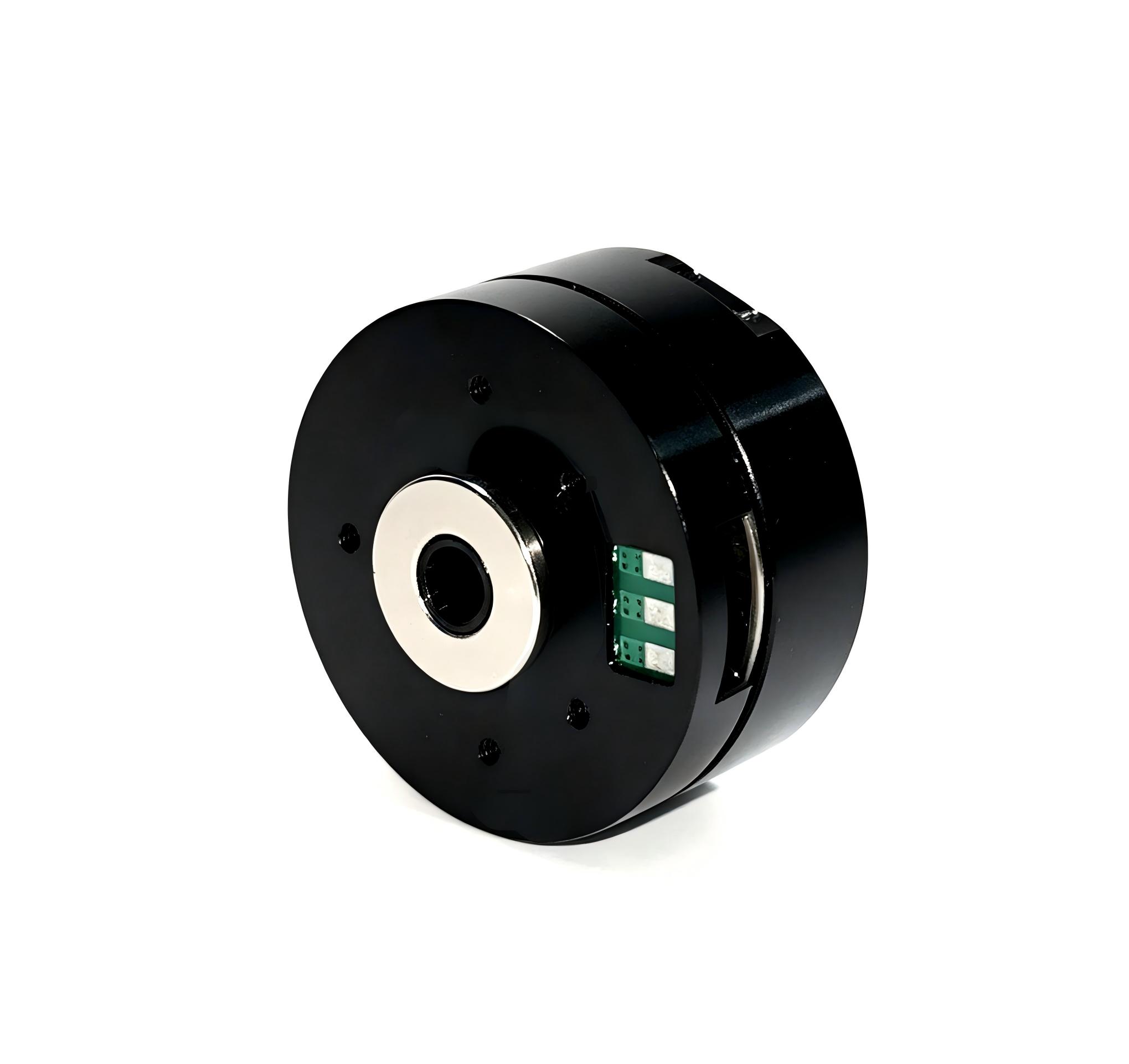
If your footage still drifts or micro-jitters even after balancing, the gimbal motors are usually the culprit. Smooth, stable camera movement isn’t just about payload specs—it depends on torque, encoder precision, and how quietly a motor corrects each axis. Below, we look at the gimbal motors that actually deliver dependable stabilization, and why Retek has become a name worth knowing for shooters who want repeatable results.
Torque Ratings That Match Your Actual Payload
Most manufacturers advertise peak torque as if you'll spend every shift at redline with an empty bed. Reality hits different when you're hauling a loaded trailer up a long grade and the truck falls flat exactly where you need the pull. The numbers that matter are the ones available in the rpm band you actually use with your normal payload, not the bragging-rights figure on a spec sheet.
A better way to gauge a truck is to load it the way you would on a busy Tuesday, then watch how it holds speed on a sustained climb without downshifting every half mile. That sustained, mid-range twist is what keeps the trailer moving without cooking the transmission or forcing the engine to scream. It's the difference between a comfortable tow and a white-knuckle merge onto the interstate with a full bed.
If the torque curve has a narrow spike that only shows up near the limiter, you'll feel it in the seat when the real weight is hooked up. Instead, look for ratings that stay honest under load—where the engine breathes easy at 2,200 rpm and doesn't beg for a downshift the moment the road tilts upward. That's when the number on the window sticker actually earns its keep.
What Encoder Resolution Does to Slow Panning
Slow pans tend to reveal what a static frame can hide. When encoder resolution drops, the fine grain in a wall, fabric, or distant foliage no longer gets enough samples to survive frame-to-frame. The result is less about obvious blockiness and more about a subtle loss of texture that makes the motion feel slightly smeared, as if the lens were not quite keeping up.
Resolution also changes how motion estimation behaves. At lower encoder resolution, macroblock boundaries are larger relative to the image content, so small high-contrast details can shift in and out of block alignment during a pan. This can produce faint haloing or pulsing along edges, especially when the camera moves at a steady speed and the codec keeps reusing motion vectors that are a fraction of a pixel off.
Higher encoder resolution helps, but only if there is enough bitrate to feed it. Otherwise the encoder spends bits preserving a sharper grid of noise and compression artifacts rather than the actual slow-moving detail. For slow pans, matching encoder resolution to the true output size and keeping the bitrate in a range where grain stays stable usually does more for perceived smoothness than raising the frame rate alone.
Voltage Sag and Battery Life During Long Takes
Voltage sag rarely announces itself until a long take cuts out with the battery meter still showing a healthy charge. On paper a 14.8 V pack may look fine, but under the sustained draw of a cinema camera, lens motors, a wireless transmitter and a monitor, terminal voltage can dip below the camera's cutoff threshold well before the cells are empty. Long takes are especially punishing because there is no pause for the chemistry to recover, so the sag deepens and becomes the limiting factor rather than remaining watt-hours.
Older batteries tend to sag more because internal resistance climbs with every cycle and with age. A pack that once held a stable voltage under load may now drop sharply in the first few minutes of a recording. Cold weather makes this worse, as cell chemistry slows and the available voltage under load falls even when the state of charge is still high. If you are chasing down random shutdowns during extended shots, it helps to watch the live voltage readout rather than the percentage indicator.
For long takes, use batteries with a continuous discharge rating that comfortably exceeds the combined load of the camera and accessories. Keep contacts clean, avoid daisy-chaining hungry accessories off the same source, and test the exact rig at operating temperature before the shoot. If the voltage dips close to the camera's cutoff during a rehearsal, add a higher-quality pack, reduce accessory load, or move to an external power source with shorter, thicker cables to reduce resistance.
Noise Signatures That Stay Clear of the Audio Track
A clean audio track is the backbone of any solid mix, but too often the supporting textures bleed into the vocal or lead instrument's space. The trick isn't to strip those elements away entirely—it's to shape them so their noise signatures sit in a different frequency pocket. Start by identifying where the main audio lives, then sculpt the surrounding layers to avoid that zone. A gentle high-pass filter on reverbs and delays can work wonders, keeping the low-mid mud from creeping upward.
Think of the noise floor as a living thing that shifts with your arrangement. Instead of gating everything into silence, let the quiet parts breathe but give them a defined boundary. Parallel compression on the main track can actually push competing artifacts further back, creating a natural masking effect that feels organic rather than surgical. The goal is a mix where every element has its own corner, and no two sounds are fighting for the same real estate.
Sometimes the best move is to lean into the imperfections. A room tone or subtle hiss from a hardware chain can actually act as a cushion, softening the edge between the lead audio and its background. By treating that noise as a design element instead of an enemy, you build a sense of depth that clean digital silence rarely offers. The result is a track where the main signal stays clear, not because everything else was removed, but because everything else learned to step aside.
Sealed Housings for Dusty and Damp Sets
Dust and moisture rarely cause instant failure, but they have a way of creeping into switch contacts, terminals, and cooling paths long before anyone notices. A sealed housing on a dusty or damp set keeps that slow degradation from becoming a random trip or a corroded connector. The trick is not just adding a gasket; it is making sure the seal tolerates the temperature swings that pull moist air in and out as the equipment breathes.
For sets that run in textile mills, grain handling, washdown areas, or coastal sites, the housing material and finish matter as much as the IP rating. Powder-coated seams, stainless steel latches, and cable entries with compression glands all help keep fine particles and humidity away from live parts. Where pressure changes are common, a vent with a hydrophobic membrane lets the enclosure equalize without inviting dust or water inside.
Regular checks make a bigger difference than buying the most heavily rated box. A scored gasket, a missing drain plug, or a cracked conduit fitting is enough to undo an otherwise solid design. Keeping the interior slightly warm or using desiccant packs in long idle periods can also prevent condensation from collecting on circuit boards and terminals.
Tuning Apps That Respect Your Time
A tuning app either gets out of your way in the first three seconds or it ends up buried in a folder. The ones worth keeping skip the splash screens and account prompts, dropping you straight onto a needle that moves without lag. On a noisy stage or a cramped green room, the clearest sign of respect is that it catches the note once, holds steady, and lets you fix the string instead of fighting the display.
That restraint extends to the feature list. A metronome, chord library, and scale trainer can be useful, but not when they crowd the single job you opened the app to do. Apps built around your time tend to keep the tuner front and center, with a few practical settings like reference pitch and temperament tucked one tap away. No countdown timers, no autoplaying promos, no forced onboarding sequence between you and the headstock.
Accuracy also plays a role in how fast the whole thing feels. When the pitch detection is solid, you are not endlessly re-plucking a string because the readout drifts or flips between notes. You get a clear green the first time, make a small turn, and move on. That is what the whole exchange should feel like, a quick tool rather than a destination.
FAQ
Mostly it comes down to how cleanly the motor and driver handle low-speed changes. A motor with tighter winding consistency and a well-matched encoder will make tiny corrections without overshooting. If the control loop hunts for position, even a strong motor will look nervous, so smoothness is as much about tuning as it is about hardware.
Closer matching usually works better. Oversized motors can feel sluggish and may amplify small vibrations because the system has to move more mass. You want enough torque to hold the rig through quick moves with some headroom, but not so much that the gimbal constantly fights its own inertia.
For stabilized camera work, yes. Brushed motors wear out and introduce noise, while brushless designs run quieter and last far longer. The real choice is between standard gimbal motors and higher-end options with better bearings, thinner laminations, or improved heat handling rather than a different motor type.
Sometimes, but it is rarely a drop-in change. The frame, drivers, and firmware are usually tuned around specific motor resistance and pole counts. If you swap in something much larger or smaller, you may get oscillation, overheating, or a gimbal that refuses to initialize. It is often more practical to tune the existing setup or move to a different gimbal.
They can. An encoder gives the controller real position feedback instead of relying on back-EMF estimates, so the motor behaves more predictably at very low speed. That translates into cleaner starts and stops, which matters when you are walking or panning slowly.
That is usually magnetic cogging. It does not automatically mean the motor is bad, but excessive cogging can force the control system to work harder to maintain fluid motion. Higher-quality motors often reduce cogging through stator design or skewed magnets, and that tends to show up as calmer footage in difficult conditions.
A lot. Raising voltage can give the motor faster response and better holding torque, but it also increases heat. Current limits shape how much force the driver will deliver before backing off. If those settings are mismatched, even a capable motor can feel weak or run hot, so tuning them to the camera load is part of getting stable results.
Firmware tuning usually has the bigger influence. A mid-size motor with well-tuned PID settings will often outperform a larger motor running generic parameters. Hardware sets the ceiling, but the control loop decides how much of that potential actually shows up in the footage.
Conclusion
A gimbal motor is easy to ignore until a slow pan stutters or a heavy lens starts drifting mid-take. The motors worth keeping in a kit are the ones matched to the actual payload, not just the spec-sheet maximum. A motor with too little torque fights the rig, while one with too much torque can feel twitchy and waste power. Encoder resolution quietly shapes the quality of slow movement: a high-resolution encoder lets a long, creeping reveal glide without visible step changes, which becomes obvious when you push in on architectural details or product shots. Voltage sag is just as practical. On extended shoots, a stable power path keeps pan and tilt speeds consistent even as the battery drops, instead of leaving you to compensate for a rig that gets softer by the third hour.
The less obvious details often separate a dependable motor from a frustrating one. Audible hiss, whine, or chattering bearings can bleed into dialogue if the microphone is mounted close, so quieter windings and well-damped movement matter more than the datasheet suggests. Dust, sand, and light moisture are also part of real locations, and sealed housings around the stator and connectors prevent that grit from turning smooth rotation into a grinding halt. Tuning should not eat half the morning either: a clear app for stiffness, follow speed, and deadband means you can adjust to a new lens or balance point in seconds, then get back to framing. A gimbal motor earns its place when it disappears from your attention ten minutes into a shot.
Contact Us
Contact Person: Sean
Email: [email protected]
Tel/WhatsApp: +86-13338694967
Website: https://www.retekmotion.com