

Calcium Sulfate Antistatic Floor Supplier: How to Choose a Reliable Partner for Static-Safe Flooring
2026-11-18
Static-sensitive environments expose a supply chain reality: the best calcium sulfate antistatic floor is only as reliable as the partner behind it. A supplier's material data sheet may look flawless, yet real confidence comes from production consistency, load performance, and installation support. This guide cuts through vague claims and helps you evaluate what makes a dependable source for static-safe flooring. Whether you are upgrading a server room or specifying a cleanroom project, the right choice reduces costly downtime and safety risks. At the center of that decision is Lipin Floor, a name built around practical antistatic performance rather than marketing noise.
Know What Your Facility Actually Requires From a Static-Safe Floor
Static-control flooring often gets treated like a one-size-fits-all purchase, but a semiconductor cleanroom and an electronics repair bench place very different demands on the same square meter of material. Before comparing tile colors or resistance ranges, start with the daily reality of the space: the weight of rolling carts, the frequency of chemical spills, the type of footwear worn by staff, and whether the room doubles as a storage area for sensitive components. A floor that earns its cost is one that matches its actual workload, not just its industry label.
Electrical performance is only the entry point. The harder questions involve traffic patterns, point-to-point grounding, and how the surface behaves after months of burnishing or exposure to solder flux and IPA. Specify the required resistance range, then confirm that the flooring can hold that range under real conditions: with people moving, with furniture in place, and with the grounding system you can realistically maintain. A surface that reads perfect on a test report but loses continuity under casters or cleaning procedures creates a hidden failure point that no audit will catch until product is already compromised.
Finally, separate wants from requirements by looking at operational downtime. If replacing a damaged tile means shutting down a line for a weekend, prioritize repairability and local replacement over initial cost per square foot. Document what "static-safe" means for your specific environment, then hold every flooring option against that written definition. The goal is not the most impressive datasheet, but a floor that keeps fulfilling its role quietly, year after year, under the exact conditions your facility generates.
Dig Into the Calcium Sulfate Core Before Comparing Suppliers
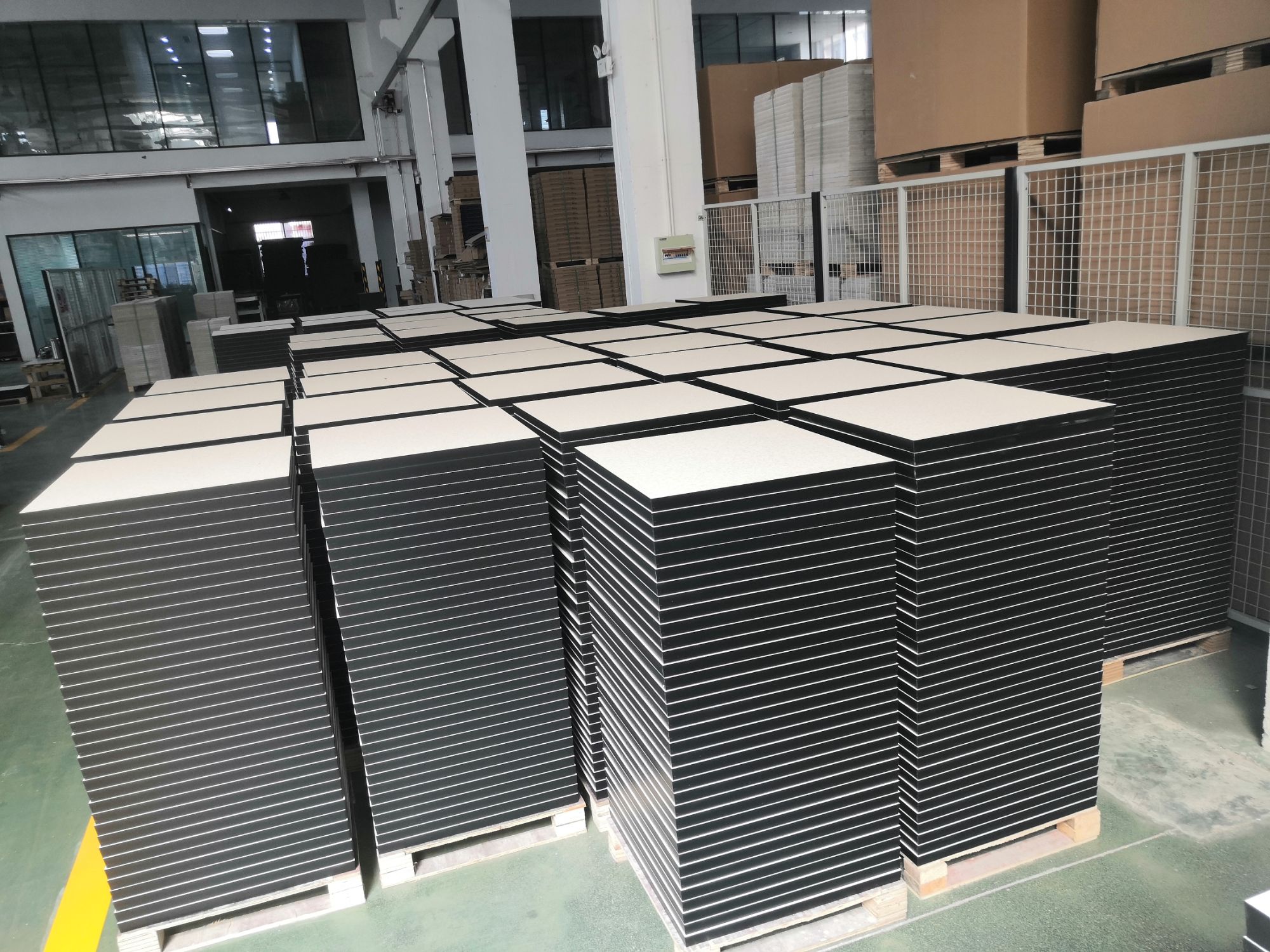
A supplier's spec sheet rarely tells you how the core behaves once it is cut, fastened, or exposed to moisture. Before lining up quotes, slice through a sample and look at the internal structure. The core should be compact and uniform, without soft pockets, uneven density, or a chalky layer that rubs off under light pressure. Calcium sulfate boards with the same nominal type can still differ sharply depending on whether the raw material came from natural gypsum, flue gas desulfurization, or a recycled source. Those origins affect crystal size, bond strength, and the way the core holds a screw over time.
Ask for batch-level data instead of a typical values sheet. The phase balance between hemihydrate, dihydrate, and anhydrite matters more than the headline purity figure, because it influences setting behavior, hardness development, and moisture uptake. Pay attention to minor constituents such as chlorides, magnesium salts, and organic residues. Even small amounts can cause paper delamination, staining, or corrosion on fasteners in humid conditions. If a supplier cannot explain how their core chemistry is controlled from one production run to the next, the lower price may carry hidden callbacks.
Run a few straightforward bench tests before making a decision. Cut equal sections from each candidate, soak them for a set period, and measure thickness swell, edge softening, and nail pull resistance after drying. Then break the strips and compare the fracture faces. A dense, fine-grained break usually points to better internal cohesion, while a crumbly or layered failure suggests trouble after installation. Comparing cores this way exposes differences that a polished surface and a confident sales pitch tend to hide.
Ask for Test Data, Not Just Antistatic Claims
A label that says antistatic doesn’t really tell you how the material behaves on your line. Humidity, temperature, contact pressure, and even the way a part is cleaned can shift electrical performance enough to turn a supposedly safe tray into a source of field failures. If a vendor can’t show numbers for surface resistivity, static decay, or triboelectric charge under conditions close to yours, treat the claim as a placeholder rather than a specification.
Request the raw test data, not just a certificate number. Ask what standard was used, what electrode geometry was applied, what humidity and temperature were present, how many samples were measured, and whether the results came from an in-house fixture or an independent lab. A vendor that hesitates or sends only a one-page datasheet often hasn’t actually characterized the lot you are buying.
Compare the data against the threshold your components actually need. ESD-sensitive devices are not all the same; a material that is fine for a 100V HBM part may be marginal for a 50V CDM part. Having the numbers allows you to set incoming inspection limits and catch process drift before it reaches the production floor.
Look for Project Experience That Mirrors Your Environment
A project that ran in a polished, simplified setting won't tell you much about how a solution behaves once real users, legacy data, and irregular workflows get involved. When the surrounding conditions are different, even a well-executed plan can quietly fall apart in ways that documentation rarely predicts. That is why the most useful experience is seldom the flashiest one; it is the one that happened under constraints similar to yours.
Look past sector labels and ask what the team actually dealt with day to day. Did they operate under the same regulatory pressure, staffing limits, or tangled integration points? Someone who has navigated those specific frictions will already know which small decisions tend to cause the biggest downstream problems. That familiarity usually shows up in the questions they raise and the risks they flag before you have to mention them.
It is tempting to value scale or brand names, but scale in a different environment often just means the pain was larger and farther away from your reality. The closer the working conditions, the more transferable the judgment becomes. Filter for similarity in operating context, not just similarity in title, and you will spend less time bridging the gap between someone else's world and your own.
Assess Installation and Ongoing Support Before Signing
Too many buyers focus entirely on the upfront quote and overlook what happens after the purchase. Ask the vendor for a written outline of the installation process, including who handles site preparation, how long typical setup takes, and whether travel or configuration fees are billed separately. If the answer is vague or constantly refers you to a sales engineer, treat that as a warning sign.
Ongoing support deserves the same scrutiny. Find out whether support is included for a fixed period or billed per incident, what the average response time is, and how updates are delivered. A product that works perfectly during a demo can still become a burden if the support team is slow to answer when something breaks.
Try to speak with a current customer who has already gone through installation and at least one support request. Their experience will tell you more than a polished demo or a list of certifications. This step takes extra time before signing, but it often prevents months of frustration later.
Weigh Lifetime Costs Instead of Settling for the Lowest Bid
The lowest bid can feel like a win on paper, but purchase price only tells a small part of the story. Equipment that costs less upfront often carries higher energy consumption, more frequent breakdowns, and shorter service life. When you add up repair calls, replacement parts, downtime, and lost productivity, the cheap option can quietly become the most expensive one in your facility.
A better approach is to estimate the total cost of ownership before making a decision. Look beyond the invoice and consider how much the asset will cost to run, maintain, and eventually retire over its expected lifespan. Two machines with similar specs can differ dramatically in energy draw, ease of servicing, and parts availability. Those differences show up month after month on your operating budget, long after the initial purchase is forgotten.
By weighing lifetime costs instead of settling for the lowest bid, you give yourself room to choose equipment that stays reliable and efficient for years. That might mean spending a little more now to avoid repeated emergency repairs later, or selecting a vendor with proven support rather than the one offering the deepest discount. Over time, the higher-quality choice usually pays for itself through fewer disruptions and lower running costs.
FAQ
A dependable supplier can explain how the panels perform in the conditions you actually have, not just in lab settings. They will ask about humidity range, rolling load frequency, and the type of electronics in the space before recommending a system. They also tend to share batch-level test results and keep records that trace materials back to the gypsum source, which is harder to fake than a generic certificate.
Ask for documented aging tests or examples of installations that have been in service for five years or more. The supplier should be willing to arrange a conversation with a past client or provide maintenance logs showing surface resistance readings over time. Long-term stability usually depends on conductive fibers or additives being evenly dispersed through the core, not just applied as a surface coating.
They should provide a clear pre-installation survey, guidance on grounding connections, and a supervisor familiar with ESD-sensitive environments. A suitable partner will also coordinate with the electrical contractor so the copper grid or grounding points are placed correctly before panels are laid, rather than leaving this to the flooring crew alone.
Higher density panels resist indentation and stay dimensionally stable under heavy rolling loads. The core mix, meaning how the gypsum is blended with fibers and conductive material, affects both mechanical strength and consistent resistivity. If the core is too porous or additives are uneven, you may get dead spots where static dissipation fails even if the average reading looks acceptable.
Be cautious when a supplier cannot provide the country of origin for raw gypsum, avoids giving references from similar projects, or offers a price far below the market without a clear reason. Also watch for vague test reports that show only a single point reading instead of multiple locations across the panel surface.
It matters more than many buyers expect. Reliable suppliers can adjust panel thickness, edge trim, and top finishes to match the exact static-dissipative requirements and load ratings of your rooms. They also handle cutouts for air flow or cable entry cleanly without damaging the antistatic layer, which helps keep the whole floor electrically continuous.
You should receive as-built drawings, grounding point locations, surface resistance test results from multiple points per room, and care instructions that list compatible cleaning products. This documentation makes future audits easier and helps maintenance teams avoid waxes or coatings that could defeat the static-safe properties.
Ask to see how the supplier tracks each batch from gypsum and conductive additive intake through finished panel production. A trustworthy partner usually has a batch code system and can connect a delivered pallet back to quality-control records. This level of traceability is useful when a specific room shows unusual readings years later.
Conclusion
Selecting a calcium sulfate antistatic floor supplier rarely comes down to product sheets alone. The first useful step is to pin down what your space actually demands—moisture exposure, rolling loads, cleanroom protocols, or just occasional equipment movement—because a floor that works in one facility can fail quietly in another. Once those requirements are clear, look closely at the panel composition, not just the surface finish. The density and internal bonding of the calcium sulfate core affect how evenly static charge dissipates and how the floor holds up under point loads. Ask for measured resistance values and aging data under your operating conditions; broad antistatic language tells you very little.
Beyond the samples, a dependable partner should be able to point to completed projects in settings similar to yours, including details on substrate preparation and edge detailing that often decide long-term performance. Installation quality also matters more than the warranty document suggests—trained crews, moisture testing, and responsive post-installation support prevent small issues from becoming floor failures. Finally, compare total ownership cost rather than the initial quote. A slightly higher upfront price can reflect tighter dimensional tolerances, better underfloor access, and lower repair frequency, which usually makes it the more economical choice over the floor’s service life.
Contact Us
Contact Person: yuki
Email: [email protected]
Tel/WhatsApp: +86 18664390732
Website: https://www.lipinfloor.com/