
Calcium Sulfate Six-sided Van-steel Plate Company Delivers Durable Panels for Modern Construction
2026-11-25
When a single panel has to survive edge loads, moisture, and daily wear, material choice stops being a detail. Huahong has refined the calcium sulfate six-sided van-steel plate into a dependable option for modern construction. Here is a closer look at what makes these panels hold up.
Steel Edges That Arrive Straight From the First Pallet
The first pallet usually tells you everything you need to know. These steel edges are leveled and stress-relieved before they are packed, so the top strip you pull off the stack already sits flat against the frame without coaxing. There is no hidden bow tucked into the middle layers and no hope that the weight of the pallet will press things straight by the time it reaches your floor.
Stacking gets the same attention as the rolling and cutting steps. Spacers are placed at even intervals instead of relying on band tension, which means vibration during transit does not turn a straight edge into a slow curve. The result is simple to check on arrival: set the first piece on a flat surface and run a fingertip along the contact line. If there is daylight, something went wrong. Most days there is not.
That consistency carries into assembly. Edges can move from pallet to fixture without being walked on, hammered, or re-rolled straight, which keeps the protective coating intact and the install crew moving at a steady pace.
The Calcium Sulfate Core Keeping Panels Flat in Humid Air
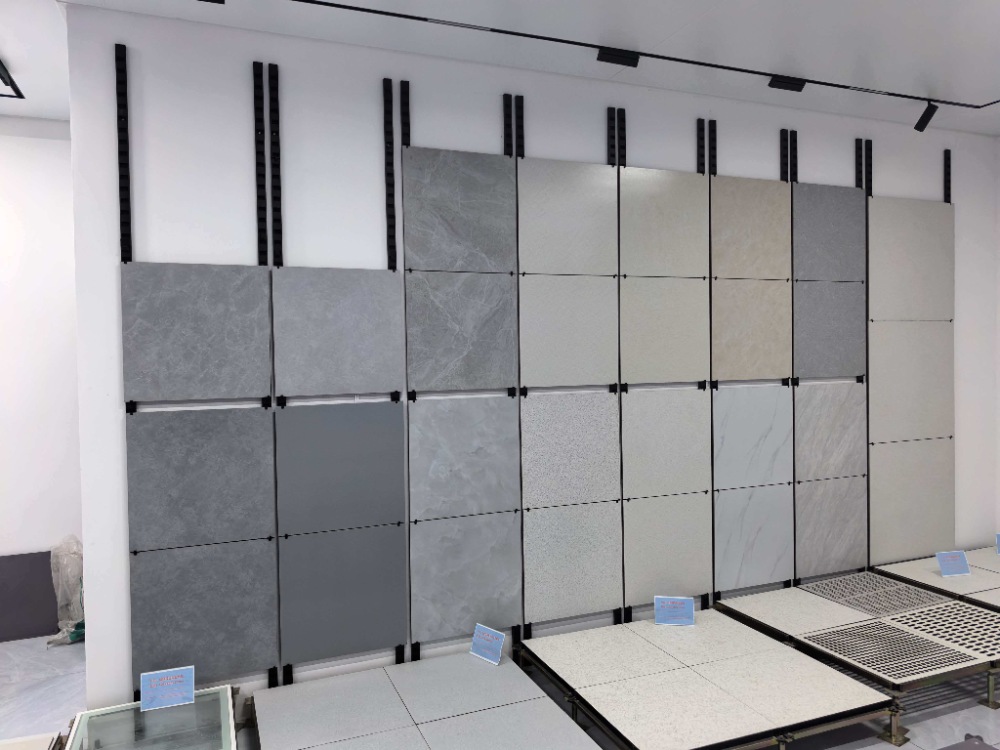
Most warping in wall panels doesn't come from outright water exposure. It starts with small swings in room humidity, the kind that happen in kitchens, laundry rooms, or coastal homes. The calcium sulfate core acts as a buffer because it picks up and releases moisture more evenly across the whole board. Instead of one face expanding faster than the other, the panel absorbs changes as a single unit, so it has less reason to curl or bow.
Calcium sulfate also forms a rigid crystalline structure once set. That gives the panel a stable body, even when the air stays damp for days at a time. The core holds its dimensions well enough that the paper or fiberglass facers stay in tension without pulling the panel out of shape. In practice, this means fewer visible humps at joints and tighter corners that remain flat after installation.
The benefit becomes most obvious in buildings that are only partly conditioned or in rooms that see seasonal moisture. Rather than reacting sharply to one humid week, the core takes on small amounts of moisture gradually. As conditions dry out, it lets that moisture go just as slowly. That slow exchange keeps the panel's face and edges stable, which is why installers notice fewer callbacks for sagging or rippled ceilings in these spaces.
High-Traffic Wall Runs Where Standard Board Falls Short
Hallways, stairwells, and hospital wings all share the same problem: the lower half of the wall takes a beating long before the rest of the room shows any real wear. Standard gypsum board holds paint well enough in a quiet office, but once carts, gurneys, bags, and shoulders become part of daily traffic, the surface starts to dent, crack, and chip in ways that a fresh coat of paint cannot hide.
The failure usually starts small, a scuff near a corner, a hairline crack around a door stop, a soft spot where a mop handle lands. Over time those small marks turn into crumbling edges and exposed core. Maintenance crews get stuck in a loop of patching and repainting that never fixes the actual problem because the board was not built to absorb repeated impact.
A better fit for those areas is a panel with a denser core and a tougher face, one that can handle routine abuse without transferring every bump to the framing behind it. In these spaces the real question is not whether the wall will get hit, but whether the material can take the hit without turning it into another repair ticket.
Fire and Moisture Ratings That Work Together
A lot of ceiling and wall specs call out one number and ignore the other. That split approach causes problems later. A panel can pass a moisture test but still fall apart under heat, or hold a fire rating while soaking up enough humidity to sag. The useful combination is a product where the fire rating and the moisture resistance are tested on the same assembly, not just listed side by side in a brochure.
Look for ratings that reference actual installed conditions. A surface-level class means less when the substrate behind it stays damp. The better spec sheets state how the material performs after high-humidity exposure, and whether the flame-spread index still holds when the board has been through moisture cycling. That is the part people skip because it is buried in the test data.
In practice, matching these two ratings narrows the field quickly. It is less about finding the highest number in each column and more about finding a rating pair that does not cancel out. Once that pair is confirmed, job site handling gets simpler: same backer, same fastener schedule, fewer workarounds.
Cutting, Hanging, and Finishing a Six-Sided Van-Steel Panel
Working with a six-sided van-steel panel starts long before it meets the wall. I usually lay the sheet on a pair of sawhorses and mark the cut lines with a soapstone pencil, leaving about an eighth of an inch for filing. A variable-speed jigsaw with a metal blade handles the curves, but the straight runs come out cleaner with a nibbler or a circular saw fitted with a carbide-tipped blade. Keep the speed steady and let the tool do the work; forcing it only heats the steel and dulls the edge.
Once the blank is trimmed, I dry-fit it into the opening and check for high spots along the six edges. Small misalignments show up as daylight between the panel and the frame, so I mark those areas and take them down with a half-round file. After the panel sits flush, I hang it with temporary fasteners at the corners before committing to the full bolt pattern. This lets the steel settle under its own weight and prevents a visible bow from showing up later.
Finishing is where the panel either looks factory-made or noticeably hand-cut. I scuff the surface with a fine abrasive pad, wipe it with a tack cloth, and apply a self-etching primer before the topcoat. Light, overlapping passes keep the paint from pooling along the folded edges. After the first coat flashes off, a quick knock-down with 400-grit paper and one more wet coat gives the six-sided steel a smooth, even skin that matches the surrounding bodywork.
The Flat Wall Finish That Cuts Down Callbacks
A flat wall finish earns its keep when the job is already in the rearview mirror. Glossier paints turn every little ridge and patch into something the light catches, which means a client standing near a window at 4 p.m. suddenly sees a problem that wasn’t there at noon. A properly applied flat finish settles the wall down, leaving a soft, even surface that doesn’t invite that kind of second-guessing.
The trick is treating flat as a system, not a single coat. A decent primer, two full topcoats, and a wet edge while rolling keep the sheen from drifting into dull, uneven bands. When the surface reads the same from corner to corner, small touch-ups blend in without flashing, so a nail hole fixed on a follow-up visit doesn’t turn into another phone call.
For builders and remodelers, that reliability is the point. Clients rarely call back about a wall they don’t notice. Flat finishes hide hand and tool marks, stay forgiving under harsh hallway lighting, and make minor repairs disappear. Fewer picky callbacks means less unpaid time in the truck and more jobs moving forward.
FAQ
The steel skin wraps all six faces, so edges and corners get the same protection as the main surface. That reduces moisture ingress at joints and gives installers a consistent substrate for sealing, which is usually the weak point of conventional boards.
They perform well in intermittent humidity and splashing when the joints are properly taped and sealed. For continuously submerged conditions or steam rooms, you would still need a compatible waterproofing membrane over the panel surface.
Most installers fix them to light-gauge steel studs or timber battens with mechanical fasteners through the panel face. The panels are rigid enough to span common stud centers, but the exact spacing depends on thickness and wind or impact loads.
Because the face is steel, they take standard metal primers and acrylic or polyurethane topcoats well. Scuffs can be sanded lightly and touched up, but deeper scratches should be sealed to keep the core from absorbing moisture.
The calcium sulfate core gives them solid non-combustible behavior. They will not fuel a fire, and they can be used in assemblies that need a specified fire rating when combined with the tested stud and insulation layers.
Custom sizing is available for both. For renovations, the main constraint is usually access and existing substrate condition rather than the panel manufacturing. Smaller formats can be produced to fit tight lifts or irregular openings.
They resist impact and surface damage far better than paper-faced gypsum. You can lean carts, bump equipment, and clean scuffs without the paper tearing or the board denting as easily, which makes them a practical choice in corridors and service areas.
They should confirm the panel thickness for the span, specify a suitable exterior-grade sealant for the joints, and verify that the supporting frame allows for thermal movement. Ventilation detailing behind the panel also matters in cold or humid climates to avoid trapped condensation.
Conclusion
The company’s calcium sulfate six-sided van-steel panels handle several jobs that ordinary wallboard cannot. The steel edges come off the first pallet without bows or crimps, so framing crews are not straightening edges before the first screw goes in. That rigid perimeter matters in corridors, stairwells, and other high-traffic wall runs where scuffs, carts, and door hardware quickly dent standard board. The calcium sulfate core keeps the face flat even when humidity climbs or wet seasons drag on, reducing ripples that would otherwise show under bright side light. Fire and moisture ratings are not treated as separate afterthoughts; the assembly is built to meet both requirements at once, which shortens submittal review and keeps one panel system in the specification instead of layering multiple products.
On site, cutting, hanging, and finishing follow a predictable sequence because the six-sided steel enclosure gives the panel a consistent edge and thickness. Installers can score or cut with standard tools, set the panel against the framing, and fasten through the metal edge without blowouts or crushed corners. The result is a flat wall finish that reduces the kind of callbacks tied to visible joints, fastener pops, and edge cracking. For modern construction schedules, that combination of straight steel, stable core, and simpler finishing removes a few of the usual coordination headaches without asking crews to learn a different system.
Contact Us
Contact Person: Hai-Bo Xiao
Email: [email protected]
Tel/WhatsApp: 8618898711810
Website: https://www.huahongfloor.com