

China Energy Storage System Advancements Unlock Renewable Potential
2026-09-01
Every gigawatt of solar and wind has a hidden dependency: storage. Without it, renewable energy remains a weather-dependent promise. China's energy storage breakthroughs are rewriting that equation—turning surplus electrons into dispatchable power and calming grid volatility. At the forefront, Chang Song tracks these advances, from lithium-iron-phosphate scale-ups to novel flow batteries, to reveal how storage is no longer the bottleneck but the catalyst for a decarbonized future. Here's what's changing—and why it matters now.
Grid-scale batteries move from pilot projects to daily grid balancing
For years, grid-scale battery installations were mostly high-profile demonstration projects, tucked into research reports or showcased during ribbon-cutting events. That era is fading fast. Operators now dispatch these systems every few minutes to smooth out mismatches between supply and demand, often responding to rapid swings in solar and wind output that would have once forced a gas plant to ramp or curtailed renewable generation.
The shift is most visible in markets with deep solar penetration. In California and parts of Texas, batteries now routinely absorb midday excess generation and release it during the evening peak, a role once left to peaker plants. This isn't occasional emergency backup—it's the kind of hour-by-hour, minute-by-minute work that defines daily grid balancing. System operators have moved from asking whether batteries can handle the job to counting on them as a standard tool.
What changed? Costs fell sharply, software improved, and revenue streams from ancillary services became more predictable. Storage developers no longer pitch batteries as experimental. They pitch them as a way to keep the grid stable while retiring older fossil fuel units. The pilot phase, for the most part, is over.
Lithium iron phosphate dominates as costs fall below $100 per kWh
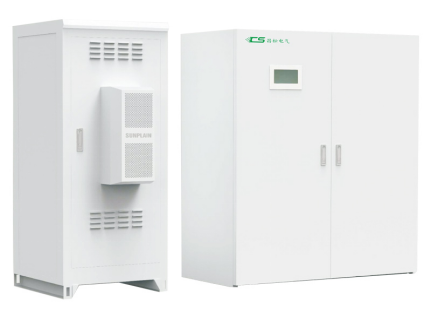
The price threshold of $100 per kWh has long been treated as a tipping point for electric vehicle affordability, and LFP chemistry is now crossing it ahead of most forecasts. This is not a marginal shift: cell prices in China have dipped below $90 per kWh for certain LFP formats, while comparable nickel-manganese-cobalt packs still carry a 15–20% premium. The gap comes from simpler supply chains, the absence of cobalt and nickel, and manufacturing scale that has matured faster than expected.
As a result, LFP is no longer confined to low-range or budget models. Automakers in Europe and North America are quietly adapting platforms to accept LFP packs, and stationary storage projects increasingly favor the chemistry for its cycle life and thermal stability. The dominance is less about a single breakthrough and more about the compounding effect of cheaper raw materials, higher-volume factories, and design changes that offset the lower energy density.
Compressed air and flow batteries target long-duration storage gaps
Utilities have spent years leaning on lithium-ion for bursts of grid support, but the real headache now is the multi-hour stretch after sunset or during a windless cold snap. Compressed air facilities, often built in salt caverns or repurposed mines, are quietly filling that role by using excess electricity to pressurize underground chambers and releasing it later through turbines. A few projects in California and the Midwest have already scaled past 100 megawatts, proving the technology can handle daily cycling for decades without the degradation that plagues chemical batteries.
Flow batteries take a different route. Instead of storing energy in solid electrodes, they keep charged electrolytes in external tanks and pump them through a cell stack when power is needed. That design decouples energy capacity from power rating: add more tanks, get more hours. Vanadium redox systems have led the field, but newer chemistries using iron, zinc-bromine, or organic molecules are driving down costs and easing supply chain worries. Grid operators in Australia, China, and parts of Europe are now testing multi-megawatt installations that promise six to twelve hours of discharge.
Neither technology is chasing the sub-second response market dominated by flywheels and supercapacitors, nor the four-hour sweet spot where lithium-ion remains competitive. Their value emerges beyond that threshold, when the sun has been down long enough and the wind has stalled. As renewable penetration climbs past 40 or 50 percent in some regions, the need for affordable, durable, eight-to-twenty-four-hour storage has moved from academic debate to procurement reality.
Provincial mandates drive triple-digit growth in storage capacity
Across several provinces, new energy storage requirements have transformed what was once a slow-moving market into one of the fastest-growing segments in the power sector. Mandates that tie a percentage of renewable capacity to on-site or grid-connected storage have pushed developers to secure battery systems at an unprecedented pace. The result is a surge in installed capacity that many analysts did not expect to see until the end of the decade.
The growth numbers are striking: quarterly additions have more than doubled year-over-year in provinces with the strictest mandates, while ancillary markets for frequency regulation and peak shaving have also expanded. What makes this wave different is the breadth of participation—state-owned utilities, private developers, and even industrial users are now racing to lock in supply contracts. Lead times for battery modules have stretched, and local assembly plants are running at full tilt to keep up with demand.
Provincial officials have also adjusted interconnection rules and land-use policies to speed up deployment, creating a feedback loop that further fuels capacity growth. Some regions now require storage to be operational before new solar or wind farms can connect to the grid, turning previously optional add-ons into mandatory project components. This regulatory push, combined with falling battery prices, has pushed annual storage installations into triple-digit percentage growth across multiple provinces.
Solar-plus-storage complexes cut curtailment rates dramatically
Pairing utility-scale solar with on-site battery storage changes the curtailment equation from an operational headache into a manageable load-shifting strategy. When midday PV output spikes beyond what local transmission can absorb, the battery bank steps in to soak up the excess instead of forcing inverters to throttle back. This direct absorption happens in real time, often shaving curtailment rates from double digits down to low single digits within a single season of operation.
The dynamic is especially visible in high-penetration solar regions during spring, when cool temperatures boost panel efficiency while demand stays moderate. A co-located storage system can capture that otherwise-wasted energy in under five minutes, then discharge it into the evening ramp when grid prices climb. Developers report that every stored megawatt-hour both reduces lost revenue and displaces more expensive peaking generation, turning what was once a pure loss into a layered arbitrage opportunity.
Beyond raw energy recovery, the reduction in curtailment also eases mechanical stress on inverters and transformers, which no longer need to cycle as aggressively between full output and standby. That lowers maintenance costs and extends equipment life. Grid operators notice the difference too, since a solar-plus-storage complex can hold its output steadier through cloud transients, making the facility a more predictable contributor to system stability rather than a source of sudden supply swings.
Smart dispatch systems turn distributed batteries into virtual power plants
A smart dispatch system works as the missing link between thousands of small batteries and the power grid. Instead of treating a home storage unit or an electric vehicle battery as an isolated device, the software continuously collects data on state of charge, local demand, and weather forecasts. It then groups these assets into a coherent resource and decides when each battery should charge or discharge. This coordination happens automatically every few seconds, shifting power from midday solar surplus to evening peaks without requiring any action from the owners.
The real difference lies in how quickly these virtual plants respond to grid signals. Traditional power plants can take minutes to ramp up or down, but a distributed fleet under smart control can alter its aggregate output almost instantly. When frequency drifts outside its normal range, the dispatch platform sends targeted instructions to hundreds or thousands of units, adjusting their inverters by a fraction of a percent. This level of precision turns scattered consumer devices into a reliable source of ancillary services, something utilities used to buy exclusively from large generators.
For battery owners, the virtual power plant model creates a new revenue stream without disrupting daily routines. The dispatch system reserves a small buffer of capacity for grid support and pays the owner for access, while still guaranteeing enough energy for backup or self-consumption. Over time, these contracts can offset a significant share of the initial hardware cost. Meanwhile, grid operators gain flexible capacity that can be deployed exactly where congestion or voltage issues appear, avoiding expensive transmission upgrades and reducing reliance on fossil-fuel peaker plants.
FAQ
A mix of advanced lithium-ion, flow batteries, and compressed air systems are hitting higher efficiencies and lower costs, allowing grid operators to smooth out the intermittency of wind and solar far better than even two years ago.
By storing surplus midday solar and nighttime wind, storage plants can dispatch power during peak demand or cloudy spells, which cuts curtailment rates and reduces the need for coal-fired backup.
Lithium iron phosphate batteries dominate new installations due to their safety and falling prices, but vanadium redox flow batteries are gaining ground for long-duration storage, and several utility-scale compressed air projects have come online in the past year.
Yes, provincial mandates requiring new renewable projects to include a percentage of storage capacity, plus national targets for 30 GW of new storage by 2025, are pushing utilities and developers to invest heavily.
They enable a higher share of zero-carbon electricity by capturing energy that would otherwise be wasted, effectively displacing fossil fuel generation during peak hours and lowering the overall carbon intensity of the grid.
Modern storage plants with advanced thermal management and battery management systems can maintain performance in a wide temperature range, and some projects in northern China use liquid cooling and insulated containers to cope with sub-zero winters.
Massive domestic production of battery cells and components has driven down global prices for storage systems by roughly 40% since 2020, making renewables-plus-storage projects competitive in many emerging markets.
Key hurdles include standardization of safety protocols, recycling infrastructure for retired batteries, and market mechanisms that adequately compensate storage for the flexibility it provides to the grid.
Conclusion
China's grid-scale batteries have moved decisively from pilot demonstrations into the daily balancing act of the power grid. With lithium iron phosphate cell prices tumbling below $100 per kilowatt-hour, utilities and developers now deploy these systems not as novelties but as routine assets for frequency regulation and peak shaving. Provincial mandates—some targeting triple-digit annual storage additions—have accelerated installations far beyond earlier projections. In solar-heavy regions, pairing storage with photovoltaic farms has slashed curtailment rates from double digits to near zero, turning wasted midday generation into dispatchable evening supply. This combination of falling costs, policy pressure, and visible operational value is pushing storage from a supporting role into the core of grid planning.
Long-duration gaps remain, and here compressed air energy storage and flow batteries are stepping in where lithium-ion economics weaken beyond four hours. Several hundred-megawatt compressed air projects, along with vanadium flow installations, now target multiday discharge cycles to bridge extended renewable lulls. Meanwhile, smart dispatch platforms aggregate thousands of distributed behind-the-meter batteries, pooling them into virtual power plants that bid into ancillary service markets and relieve local congestion. These software-defined fleets respond to grid signals within seconds, effectively turning scattered residential and commercial capacity into a coordinated, utility-scale resource. Together, these advances are unlocking renewable potential that was previously stranded by intermittency, making China's ambitious clean energy targets more credible and its grid far more flexible.
Contact Us
Contact Person: Tonglun Chen
Email: [email protected]
Tel/WhatsApp: 8618906642555
Website: https://www.cncsele.com