

China Textile Industry Air Compressors: Boosting Efficiency and Sustainability
2026-07-28
In the competitive landscape of textile manufacturing, air compressors are the unsung heroes powering everything from spinning to weaving. As energy costs soar and sustainability mandates tighten, the industry is turning to smarter, high-efficiency solutions. Leading this shift, Seize Air delivers cutting-edge compressed air systems that don't just keep the machines running—they transform operational costs and carbon footprints. Discover how the right air strategy can become your mill's secret weapon for profitability and green compliance.
Powering the Loom: Why Air Compressors Are Central to Textile Efficiency
In the fast-paced world of textile manufacturing, consistent and reliable power delivery is non-negotiable. Air compressors have quietly become the backbone of modern loom operations, supplying the precise pressurized air needed to run air-jet and rapier weaving machines without interruption. Unlike mechanical drives that can wear down and require frequent upkeep, compressed air systems offer a streamlined, low-contact alternative that reduces friction on delicate yarns and keeps production speeds high. This shift has allowed mills to push beyond traditional limitations, achieving faster weft insertion rates while maintaining fabric quality.
The real advantage lies in how deeply compressed air integrates into the weaving cycle. From propelling the weft yarn across the shed to actuating valves, nozzles, and even cleaning mechanisms, every puff of air is carefully tuned to match the rhythm of the loom. Even slight fluctuations in pressure can cause mispicks, thread breakage, or irregular fabric texture—problems that cascade into costly downtime. Savvy mill operators invest not only in high-efficiency compressors but also in advanced control systems that monitor and adjust output in real time, turning what was once a utility expense into a strategic asset for throughput and consistency.
Beyond the loom itself, air compressors influence the broader textile ecosystem. They power lint-cleaning systems, pneumatic transport for fibers, and finishing equipment, creating a unified energy source that simplifies plant design and maintenance. As energy costs climb and sustainability targets tighten, the link between compressor performance and overall mill efficiency becomes impossible to ignore. Forward-thinking facilities now view their compressed air setup as a core part of process optimization, choosing variable-speed drives, heat recovery options, and leak-detection protocols that directly trim operating expenses without sacrificing the relentless pace of modern weaving.
Breaking Down the Latest Energy-Saving Compressor Innovations
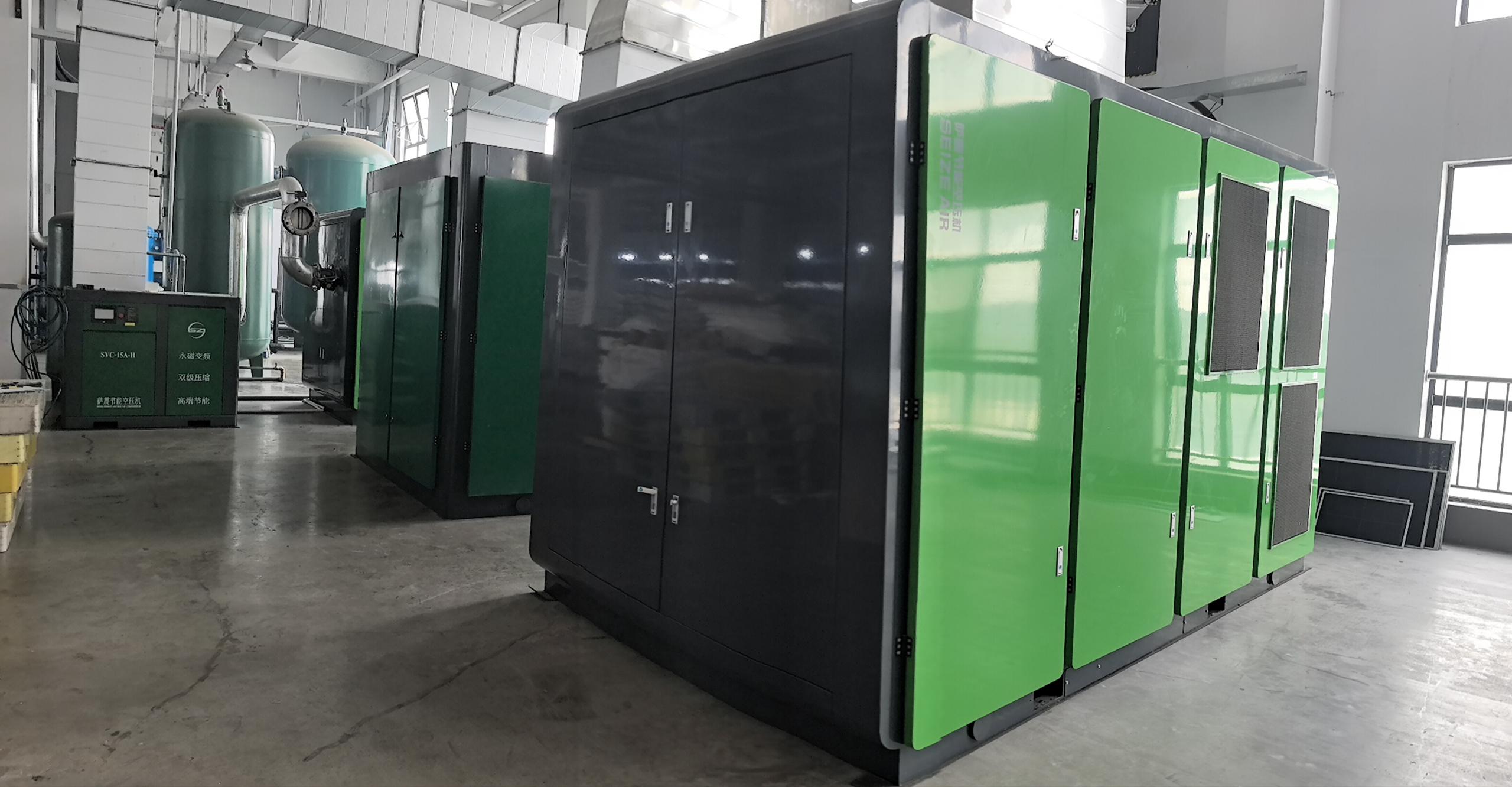
Modern compressors are shedding their reputation as energy hogs, thanks to a wave of engineering breakthroughs that feel almost intuitive. Instead of simply brute-forcing air or refrigerant through a system, new designs incorporate variable-speed drives that think ahead—adjusting motor RPMs in real time based on demand curves you’d normally have to plot out manually. This isn’t just about ramping up and down; it’s about syncing with the subtle ebbs and flows of industrial shifts, refrigerated case loads, or even weather fronts, cutting power consumption in ways that old on/off cycling could never touch.
Then there’s the quiet revolution inside the compression chamber. Seal geometries have been reimagined using computational models that mimic the way a fish’s gill traps oxygen—minimizing blow-by losses that once bled efficiency by the percentage point. Oil-free rotors, coated with diamond-like carbon, are becoming standard in applications where lubricant carryover once meant compromise, sidestepping both friction and contamination in one stroke. It’s a shift from treating air as a blunt tool to handling it like a precision fluid, and the result is a compressor that runs cooler, longer, and at a fraction of the kilowatt-hour tally.
Heat recovery adds another layer, and it’s almost surprising it took this long to become a headline feature. Rather than venting thermal waste, integrated exchangers now funnel it into building hot water loops or process pre-heating, turning what was once a costly byproduct into a second stream of utility. Coupled with smarter membrane dryers that purge loss into the single digits, the latest machines feel less like updates and more like a fundamental rethinking of where all that energy actually goes—and how much of it you really need in the first place.
From Waste to Resource: Harnessing Heat Recovery in Compressor Systems
Compressor systems are the workhorses of many industrial operations, but they come with a hidden cost: a staggering amount of energy lost as heat. In fact, up to 95% of the electrical energy driving a compressor is converted into heat, which is usually dissipated into the surroundings without a second thought. This waste stream represents a largely untapped opportunity—one that, when captured, can turn a costly byproduct into a valuable resource for heating, drying, or process preheating. The shift from viewing this heat as waste to treating it as an asset is not just an environmental imperative; it's a practical strategy that slashes operational costs and improves overall plant efficiency.
Modern heat recovery solutions for compressor systems have evolved far beyond simple ductwork. Advances in heat exchanger technology and integration controls now allow facilities to reclaim high-grade heat from oil-injected screw compressors or even cooler exhaust from centrifugal machines. This recovered thermal energy can be put to work in space heating, boiler feedwater preheating, or warm water generation—applications that often run in parallel with compressed air demand. The key is to match the heat output profile with a facility’s thermal needs, transforming a once-ignored discharge into a steady, predictable energy source that reduces reliance on dedicated heating equipment.
Adopting heat recovery is not merely a bolt-on upgrade; it requires a thoughtful look at system layout and consumption patterns. Yet the payoff makes the effort worthwhile. Companies that integrate these systems frequently report double-digit improvements in total site energy efficiency, with payback periods measured in months rather than years. As energy prices fluctuate and sustainability targets tighten, turning compressor heat from waste to resource is no longer an afterthought—it’s becoming a standard practice for competitive, forward-thinking operations.
The Digital Upgrade: How Smart Controls Slash Downtime in Textile Plants
Downtime in a textile mill isn’t just an inconvenience—it’s a profit killer that ripples through order books and delivery schedules. Traditional setups rely on reactive maintenance, waiting for a loom to jam or a spinning frame to shudder to a halt before anyone notices. That lag, often measured in hours, bleeds money and frays customer trust.
Smart controls flip this model by weaving real-time data into every stage of production. Sensors tucked into machinery track vibration, temperature, and throughput, feeding a central system that learns normal patterns. When a deviation pops up—say, a bearing running slightly hot—the system flags it instantly, often triggering automatic adjustments or alerting technicians before a minor glitch escalates into a full stop.
The result is a plant that practically heals itself. Mills using these digital upgrades report slashing unplanned downtime by up to 30%, and in some cases, stretching predictive maintenance intervals far beyond old-school schedules. It’s not about replacing skilled workers; it’s about giving them a dashboard that turns guesswork into precision, keeping the hum of production steady and the bottom line healthier.
Real-World Results: A Zhejiang Mill’s Journey to Lower Energy Bills
When the management team at a textile mill in Zhejiang first examined their monthly operating costs, the staggering electricity bills stood out as an area ripe for improvement. Located in a region known for its dense industrial activity, the facility had long accepted high power consumption as an unavoidable part of doing business. However, rising tariffs and a corporate-wide push toward leaner operations prompted a fresh look at energy usage patterns. An initial audit revealed that aging motor systems, suboptimal lighting, and compressed air leaks were draining thousands of yuan each month without contributing to output. Rather than embarking on a costly full-scale retrofit, the team decided to tackle the most obvious inefficiencies first, setting the stage for a pragmatic, data-driven transformation.
The mill’s approach blended low-cost fixes with targeted technology upgrades. Maintenance crews sealed compressed air lines and recalibrated pressure settings, immediately reducing waste. Old fluorescent tubes were swapped for LED fixtures with motion sensors, cutting lighting consumption by more than half in rarely occupied storage zones. A larger investment went into replacing several oversized motors with variable-speed drives that adjusted power draw based on real-time load. To measure the impact accurately, the team installed sub-meters on key production lines and linked them to a simple dashboard that displayed energy intensity per kilogram of finished fabric. This visibility not only motivated operators to shut down idling machines but also helped scheduling staff shift energy-intensive processes to off-peak hours, where rates were lower.
Within the first year, the mill’s electricity bills dropped by nearly a third, while production volume remained steady. The savings freed up capital that was partially reinvested into additional process improvements, such as heat recovery from dyeing vats that further trimmed gas usage. Perhaps more importantly, the initiative changed how the organization thought about energy—not as a fixed overhead, but as a controllable resource. Cross-departmental meetings that once focused solely on output targets now routinely included discussions on consumption trends and upcoming efficiency projects. For the Zhejiang facility, lowering energy bills turned out to be less about a single grand gesture and more about building a culture of continuous, small wins—a journey that continues to deliver results long after the obvious leaks were plugged.
Beyond Green: The Next Wave of Sustainable Air Compression
The conversation around sustainable air compression is evolving beyond the checkbox of energy efficiency. While trimming kilowatt-hours remains vital, the next wave digs into system-level intelligence and adaptive control. Compressors are learning to read production rhythms, adjusting output in real time rather than running flat-out and bleeding surplus as waste. This isn't just about variable-speed drives anymore—it's about predictive algorithms that match air supply to actual demand, moment by moment, often harnessing data from sensors dotted across the plant floor.
Another frontier quietly reshaping the industry is the circularity of materials and heat. Modern compressor installations are being designed as energy hubs that recapture and repurpose thermal output for facility heating or process warming, transforming a byproduct into an asset. Simultaneously, manufacturers are rethinking lubricants, filtration media, and component lifecycles, pushing for fully recyclable consumables and modular designs that extend service intervals without compromising performance. This holistic approach slashes the environmental footprint far beyond what a simple carbon offset ever could.
Perhaps the most disruptive shift is the democratization of compressed air as a utility. On-site nitrogen generation, decentralized air networks, and pay-per-use models are challenging the notion that every factory must own and maintain a mammoth centralized system. These delivery innovations shrink capital expenditure, slice transmission losses, and allow smaller players to access high-efficiency compressed air without the overhead of ownership. It’s a move from sustainability as a premium feature to sustainability as a fundamental, accessible design principle—one that quietly reshapes factory floors across the globe.
FAQ
Air compressors are the backbone of many textile operations, powering everything from spinning and weaving machines to pneumatic controls and material handling systems. They supply clean, pressurized air that ensures consistent fabric quality and smooth, uninterrupted production lines.
Advanced compressors now incorporate variable speed drives and intelligent control systems that adjust output to match real-time demand, slashing energy consumption. Some models also recover waste heat for facility heating or water preheating, turning a major cost center into an energy-saving asset.
By cutting electricity use, they directly lower the carbon footprint of textile production. Oil-free compressor designs also eliminate the risk of condensate contamination, reducing environmental compliance burdens and supporting circular economy goals through longer equipment life and reduced waste.
In textile processes, especially spinning and dyeing, even trace oil or moisture in compressed air can ruin fabrics, cause dye inconsistencies, or damage sensitive machinery. High-quality filtration and drying systems ensure the air meets stringent purity standards, avoiding costly product defects and production halts.
Many mills now integrate compressors with Industrial Internet of Things platforms, enabling remote monitoring, predictive maintenance, and real-time performance analytics. This shift not only prevents unexpected downtime but also optimizes the entire compressed air system for peak operational efficiency.
The push for carbon neutrality is driving demand for oil-free, water-lubricated compressors and hybrid systems that pair with renewable energy sources. Digital twins and AI-driven optimization are also emerging, promising further efficiency gains and seamless integration with smart factory setups.
Conclusion
Air compressors form the hidden backbone of China’s textile mills, driving everything from spinning frames to air-jet looms with a voracious appetite for energy that can devour up to 30% of a plant’s electricity costs. The push for efficiency has steered the industry toward compressors that don’t just perform but think — variable-speed drives paired with permanent magnet motors now adjust output in real time to match fluctuating demand, slashing idle waste without human intervention. Innovations like two-stage compression with advanced rotor coatings squeeze more air from less power, while ultra-low-loss air treatment systems strip moisture with minimal pressure drop. Quietly, heat recovery modules are turning a former nuisance into an asset, capturing the thermal energy generated during compression and rerouting it to preheat boiler water or warm factory spaces, cutting coal or gas reliance. These gains are especially palpable in Zhejiang, where mills that once bled money on utility bills are now seeing double-digit drops after retrofitting their compressed air systems, proving that the path to leaner operations runs straight through the compressor room.
Beyond mechanical upgrades, a digital layer is rewriting the rules of maintenance and uptime. Smart controllers with cloud connectivity stream live performance data — pressure, temperature, dew point, energy consumption — to a central dashboard where predictive algorithms flag subtle deviations before they spiral into line-stopping failures. The result: planned interventions replace fire-drill repairs, and downtime shrinks from hours to minutes. This shift is laying the groundwork for the next sustainability wave, where air compressors will not only optimize their own efficiency but also integrate with plant-wide energy management systems to synchronize with renewable generation peaks or even participate in demand-response programs. By treating compressed air as a strategic utility rather than a cost center, China’s textile sector is turning a mature technology into a lever for both competitiveness and environmental stewardship, one that quietly weaves together operational resilience and a lighter carbon footprint.
Contact Us
Contact Person: Mia
Email: [email protected]
Tel/WhatsApp: +86 19821985894
Website: https://www.seize-air.com