

Custom CNC Lathe Factory Delivers Precision Parts for Modern Manufacturing
2026-05-14
Precision isn't just a goal in modern manufacturing—it's a necessity. When a custom CNC lathe factory steps up to deliver components that meet the tightest tolerances, entire production lines run smoother and faster. At WINNRUI CNC, that kind of reliability isn't a promise; it's an everyday outcome. But what does it really take to turn a raw design into a flawless metal part, ready for industries that never settle for 'close enough'? Let's open the doors on a process where technology, skill, and obsessive attention to detail converge.
Where Precision Meets Customization: Inside the CNC Lathe Process
Precision in CNC turning isn’t just about hitting tight tolerances—it’s about consistently replicating complex geometries under real-world conditions. Inside the process, the marriage of rigid machine construction, dynamic toolpath algorithms, and real-time feedback loops ensures every cut lands exactly where it should. Spindle speeds, feed rates, and depth of cut are tuned not only for accuracy but for surface finish and tool life, treating each workpiece as a unique challenge rather than a generic part.
Customization enters the picture long before the first chip flies. Modern CAM systems translate intricate CAD models directly into G-code, enabling one-off prototypes and small batches to be machined with the same efficiency as high-volume runs. Quick-change tooling, programmable tailstocks, and live tooling stations allow a single setup to perform turning, milling, drilling, and threading—collapsing multiple operations into a seamless workflow. This flexibility means engineers can iterate designs rapidly, testing form and function without the traditional lag of retooling.
The human element remains at the core. Skilled machinists interpret the subtle cues—chip color, sound signature, load meter fluctuations—to make micro-adjustments that even adaptive control can miss. This dialogue between programmer and machine turns a subtractive manufacturing process into a craft, where experience shapes the final outcome. The result is components that not only meet print specifications but embody a level of attention that automated systems alone can’t replicate.
The Art of Crafting Complex Components with Advanced Turning
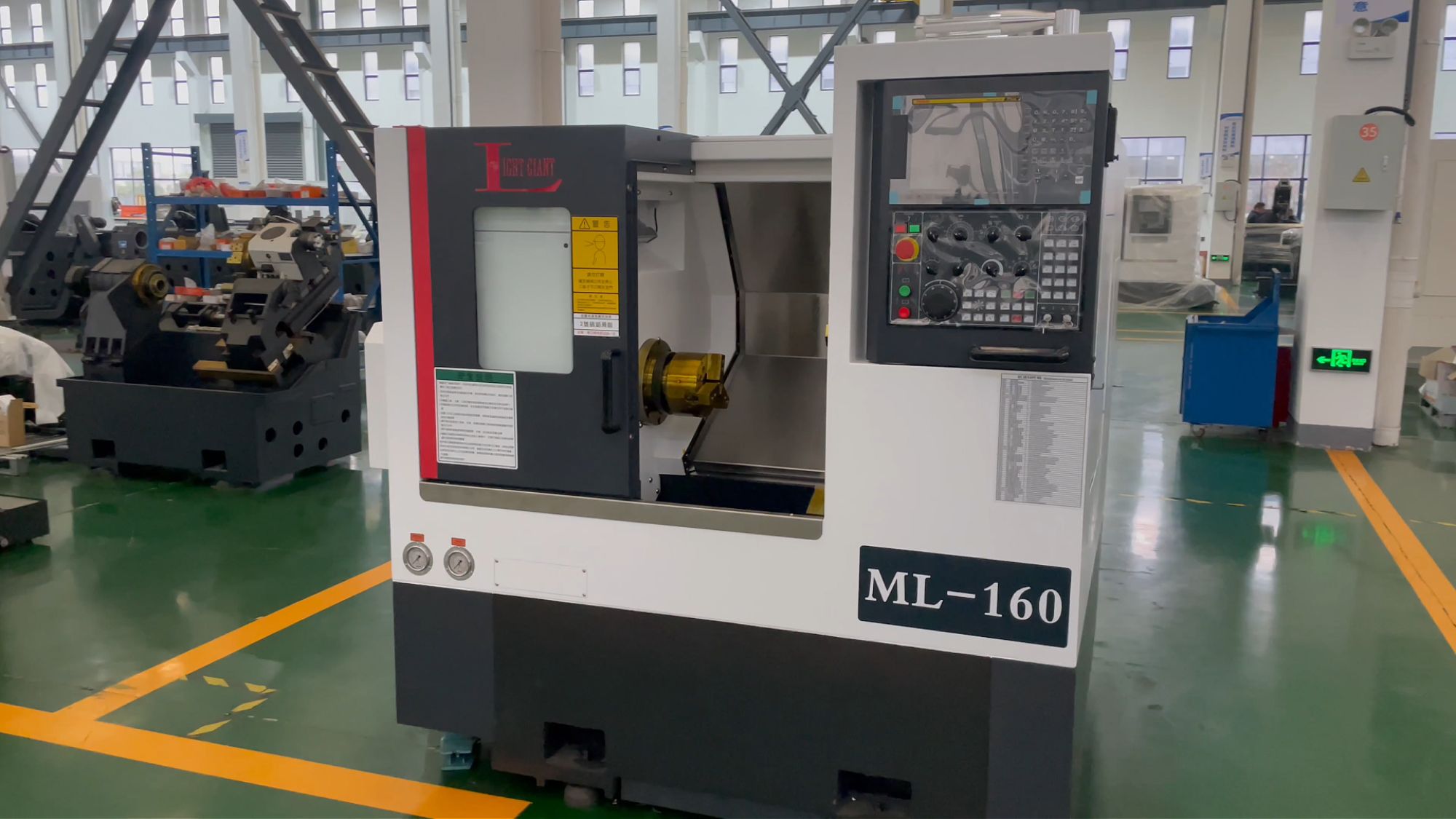
Turning intricate geometries from a solid blank demands more than just programming toolpaths—it requires an intuitive understanding of material behavior under stress. Every pass of the insert sets off a chain reaction: heat builds, chips curl and break, and residual stresses redistribute within the workpiece. Mastering that interplay means leaning into the specific personality of the material, whether it's the gummy flow of aluminum or the abrasive defiance of Inconel. At this level, you stop fighting the cut and start choreographing it, adjusting speeds and feeds to coax the component into shape rather than forcing it.
The real art emerges in the setup strategy. Holding a thin-walled, asymmetrical part securely without distorting it takes a blend of mechanical empathy and clever workholding. Sometimes a soft-jaw fixture custom-machined in-situ becomes the unsung hero; other times, a deliberate sequence of roughing and semi-finishing allows internal tensions to release before the final skim pass. It’s about building a stable platform that respects the part’s delicate features while leaving enough clearance for tool access at odd angles. When you get it right, the machine hums with a consistency that tells you the process is locked in—but knowing how to listen takes years.
Ultimately, advanced turning isn't just a subtractive process—it's a conversation with constraints. Tolerances shrink, surfaces become functional interfaces rather than mere boundaries, and the line between machinist and artisan fades. A perfectly executed complex component carries the invisible fingerprints of all the decisions made to bring it about: the daring peck cycle that cleared deep bore chips without a single spindle stall, the deliberate dwell that knocked down tool deflection, the quiet adjustment of coolant concentration that kept thermal growth predictable. That’s the craft hiding in plain sight on every blueprint.
How Custom Lathe Work Drives Innovation Across Industries
The quiet hum of a custom lathe often masks its true impact, but behind that steady rotation lies a catalyst for breakthroughs in fields as diverse as aerospace and medical devices. Unlike standardized machining, custom lathe work allows engineers to dictate every nuance of the cutting process, from unconventional tool geometries to adaptive speed controls, enabling the creation of parts with tolerances that generic equipment can't touch. This capability doesn't just improve existing designs—it opens up entirely new possibilities, such as heat-dissipating surfaces that mimic organic structures or lightweight components with internal lattices that were once impossible to produce. By transforming raw metal into precision instruments layer by micron-thin layer, custom turning becomes a playground for materializing ideas that push the boundaries of what machinery can achieve.
In the automotive and energy sectors, custom lathe work is quietly rewriting the rules of efficiency and durability. Consider the pistons in a racing engine or the rotors in a turbine: off-the-shelf parts often leave performance on the table because they're designed for broad compatibility, not specific conditions. When a shop tailors its lathe setup to carve out components from exotic alloys or composites, they can optimize geometries to handle extreme heat, reduce friction, or shave off unnecessary weight without sacrificing strength. These gains cascade into fuel savings, longer service intervals, and even the viability of next-gen technologies like hydrogen fuel cells, where every microscopic seal must perform flawlessly. It's a reminder that innovation isn't always about a flashy new invention—sometimes it's about perfecting the parts we already rely on.
Beyond the chips and coolant, custom lathe work fosters a culture of iterative problem-solving that bleeds into other areas of a business. Machinists who regularly tackle unique challenges develop a knack for creative troubleshooting, often suggesting design tweaks that simplify assembly or eliminate failure points downstream. This cross-pollination of ideas shortens development cycles and nurtures a mindset where custom solutions become the default, not an exception. In industries like robotics or consumer electronics, where miniaturization and weight reduction are everything, being able to quickly spin up a prototype on a customized lathe can mean the difference between leading a market and chasing it. Ultimately, the lathe itself is just a tool—it's the human ingenuity, amplified by the machine's flexibility, that sparks enduring innovation.
Quality from the Ground Up: Materials, Methods, and Mastery
The foundation of exceptional work isn't a secret formula—it's an obsession with what others overlook. We start with raw materials that meet standards most suppliers consider excessive, because we've learned that every flaw at the beginning multiplies by the end. This isn't about premium pricing; it's about refusing to let a single substandard component become someone else's problem. When you hold a finished piece, you're feeling decisions made weeks earlier, when someone chose integrity over convenience.
Methods matter, but not in the way manuals suggest. Our processes evolve through the kind of knowledge that only comes from doing, failing, and adapting. A technique refined over decades can't be replicated by following steps—it lives in the hands that execute it. We document nothing because the real craft is in the adjustments made in real time, the small corrections that no camera captures and no tutorial explains. It's the difference between a replicated object and an authentic creation.
Mastery is often mistaken for talent, but we see it as accumulated attention. It's the result of showing up every day and caring about margins invisible to the untrained eye. This approach doesn't make us faster or cheaper, but it makes us incapable of producing something we wouldn't stand behind. The reward isn't in recognition; it's in the quiet certainty that what leaves our hands can withstand scrutiny that may never come.
Speed and Accuracy: Balancing Fast Turnaround with Flawless Parts
In the world of manufacturing and prototyping, the tension between delivering parts quickly and ensuring they meet exact specifications is a daily challenge. Speed promises agility and keeps projects on schedule, but pushing too hard risks dimensional errors, surface imperfections, or structural weaknesses that undermine the part's function. True operational excellence lies not in choosing one over the other, but in treating them as complementary goals—where accelerated processes still produce parts that fit, perform, and endure without compromise.
Achieving this equilibrium demands a thoughtful integration of technology, process control, and skill. Advanced CNC machinery with high-speed spindles and real-time adaptive feedback can maintain tight tolerances even at elevated feed rates, while automation in toolpath generation minimizes idle time. Equally important is the human element: machinists who fine-tune setups, inspect in-process dimensions, and make micro-adjustments based on material behavior. This blend of digital precision and hands-on expertise turns rapid production into a repeatable, high-quality outcome.
Moreover, balancing speed and accuracy requires a culture that refuses to accept speed as an excuse for defects. It involves rigorous pre-production planning, such as simulating cuts to eliminate collisions and optimize sequences before metal is ever cut. Post-process inspection using laser scanning or CMMs closes the loop, verifying that even rush jobs hit every critical dimension. When these practices become second nature, fast turnaround stops being a gamble and starts being a predictable, engineered capability—delivering flawless parts on time, every time.
The Human Touch in High-Tech Manufacturing
Walk into any modern factory and you'll find machines working at dizzying speeds, handling tasks once done by hand. Yet amid the whir of automation, it's the human eye that still catches micro-defects invisible to cameras, and experienced hands that make those final, subtle adjustments no program can replicate. Technology amplifies our reach, but it’s the nuanced judgment of floor workers that keeps production lines truly agile.
Think of the last time a high-precision assembly line went down. Sensors flagged the issue, but it took a veteran technician minutes to diagnose a problem pattern that algorithms missed entirely—something about the way a vibration changed pitch under specific humidity. This blend of instinct and deep familiarity doesn't come from a manual; it grows from years of listening and adapting. Smart factories don't replace that expertise; they thrive on it.
Even in facilities packed with collaborative robots, the most valuable skill isn't coding—it's the ability to improvise. When a custom order throws off the routine, a team that knows their machines can reconfigure a cell in half the time a remotely programmed solution would take. That dance between human creativity and machine consistency is where real manufacturing resilience lives, and it can't be automated away.
FAQ
We specialize in turned components ranging from simple bushings to complex multi-featured shafts. Common parts include valve stems, hydraulic fittings, aerospace fasteners, and medical device bodies. Our lathes handle diameters up to 12 inches and lengths to 40 inches, with tighter tolerances on smaller work.
We work mostly with aerospace, medical equipment, and oil & gas companies. About half our output goes to surgical instrument makers, a third to aircraft component suppliers, and the rest to energy sector clients. Each industry has specific certification needs we're familiar with.
We routinely machine alloys like Inconel 718, 17-4 PH stainless, titanium grade 5, and 6061 aluminum. We also handle engineering plastics like PEEK and Torlon for certain applications. Material lot traceability is standard for us, not an upcharge.
On our Swiss-type lathes, we comfortably maintain ±0.0002 inches on diameters. For conventional CNC lathes, ±0.0005 inches is typical. We've held 0.0001 inch on specialty parts using in-process probing and temperature-controlled environments. It really depends on the geometry and material.
For repeat jobs, we often ship within 5-7 business days after order release. New projects with complex features might take 3-4 weeks including first article inspection. We keep a large inventory of commonly used alloys to cut down on material lead time.
We focus on tricky tolerances and difficult materials that many shops decline. Our team includes tool and die makers who can build custom workholding on site. We also don't require minimum order quantities—we'll run a prototype batch of 5 pieces or a production run of 50,000.
Yes, we offer passivation, anodizing, electropolishing, and heat treatment through partners, but we handle bead blasting and deburring ourselves. Our in-house quality team verifies all finishes using profilometers and salt spray testing when required.
Conclusion
In modern manufacturing, the demand for components that meet exact specifications without compromise has never been greater. A custom CNC lathe factory stands at the intersection of advanced technology and skilled craftsmanship, turning raw materials into precision parts that power everything from medical devices to aerospace systems. The process begins well before the first cut, with engineers collaborating closely with clients to understand the unique requirements of each project. This early partnership ensures that every aspect of the design—from tolerances measured in microns to the selection of specialized alloys—is translated perfectly into the machining sequence. Complex geometries that once seemed impossible now emerge from multi-axis lathes, where live tooling and automated tool changers allow for drilling, milling, and threading in a single setup. The result is not just a part, but a solution tailored entirely to its purpose, blending the precision of digital controls with the creativity of human problem-solving.
Behind every batch of flawless components lies a commitment to quality that starts with raw material inspection and extends through every stage of production. Experienced machinists bring an intuitive feel to the work, making fine adjustments that software alone cannot predict, and final inspections often involve a mix of coordinate measuring machines and hands-on verification. This human element remains irreplaceable, even in highly automated environments. At the same time, the factory’s ability to deliver rapid turnarounds without sacrificing accuracy is a direct result of streamlined workflows and real-time monitoring. From prototyping a single piece to full-scale production, the facility adapts quickly, helping clients accelerate their own development cycles. It’s this combination of rigorous process control and technical agility that allows a custom lathe factory to drive innovation across industries, supporting everything from next-generation robotics to sustainable energy solutions.
Contact Us
Contact Person: Tim
Email: [email protected]
Tel/WhatsApp: +86 15522553731
Website: https://www.winnrui-cnc.com/