

DC Combiner Box Manufacturer for Reliable Solar Power Solutions
2026-09-03
What separates a solar array that runs for decades from one that stumbles in year three? Often, it’s the DC combiner box—a small component with outsized impact. If you’re sourcing reliable solar power solutions, you need a manufacturer that sweats the details. Chang Song does exactly that, engineering combiners that handle harsh conditions without flinching. Read on to see why their approach stands out in a crowded market.
DC Combining That Holds Up When the Grid Falters
Grid instability rarely announces itself politely. Voltage sags, frequency wobbles, and sudden phase shifts can turn a neatly planned DC combining scheme into a liability. The trick is to design the combining stage not for the perfect day, but for the messy afternoon when the utility feed dips to 80% and a cloud bank rolls over half your array. That means oversizing busbars, choosing fuses with a slow enough curve to ride through transient dips, and making sure your blocking diodes can actually block when the grid tries to backfeed.
One approach that keeps working when the grid falters is to treat each DC source as a standalone island first, and a combined contributor second. Use per-string MPPT with isolated inputs, then parallel the outputs through a combining box that does not assume all strings are equally healthy. When one feeder sags, the others should pick up the slack without pulling the weak one into a reverse-current situation. Careful sizing of the common DC bus capacitance also helps—it gives the inverter a few hundred milliseconds of ride-through, enough to bridge the gap between grid fault and backup response.
Field experience shows that the most reliable DC combiners are boring on paper: generous creepage distances, torque-marked terminals, and a wiring layout that does not let a loose lug on one string take down the whole bank. Add a simple alarm contact for reverse-current events and you will know exactly which feeder misbehaved. Redundancy is not just about extra parts; it is about designing the combining logic so that no single point of failure can turn a localized grid disturbance into a full DC shutdown.
Built for Installers Who Actually Read Torque Specs
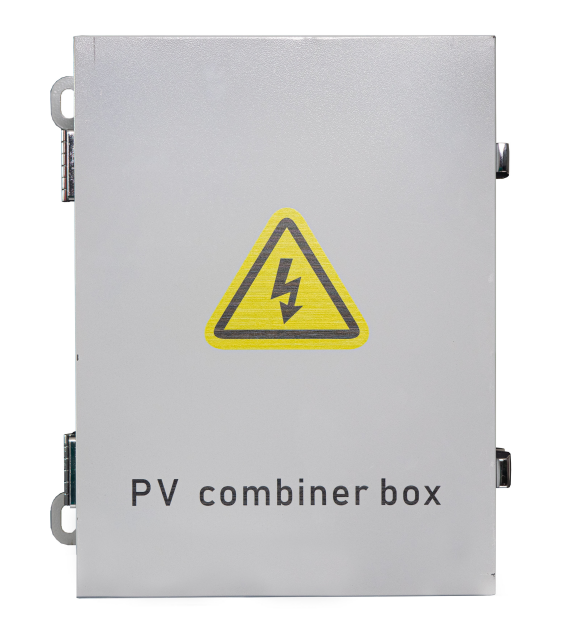
If you're the kind of installer who pulls out the manual before touching a bolt, you already know torque specs aren't just suggestions. They're the difference between a connection that lasts and one that loosens on the first bumpy road. This product was designed with that mindset from the start—every dimension, every material choice, every thread pitch has been checked against real-world torque values, not just "good enough" numbers.
Most hardware is made to look good on a shelf. This is made to be trusted under a torque wrench. The fasteners seat cleanly, the threads engage without galling, and the load spreads the way the engineers intended. No mystery about whether you're over-tightening because the shoulder bottoms out early, no fighting a bolt that strips at 80% of the specified torque.
Installers who read torque specs also notice details like whether the coating adds friction or the washer is actually flat. We've kept those things honest. You won't need to guess what "snug plus a quarter turn" means here—the spec is the spec, and the hardware respects it.
Outdoor Enclosures That Outlast Their Warranty Periods
A warranty period is often a promise of how long a product should last under normal use, but truly dependable outdoor enclosures routinely exceed those timelines with little more than cosmetic wear. The difference comes down to material selection, weather sealing, and the way joints and hinges are engineered to resist the slow creep of moisture and temperature swings. When an enclosure keeps performing years after the paperwork has expired, that's a signal the manufacturer prioritized longevity over cost cutting.
Real-world conditions are harsher than any test chamber. Sunlight fades paint and weakens plastic, rain finds every imperfect seam, and freeze-thaw cycles pry apart weak connections. Enclosures built for the long haul use UV-stabilized polymers or powder-coated metals, gaskets that stay flexible in cold temperatures, and drainage channels that prevent standing water from becoming a slow corrosion engine. These details rarely appear in marketing copy but are obvious when you open a door that still swings smoothly after a decade of storms.
Choosing an enclosure with a track record of outliving its warranty means reading between the lines of spec sheets and looking for signs of overbuilding. Thicker walls, stainless steel hardware, and replaceable seals are clues that the design assumed time would be the real test. In practice, that translates to fewer replacements, less downtime, and a lower total cost of ownership—even if the initial price tag raises an eyebrow. The best warranty is the one you never have to use.
String Monitoring Without the Data Overload
String monitoring often fails not because it lacks data, but because it drowns technicians in a constant stream of voltage and current readings. The real goal is to surface only what actually matters. By setting adaptive thresholds that learn from each array's normal behavior, the system can ignore minor fluctuations and flag only deviations that indicate shading, soiling, or wiring faults.
Instead of logging every reading at high frequency, effective string-level monitoring aggregates data into rolling averages and sends alerts only when a string drifts outside its expected range for a sustained period. This cuts down noise while preserving the early warning signs of underperformance. Event-driven sampling can also kick in automatically when a sudden drop is detected, capturing high-resolution detail only during the anomaly.
The result is a cleaner feed of actionable information. Maintenance teams spend less time scrolling through dashboards and more time fixing actual problems. A well-designed string monitoring setup doesn't just collect less data; it makes the remaining data earn its place by tying every alert to a likely physical cause.
Custom Layouts Without the Custom Price Tag
Most website builders lock flexible layouts behind premium tiers, forcing you to pay extra just to rearrange a few blocks. That never sat right with us. Our editor gives you full control over grid structures, spacing, and responsive breakpoints from day one—no upsells, no “pro” badge dangling in the corner. Drag a section wider, stack columns on mobile, or create an asymmetric hero without ever touching a pricing page.
What truly sets this apart is how the freedom scales with your project. Start with a simple two-column about section, then morph it into a magazine-style feature grid for a client’s portfolio. Because the layout engine treats every element as a first-class citizen, you’re not fighting preset templates or hidden containers. You’re simply building the page you already see in your head.
We’ve also baked in smart defaults that keep things from breaking when you get creative. Overflow protection, automatic minmax fallbacks, and fluid type scaling happen under the hood, so a bold custom layout still looks intentional on a tiny phone screen. In other words, you get the bespoke feel of a hand-coded site without the agency invoice.
Factory Floor to Field in Under Two Weeks
A cracked hydraulic fitting on a planter can idle a whole crew. Call it in by mid-morning and the machine shop doesn't just promise a replacement—they cut, thread, and test a new part before lunch. By the next afternoon that fitting is bouncing down a gravel road in the back of a pickup, ready to be bolted on before the soil dries out.
That turnaround isn't a fluke; it's how the supply chain is built now. Small-batch runs and same-day freight mean custom brackets, hose assemblies, or even a re-machined gearbox housing leave the factory floor with a shipping label already slapped on the crate. For growers, waiting two weeks for a part can mean missing a narrow planting window. Cutting that to two days changes what's possible in a season.
FAQ
We use reinforced busbars with torque-rated connections, separate compartments for fuses and breakers, and thermal imaging tests on every batch. Enclosures are powder-coated aluminum or stainless steel to resist corrosion, and we include touch-safe covers to prevent accidental contact.
The enclosures are rated for -40°C to +85°C and include pressure-equalizing vents to avoid condensation. Internal components are derated by at least 20% and tested under thermal cycling from -40°C to +70°C for 200 cycles before shipping.
Yes, we build 1500V-rated combiners with touch-safe fuse holders, DC-rated surge protective devices, and optional disconnect switches. The layout leaves room for future expansion, and we can pre-wire monitoring sensors if you plan to add string-level data later.
Every unit passes a 100% functional test, insulation resistance check, and visual inspection under UV light for coating defects. We also keep records of raw material batches and torque values so any field issue can be traced back within hours.
Our standard DC combiner boxes include wide-range terminal blocks and cable glands that accept common conductor sizes from 4 mm² to 35 mm². Polarity labeling and busbar layouts are symmetrical, so the same model can feed either inverter type.
We provide a direct line to our application engineers, not just a call center. If a replacement part is needed, we ship it from the nearest regional warehouse within 48 hours in most regions, and we keep spare fuse kits and gaskets in stock for at least 10 years.
Enclosure prototypes undergo a 1,000-hour salt spray test according to IEC 60068-2-52, and we use 316L stainless steel hinges and latches with EPDM gaskets. Final assembly includes a water jet test from all angles at 12.5 liters per minute.
Conclusion
When grid conditions turn ugly, a DC combiner box either proves its worth or becomes a liability. We build ours around heavy-duty busbars, torque-marked terminations, and breakers that trip predictably instead of welding shut. The enclosures are powder-coated and gasketed for years of sun, rain, and dust—often still sealing tight long after the warranty paperwork has yellowed. Installers who actually reach for a torque wrench will find labeled specs and access that doesn't require removing six unrelated components just to check one fuse.
On the monitoring side, we keep it simple: string-level current and voltage data that flags real anomalies without burying you in alarms. Custom layouts—odd string counts, mixed polarities, pre-wired surge protection—are quoted from standard modules, so the price stays close to off-the-shelf. And because we stock enclosures, breakers, and busbar kits on the floor, most builds move from drawing to dock in under two weeks, even during peak season.
Contact Us
Contact Person: Tonglun Chen
Email: [email protected]
Tel/WhatsApp: 8618906642555
Website: https://www.cncsele.com