

French Arm Crutch Services for Enhanced Mobility and Support
2026-09-15
Most people never think about crutches until they need them—and then they realize how much design matters. French arm crutch services focus on exactly that: turning a basic mobility aid into a stable, comfortable extension of your body. Whether you are recovering from surgery, managing a long-term condition, or simply tired of underarm crutches digging into your ribs, the difference is immediate. At Suncare, we help you find the right fit and support, so every step feels less like a compromise and more like progress.
Why French Arm Crutches Feel Like a Natural Extension of Your Body
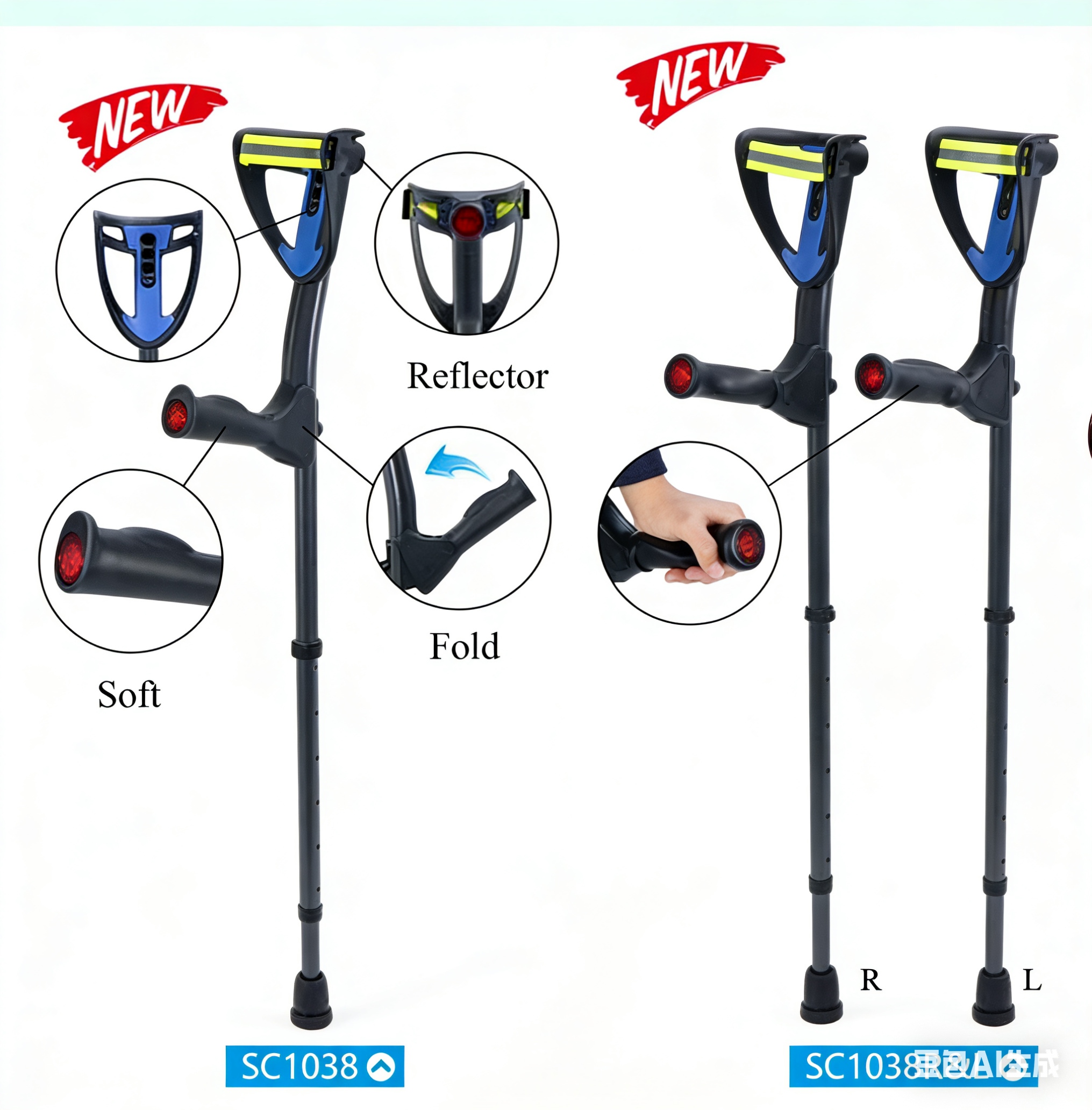
The first time you slip a French arm crutch onto your forearm, the familiar clunk of standard underarm crutches disappears. Instead of perching your weight on an armpit pad that grinds into your ribs, the cuff hugs your forearm just below the elbow and the grip meets your palm at a neutral angle. That small difference changes everything about how force travels through your frame. You're no longer holding yourself up with your shoulders and elbows locked; you're leaning into the crutch with the same relaxed posture you'd use holding a bicycle handlebar or a walking staff. The crutch stops being a separate object you fight against and starts behaving like an extra segment of your arm, one that just happens to reach the ground.
Much of this natural feel comes from the way French crutches redistribute contact. With underarm models, the pressure concentrates in two places: your armpit and your palm, with nothing in between. French crutches wrap around the forearm, spreading load across a much larger surface while letting your wrist stay slightly extended rather than sharply bent. The cuff's shape matters more than you'd expect—some are wrapped with a slight outward flare, others with a subtle twist that matches the natural curve of your radius. When the fit is right, you can unclench your fist while standing still and the crutch won't slide away; it stays propped against your forearm like a well-fitted splint. Your fingers are free to relax or even let go for a moment, and that freedom is what makes the device feel like it belongs to you rather than being carried by you.
The final piece is how the crutch moves with you during gait. A rigid underarm crutch forces a jarring, pendulum-like swing where the pole stays vertical and your body swings around it. French arm crutches tilt slightly with every step, rotating around the forearm cuff as you push off. That dynamic alignment lets your wrist flex and extend naturally, while the elbow remains bent at roughly twenty to thirty degrees—close to the angle it holds when you walk with your hands in your pockets. Over time, users report that the crutch becomes less of a medical device and more of a lower limb substitute, translating subtle shifts in weight and direction without conscious thought. You stop noticing the crutch itself and simply notice the ground under the tip, as if your arm had grown a new distal joint.
The Quiet Engineering Behind Lasting Comfort
Most people only feel a chair or mattress when it starts to fail. The absence of pressure points, the lack of creaks, the way a cushion returns to shape after a long day—these are not accidents. They come from unglamorous choices: a foam density that holds its rebound over tens of thousands of cycles, a stitch tension that keeps fabric from drifting, and a frame tolerance measured in fractions of a millimetre so that every recline stays fluid.
Durability testing for this kind of product looks deliberately boring. Samples are loaded and unloaded in climate chambers, joints are flexed past their expected lifespan, and materials are checked for how they age rather than how they feel on day one. A cushion that feels plush in a showroom but collapses by autumn fails the quiet tests. What survives is a set of materials that behave almost identically after years of daily use.
The result is comfort you stop noticing—and that is exactly the point. When the engineering is done well, nothing calls attention to itself. You simply sit, rest, and get up without thinking about what is underneath you.
A Closer Look at Cuff Design and Forearm Support
The cuff on a blood pressure monitor is more than just a strap—it's the primary interface between the device and your body, and its design directly influences both comfort and accuracy. A well-contoured cuff follows the natural taper of the upper arm, reducing the pinching or slipping that often occurs with straight-edged designs. Premium models now integrate pre-formed rigid cones or flexible internal stays that keep the cuff aligned over the brachial artery, even when you move slightly during a reading. This subtle engineering shift means fewer error codes and more consistent measurements across repeated use.
Forearm support, though often overlooked, plays a quiet but critical role in ensuring reliable readings. When the forearm rests at heart level with the wrist relaxed, muscles stay passive, allowing arterial pressure to stabilize. Monitors that include a built-in forearm cradle or an angled platform encourage this neutral posture without requiring you to stack books or pillows. Without proper support, the natural tendency to tense the shoulder or bend the wrist can alter systolic values by several points. Some designs go further by adding a soft, non-slip pad that keeps the forearm from drifting, which is especially helpful for users with limited mobility or arthritis.
From a user’s perspective, the best cuff-and-support systems fade into the background. You slip your arm in, feel a gentle squeeze rather than a hard clamp, and the reading appears without fuss. The cuff fabric matters too—breathable, latex-free materials with a slight stretch prevent that clammy, restrictive feeling during warmer months. For home users who monitor daily, these details accumulate into a less stressful routine, encouraging better adherence to measurement schedules. Ultimately, thoughtful cuff geometry and forearm support transform a clinical procedure into a simple, almost effortless part of your day.
Matching Your Gait, Not Fighting It
Most shoes are designed around an average stride, which means your feet end up doing the adjusting. When a shoe or insole pushes back against the way you naturally move, you notice it in your arches, knees, or lower back before long. Matching your gait starts with watching how your weight rolls from heel to toe, then choosing a setup that supports that path instead of trying to redirect it.
A gait-matched shoe doesn't force a neutral foot into a stability post, nor does it leave an overpronator without enough medial support. It works with the timing of your foot strike and the angle of your ankle, so the transition feels quiet rather than corrective. That difference shows up as less fatigue on long walks and fewer hot spots after a full day on hard floors.
The goal isn't perfection—it's cooperation. Small asymmetries between your left and right leg are normal, and a good match gives each side what it needs without overcorrecting the other. Once the gear stops fighting your stride, your body can settle into its own rhythm, and the miles feel less like a negotiation.
From Sidewalk to Staircase: Real-World Stability
Robots that handle city sidewalks often fall apart when they meet a simple flight of stairs. The transition isn't just about bigger steps; it's about losing the flat, predictable contact that keeps balance algorithms happy. Real-world stability means coping with changing footholds, uneven risers, and the occasional loose tile without a precomputed map.
One way to tackle this is to stop treating walking as a fixed cycle. Instead of tracking a rigid gait, the controller adjusts stride length, foot placement, and compliance on the fly. A robot might clomp over a curb with one strategy, then switch to a slower, more deliberate climb when it senses the first stair edge. This kind of shift doesn't come from a single sensor but from fusing vision, joint torque, and inertial data into a short-horizon plan.
The result is less like a carefully choreographed routine and more like how a person stumbles, catches themselves, and keeps going. That resilience, rather than perfect form, is what separates a demo reel from a machine that can actually get you up the front steps.
Choosing a Service That Fits More Than Just Your Height
Most people start their search with a simple measurement, but the right service goes far beyond a number on a tape. It's about how you move through your day, the way you sit at your desk, or the kind of support your body quietly asks for after years of routine. A truly thoughtful fit considers the small details you might not even think to mention—like feeling cramped in a car seat or always rolling up sleeves that never seem to sit right. When a provider pays attention to those unspoken clues, the result feels less like a generic solution and more like something made for the way you actually live.
The difference often shows up in the questions they ask. Instead of rushing to a standard chart, a service worth your time will want to know about your daily habits, your comfort zones, and the frustrations you've learned to ignore. Maybe you've accepted a stiff neck after long flights or shoes that pinch by noon. A good fit doesn't just fix the obvious problem—it quietly removes the small frictions you've stopped noticing. That kind of attention turns a basic transaction into something that genuinely improves your routine, without making you feel like you need to change who you are to fit their system.
Ultimately, choosing a service is less about matching a spec sheet and more about trusting someone to see the whole picture. It's the difference between a quick fix and a long-term ease you feel every single day. When the focus shifts from just your height to how you actually inhabit your space, the decision becomes easier—not because the options are limited, but because you finally know what to look for. And that's the kind of fit that lasts long after the initial measurements are forgotten.
FAQ
A French arm crutch features a molded forearm cuff and an angled handle rather than the underarm pad found on traditional crutches. This design shifts weight through the forearm and wrist, giving you a more upright posture and a steadier swing-through gait. Many users find it less fatiguing over long distances and easier to maneuver in tight spaces.
People with long-term mobility needs often notice the biggest difference, especially those with arthritis, multiple sclerosis, partial paralysis, or post-surgical weakness. Because the crutch avoids pressure on the underarm, it also helps anyone prone to nerve compression or skin irritation from standard crutches. It is a solid choice when you need daily support rather than a short-term walking aid.
Yes, proper fitting is essential. A specialist measures your forearm length, elbow angle, and wrist height, then sets the cuff position and handle height accordingly. Some services also assess your walking pattern and adjust the angle of the shaft to reduce shoulder strain. You should expect a hands-on fitting rather than a one-size-fits-all handoff.
Most reputable services offer a trial period or a rental option so you can test the crutches at home, on stairs, and outdoors. This is the best way to confirm the cuff feels secure without rubbing and that the handle does not aggravate your wrist. If a service does not offer trials, ask about a short-term rental or a satisfaction guarantee.
Training usually covers basic gait patterns, turning, sitting and standing, and navigating curbs or stairs. A therapist or trained fitter watches you move and corrects your technique so you do not develop bad habits. Some services also provide written guides or video check-ins for follow-up questions after the initial session.
Wipe down the cuffs and handles regularly with mild soap and water, and let them air dry away from direct heat. Check the height-adjustment screws and cuff fasteners every few weeks to make sure nothing has loosened. If the rubber tips show uneven wear, replace them promptly to keep your footing stable.
Many providers stock a range of sizes and weight capacities, including lighter pediatric models and reinforced bariatric frames. It is worth asking about weight limits, cuff diameter options, and shaft materials, because a proper match reduces the risk of falls and improves comfort. Some services can also order custom components if the standard range does not fit.
Coverage varies by plan and often depends on a physician's prescription stating that the crutches are medically necessary. The service may help you submit the required paperwork and a letter of medical necessity. If insurance does not pay, ask about payment plans or refurbished rental units as lower-cost alternatives.
Conclusion
French arm crutches often surprise first-time users with how naturally they move alongside the body. Instead of forcing a rigid posture, the cuff wraps around the forearm in a way that distributes pressure across a broader surface, reducing strain on wrists and palms. The engineering behind this comfort is deliberately quiet, with subtle contours and breathable padding that prevent hot spots during long walks. A closer look at the cuff reveals a shape that mirrors the natural angle of the forearm, allowing the crutch to swing in sync with your stride rather than against it. This alignment matters because every person's gait has its own rhythm, and a well-matched crutch adapts rather than dictates.
Outdoors, that adaptability shows up on uneven sidewalks, gravel paths, and staircases where stability is not just a promise but a felt experience. The base grips without being overly aggressive, and the shaft absorbs small shocks that would otherwise travel up the arm. Choosing a service goes beyond measuring your height; it should account for your typical walking surfaces, the length of your daily routes, and how much upper-body strength you rely on. When the fit is right, the crutch becomes less like an assistive device and more like a trusted companion. Good services take time to ask those granular questions, making sure the final pair feels refined rather than generic. This level of attention transforms mobility support into something that genuinely enhances daily life instead of merely compensating for its challenges.
Contact Us
Contact Person: Frank Chan
Email: [email protected]
Tel/WhatsApp: 0086-13924529088
Website: https://www.suncare-medical.com