

Gimbal Motor Factory Practices That Keep Camera Footage Smooth and Stable
2026-11-19
Footage that feels weightless usually has an unglamorous origin: a factory floor where gimbal motors are wound, tensioned, and balanced to tolerances tighter than a human hair. Most shooters never see this side of the process, yet it quietly decides whether a pan glides or stutters. Rather than treating motors as interchangeable parts, Retek approaches them as the nervous system of the gimbal. The practices below reveal why the smoothest takes are often earned long before the camera is mounted.
Why gimbal motor winding tension shows up in your slow pans
When you push a gimbal into a slow pan, the motors are asked to deliver extremely fine, near-constant torque corrections. Any uneven resistance in the windings, whether from slightly inconsistent tension during manufacture, a tight bearing seat, or magnetic cogging, turns those tiny corrections into visible micro-steps. At faster moves, the same irregularity gets buried in momentum and smoothing algorithms, but a slow pan leaves no place for it to hide.
The winding tension matters because it changes how current flows through the stator and how evenly the motor builds its magnetic field. If one phase has marginally higher resistance than the others, the controller keeps nudging the axis back toward center, but each nudge overshoots by a fraction. In playback, that overshoot reads as a subtle rocking or porridge movement even though your hands were steady. It is not always a balance problem, often it is the motor fighting its own asymmetry.
You will notice it most with lighter camera builds, long focal lengths, or when stabilization software is not masking the movement. Switching to a higher-grade motor with tighter winding consistency, reducing mechanical load, or fine-tuning the stiffness settings can reduce the effect. If a specific axis keeps pulsing only during creep-speed pans, winding irregularity is worth checking before blaming the frame or the operator.
The rotor balancing step that keeps handheld footage from feeling nervous
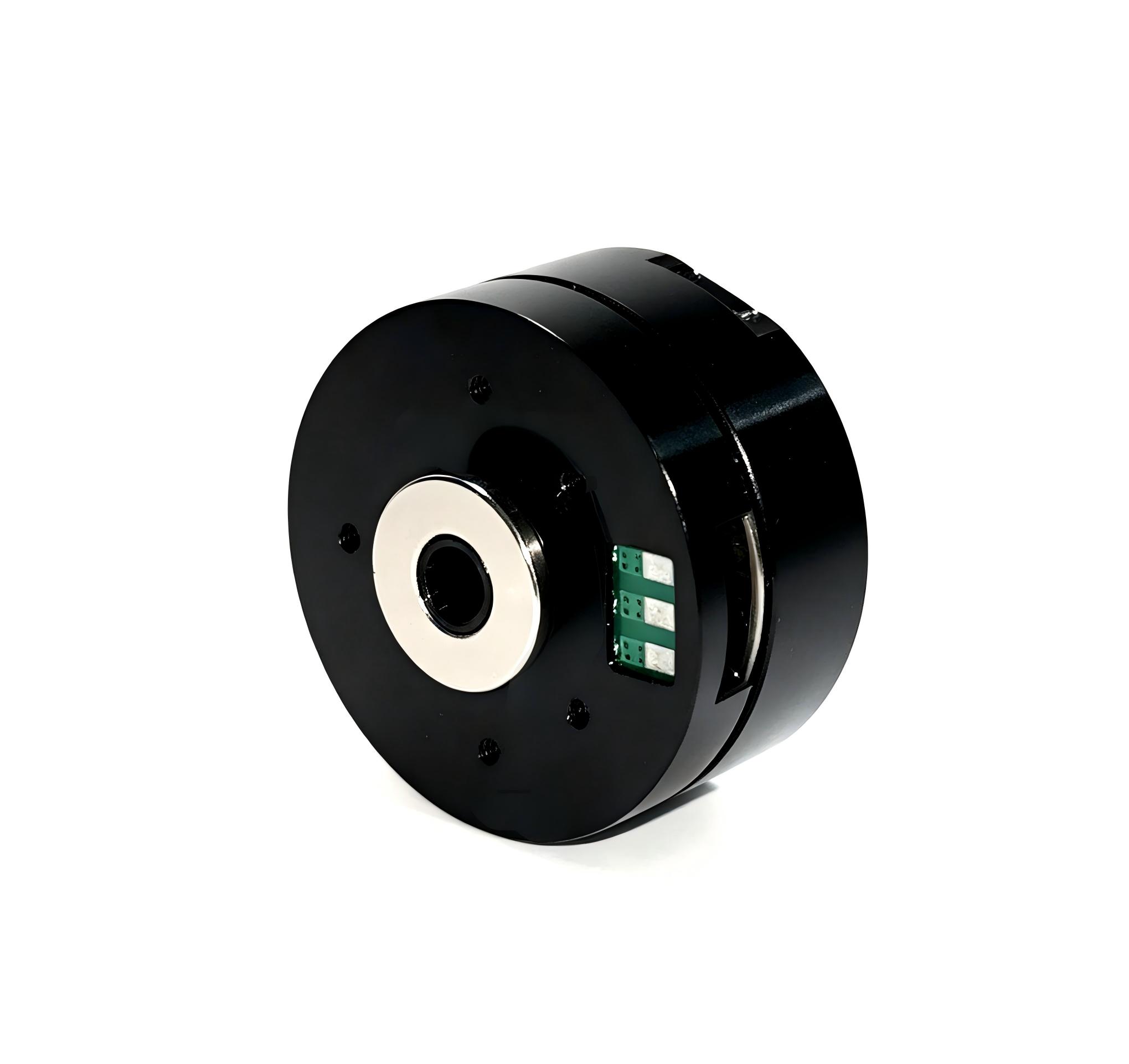
Most stabilizers do a decent job of erasing big shakes, but the real difference shows up in the tiny, almost involuntary movements—the slight wrist drift, the micro-adjustment when you shift your weight, the faint tremor that creeps in after holding a shot for thirty seconds. A proper rotor balancing pass tunes out that nervous energy at the source, not by smearing the image with software, but by making the physical gimbal axis settle into a near-neutral state where every motor works less and every frame holds steadier.
That neutral state is why two gimbals with identical specs can feel completely different in the hand. When the rotor is balanced correctly, the motors aren't constantly fighting gravity or correcting a leaning payload. They're just maintaining, barely warm, barely audible. The result is footage that doesn't have the telltale overcorrected wobble or the slow drift back to center. Instead, it floats—small pans breathe, handheld walking takes on a calm, deliberate weight, and even static shots lose that edgy, caffeinated micro-jitter.
Getting there takes patience more than gear. You balance one axis, lock it, then the next, nudging the plate a millimeter at a time until the camera holds any position without power. Some shooters skip this because it feels tedious, but the penalty shows up immediately in the edit. A well-balanced rotor doesn't just stabilize footage; it removes the subconscious anxiety baked into every frame shot on an under-tuned rig.
Bearing preload choices that let a gimbal settle instead of wobble
Getting a gimbal to hold still comes down to how much axial load you push into the bearing races. Too little preload and the inner ring drifts microscopically under changing loads, which turns into a visible shimmer at the end of the lens. Too much preload and the whole assembly fights itself, warming up and losing that easy, damped return to center.
A useful trick is to start from a known loose state and tighten the retaining collar only until a slow, steady rotation no longer shows any free play. From there, add a quarter turn at most, then let the gimbal sit under its own weight for a few minutes. If it still settles back cleanly after a nudge, you have found the band where friction and support balance without the bearing becoming a small brake.
For gimbals that see rapid direction changes, a slightly heavier preload on the pitch axis often helps more than adding damping grease. The reason is straightforward: a small, consistent drag across the bearing spread reduces micro-overshoot, while grease alone tends to vary with temperature and shear rate. Target a preload that leaves no perceptible end play, then back off just enough that the moving frame does not spring back with any elastic rebound.
Torque ripple screening before motors reach the assembly bench
Torque ripple rarely announces itself until the motor is mounted, wired, and already part of a subsystem. By then, the options are limited: shim the coupling, tweak the drive parameters, or accept the vibration. A screening step before the assembly bench changes that sequence. The idea is to run each motor under a controlled load signature and capture the instantaneous torque output at several electrical cycles, not just the average. Variations that look harmless on a spec sheet become visible as low-order harmonics in the time-domain trace. This pre-bench check separates motors that will feel smooth in the operator's hand from those that will leave a faint buzz in the machine frame.
The measurement setup does not need to be elaborate. A low-inertia brake or a spring-loaded friction pad is enough, as long as the load repeats well across units. The motor is driven through a slow speed sweep while a torque transducer logs the ripple waveform. What matters is not the absolute amplitude alone but the shape and order of the ripple against the commutation sequence. A motor with a consistent 6th-order ripple may still pass, while one with an irregular 2nd-order component is flagged, because that points to rotor eccentricity or uneven magnetization. Operators learn to read these patterns the way a machinist reads a surface finish, quickly and without overthinking.
Putting the screen before assembly also changes how problems are handled. Instead of a rework bench at the end of the line, the motor cell becomes the point of control. Bad units go back to winding, magnet bonding, or bearing seating while the stator is still accessible. Over time, the ripple traces form a useful fingerprint for each build configuration. When a new batch of magnets arrives or a winding tension drifts, the distribution of ripple signatures shifts before functional failures appear. That early warning is the real payoff: not just catching suspect motors, but keeping the whole process from drifting toward the edge of acceptable noise.
Clean assembly areas where one dust speck can ruin a take
A single speck drifting through the air lands on a lens or a sensor, and the shot is gone. In clean assembly areas for camera gear, film scanners, or optical drives, dust isn't just a nuisance; it's the difference between a usable frame and a reshoot. The workbenches here are wiped down with lint-free cloths before every session, and the tools never leave their sealed trays until the air has settled. Operators wear grounded wrist straps and keep their sleeves rolled tight, not for safety theater but because even a thread of cotton can scatter into a million invisible particles when you least expect it.
The air itself is the real enemy. These rooms run on filtered positive pressure, pushing clean air out through door gaps so unfiltered air can't creep in. Humidity sits at a careful middle ground: too dry and static makes dust cling to every surface, too damp and microdroplets leave residue on polished glass. Before any assembly starts, a particle counter takes a ten-minute reading in the exact spot where the work will happen. If the number ticks above a set threshold, the task waits. That's less about rules and more about respecting how one stray fleck can turn a twenty-minute calibration into a full teardown.
Even the simple act of opening a package gets its own ritual. Tape is cut with ceramic blades that don't shed adhesive fibers. Bags are opened under a gentle downward airflow so any trapped particles fall away from the parts. And before a component moves from tray to assembly, it gets a quick pass with an ionizing blower, neutralizing the static charge that could otherwise pull dust from across the room. It's slow, deliberate work that looks almost paranoid to an outsider. But when a single take costs more than a day of labor, caution isn't paranoia. It's the only way the final image stays clean.
Vibration table runs that mimic a full day of handheld shooting
The vibration sequence is built around accumulated fatigue rather than a single dramatic shock. It starts with the low, rolling motion of a camera carried while walking, then moves into sharper jolts from vehicle travel and finally layers in the faint, high-frequency tremble that appears after hours of gripping the body with tense hands. These shifts happen gradually, so the camera and lens have to keep adapting instead of settling into one predictable frequency.
What makes the run useful is the way small disturbances stack up. A gimbal motor that handles the first twenty minutes without issue may begin to drift after repeated passes over the same mixed pattern. Loose internal screws, damping pads that lose their bite, and connectors that shift under sustained micro-movement all tend to show up only after the test has been cycling for a while.
The table also introduces irregular pauses and sudden direction changes, similar to a shooter repositioning between shots or switching from one grip to another. That prevents the equipment from finding a stable rhythm and gives a much closer read on how it will behave after a genuine day in the field.
FAQ
Even a tiny imbalance that's easy to ignore on a workbench turns into visible micro-jitter once the gimbal is moving a full camera rig. Factory balancing removes the off-center forces before they get locked into the assembly, so the motors aren't fighting themselves while trying to hold a frame.
We check that the winding tension and fill are uniform across every stator slot. If one phase has slightly different resistance or inductance, the motor can feel fine on a quick test but develop uneven torque at certain angles, which shows up as a twitch in slow orbit shots.
Slow movement is the hardest test because it leaves no inertia to mask rough commutation. We run each motor through a low-speed sweep with a sensor mounted to the housing and watch for repeating spikes. A motor that gives clean constant-speed footage will show a flat vibration trace instead of regular peaks.
They can, mainly through changes in bearing preload and magnet strength. If a motor is assembled in a cold room and tested immediately, the numbers won't match what the user gets on a warm outdoor shoot. That's why stabilized temperature testing is part of the final pass before packing.
A light bench spin only tells you about bearing quality. Under load, the rotor can flex slightly and the magnetic gap changes, which causes the motor to lose torque in tiny steps. Factories that test with realistic off-center loads are the ones that end up with motors that don't twitch when you mount a fully rigged cinema body.
If the encoder's zero point is even slightly rotated relative to the motor's magnetic poles, the control loop gets bad position data at certain angles. The gimbal may hold level most of the time but slowly roll or tilt during a pan. Factory alignment locks that zero point so the motor always knows exactly where it is.
Each motor is run through a controlled spin-up while a contact sensor and a microphone array record the acoustic and vibration signature. The system compares that signature against a known-good profile. Anything with a bearing tick or uneven brushless hum gets flagged before it can reach a gimbal assembly line.
Conclusion
Gimbal motor factories treat winding tension as a tuning parameter, not a production afterthought. When tension shifts even slightly across coils, slow pans pick up a faint stutter that most users blame on balance or settings. The fix starts at the winding station, where operators monitor pull-off force on every spool and reject motors that drift outside a narrow band. That same attention carries into rotor balancing. A rotor with a few milligrams of asymmetry feels fine on a bench but makes handheld footage restless because the correction loop never fully settles. Shops use dynamic balancing rigs and add or remove tiny weights until residual vibration drops below what a typical gimbal encoder can sense. Bearing preload is chosen with similar care: too tight and the axis sticks before it moves, too loose and the gimbal overshoots and wobbles around the lock position. The best lines set preload by measuring breakaway torque and return swing, so each axis settles without hunting.
Before a motor reaches the assembly bench, torque ripple screening catches cogging that would show up as micro-jerks during slow orbits. Motors are spun under load while a torque trace is compared against a pass/fail envelope, and anything with periodic spikes is pulled. Assembly itself happens in clean areas because a single dust speck trapped in a bearing or magnet gap can turn an otherwise good take into a twitchy frame. Technicians work under laminar flow, keep mating surfaces wiped, and inspect critical gaps before sealing. Finally, every production lot faces a vibration table run that mimics hours of handheld shooting, including walking, handoff, and pan reversals. The table logs drift, resonance, and motor temperature while footage is recorded from a mounted camera. Only after a sample survives the full profile does the batch ship. Those quiet factory decisions are what let a gimbal hold a frame without the nervous micro-corrections that viewers feel even when they cannot name them.
Contact Us
Contact Person: Sean
Email: [email protected]
Tel/WhatsApp: +86-13338694967
Website: https://www.retekmotion.com