

How to Recommend the Right Surge Protective Device for Any Application
2026-08-07
Choosing the right surge protective device isn't just about checking a box—it's about ensuring safety and reliability in the face of unpredictable electrical surges. From industrial plants to home electronics, every application demands a tailored approach. That's where Chang Song steps in, bringing clarity to the complexity with practical, real-world guidance. In this post, we'll break down the key factors you need to consider, so you can make confident decisions for any scenario.
Matching Surge Protectors to Real-World Electrical Threats
Lightning strikes grab headlines, but the day-to-day threats lurk closer to home: motors cycling on and off, grid switching, or even a neighbor’s heavy equipment sending ripples through the line. These transients erode sensitive electronics bit by bit, and a surge protector that can’t clamp fast enough or absorb enough energy is little more than a power strip with a light. Matching the protector to the environment means understanding both the magnitude and the repetition of these events—an industrial workshop with large inductive loads demands a different class of protection than a home office with a laser printer.
Real-world surges don’t all look like textbook impulses. Some ride in on low-voltage data lines, others couple through the ground, and many are differential-mode spikes that ride the hot-to-neutral path. A quality protector will specify its modes of protection and let-through voltage at multiple current levels, not just a single optimistic rating. If the clamping voltage under a 3,000-amp surge is 400V or lower, your gear stands a chance; if the spec sheet only quotes performance at a few hundred amps, you’re guessing. Additionally, consider the response to sustained overvoltage—say, a lost neutral that sends 190V through a 120V circuit. Without thermal disconnects or upstream coordination, many surge protectors fail dangerously.
Longevity is another overlooked dimension. A protector that absorbs a dozen 1,000-volt transients and then loses all suppression capability leaves equipment exposed until someone notices a blinking LED. Look for designs with progressive degradation indicators and replaceable modules if the application is mission-critical. Ultimately, matching a surge protector to real threats isn’t about chasing the highest joule number; it’s about reading the electrical landscape, identifying the dominant transient sources, and choosing a device whose technology—MOV, GDT, SAD, or hybrid—aligns with the frequency, energy, and coupling paths present where you plug in.
Decoding Voltage Ratings Without the Jargon
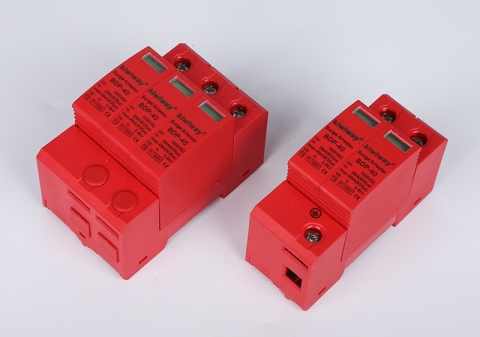
You’ve seen those little numbers on the back of a gadget or etched into a battery—5V, 12V, 240V—but what do they actually mean when you strip away the technical fluff? Most people treat voltage ratings like a secret code that only electricians can crack. In reality, it’s more like water pressure in a pipe: the number tells you how hard the electricity is being pushed through the circuit, not how much is flowing.
Think of a garden hose with a nozzle. If you barely open the tap, the water trickles out under low pressure—that’s a low voltage. Crank it wide open and the water blasts out with force, even if the same amount of water is moving. Voltage works the same way. A 1.5V AA battery pushes with a gentle nudge, while a 12V car battery gives a firm shove. The kitchen kettle that says 240V is getting a seriously strong push, which is why it heats up fast. So the rating isn’t a measure of power, just the potential push behind it.
When you’re picking a power adapter or replacing a battery, matching the voltage rating is about safety and function. Too low and your device won’t wake up—like trying to spray a tree with a dropper. Too high and you risk frying the internals, like blasting a houseplant with a fire hose. Stick to the number the manufacturer printed, and you’re golden. Once you see voltage as a push rather than a puzzle, those cryptic digits start making perfect sense.
Installation Environments That Most Guides Overlook
When you’re reading through an installation manual, the focus is almost always on a clean, climate‑controlled room. But real‑world setups rarely match that ideal. Server rooms tucked into converted closets, equipment mounted in dusty factory mezzanines, or outdoor cabinets exposed to coastal salt spray — these are the environments that silently kill hardware, and they’re rarely mentioned.
Vibration is another overlooked factor. Mounting a storage array near heavy machinery or railway lines introduces microscopic stress that eventually loosens connectors and cracks solder joints. High‑humidity basements cause creeping corrosion on exposed circuitry, and the subtle temperature swings in unconditioned attics accelerate capacitor wear far beyond published MTBF figures. Without addressing these conditions, even the best gear fails early.
The fix isn’t always a full HVAC overhaul. Sometimes a simple conformal coating on circuit boards, vibration‑dampening mounts, or a filtered positive‑pressure enclosure is enough. But you have to know the threat exists first — and most guides skip that step entirely.
When Standard Protection Isn’t Enough
Basic security measures often assume a predictable threat landscape. Firewalls and antivirus software, while necessary, address known attack signatures and perimeter breaches. The problem arises when adversaries pivot to methods that slip past these defenses—targeted phishing, zero-day exploits, or insider threats rarely trigger standard alarms. Relying exclusively on foundational tools creates a false sense of safety, leaving gaps that are invisible until a breach occurs.
Real-world incidents repeatedly show that compliance checkboxes don’t equal resilience. An organization might meet every regulatory requirement yet still fall victim to a carefully crafted social engineering campaign. Standard protection is built for mass-market threats; it isn’t designed to catch the subtle, slow-burn intrusions that prize patience over speed. When your risk profile includes proprietary data, critical infrastructure, or high-profile personnel, off-the-shelf solutions simply can’t keep pace with a motivated attacker’s creativity.
Closing these gaps demands a shift in mindset—from assuming you’re protected to continuously verifying that protection holds. This means layering behavioral analytics, deception technology, and human-led threat hunting on top of standard controls. It also requires accepting that no single product will ever be a silver bullet. The goal isn’t to replace what you have but to augment it with capabilities that make your environment hostile to the kind of threats that thrive in the space where standard protection ends.
The Overlooked Factor That Keeps Equipment Running
It's not the latest lubrication formula or the most expensive monitoring sensors that keep machinery humming year after year. Often, the real hero is something far more mundane, something that gets ignored precisely because it's so basic: the humble routine of daily, hands‐on inspections. When a technician walks the floor and actually listens to a bearing, feels for unusual heat, or spots a tiny leak before it becomes a flood, they're practicing a form of preventive care that no automated system can fully replicate. This human touch, built on familiarity and intuition, catches the subtle anomalies that algorithms and dashboards miss, turning a five‐minute walkaround into the most cost‐effective maintenance strategy you already have but probably underfund.
Consider how this plays out in the real world. A vibration sensor might alert you after a bearing has already started to degrade, but a trained ear can detect the faintest change in pitch weeks earlier, often during a casual pass‐by that isn't even a scheduled check. The same goes for thermal imaging: a camera can show you a hot spot, but it won't tell you that the heat is coming from a misaligned guard rubbing against a shaft—something an operator notices instantly when they brush against it. These small discoveries compound over time, creating a feedback loop where the people closest to the equipment become its most reliable diagnostic tool. Yet many organizations sideline this practice in favor of software dashboards, forgetting that data is only as good as the eyes and ears feeding it context.
The neglect of basic walkaround inspections isn't just a maintenance oversight—it's a cultural one. When teams are incentivized to log hours in front of a screen rather than on the shop floor, they lose the tactile connection that makes them effective. Rebuilding that connection doesn't require a new app or a costly training program; it starts with leaders who model the behavior, carrying a flashlight and a rag, and who genuinely ask operators what they noticed today. The equipment that runs longest isn't necessarily the most advanced. It's the equipment that gets looked at, listened to, and cared for by people who know its every quirk. That's the overlooked factor, and it costs nothing except time and attention.
Avoiding Spec Mistakes That Lead to Early Failure
The most dangerous spec mistakes aren't the obvious ones—they're the assumptions nobody realizes they're making. A team will nod along to a requirement like "fast response times" without ever pinning down what that means in milliseconds under peak load. Six months later, the system crumbles under real traffic, and everyone is shocked. Locking down measurable, testable criteria early isn't bureaucracy; it's the difference between building a product and building a ticking time bomb.
Another silent killer is treating specs as frozen artifacts. No matter how thorough the upfront planning, you'll discover unknowns once engineering starts. Smart teams build revision rhythms into the process—weekly spec reviews that aren't about blame but about realignment. When a constraint shifts (and it always does), the spec should flex with it, not become a straightjacket that forces terrible compromises just to hit some idealised plan.
Finally, watch out for the missing "why" behind each requirement. If a spec reads like a laundry list of features without context, implementers will fill the gaps with their own interpretations—often wrong ones. Pair every must-have with a crisp rationale: not a novel, just a sentence that connects the feature to a user pain point or business goal. This tiny habit catches incoherent priorities before they become expensive detours, and it turns a spec from a command into a compass.
FAQ
Start by determining the system voltage and configuration—single-phase, split-phase, or three-phase wye/delta. This ensures the SPD’s maximum continuous operating voltage (MCOV) is properly matched to the nominal voltage plus any expected fluctuations, so it won’t prematurely conduct or fail.
Consider where the device will be installed. Type 1 SPDs are intended for line side of the main service entrance and can handle direct lightning currents, making them suitable for buildings with external lightning protection. Type 2 units go on the load side of the main breaker and are perfect for distribution panels or subpanels to protect sensitive electronics downstream.
A single SPD at the service entrance defends against external surges, but internal switching events and longer wire runs can still produce damaging transients deeper in the facility. A cascaded approach—SPD at the main panel combined with point-of-use protection for critical loads—gives you layered defense and significantly lowers the risk of equipment damage.
It indicates how much transient current the device can safely divert without failing. For most commercial applications, look for a rating of at least 80–100 kA per phase. High-exposure sites, like those with overhead power lines or frequent storms, benefit from ratings of 200 kA or more to ensure longevity and robust protection.
VPR tells you the let-through voltage that downstream equipment will actually see during a surge. Lower VPR means the SPD clamps more aggressively. Match it to the withstand voltage of your sensitive gear—for example, IT and medical equipment often need VPR of 600 V or less to avoid latent damage.
Many quality SPDs come with end-of-life indicators—LED status lights, audible alarms, or dry contacts that tie into building management systems. These let facility staff instantly know if a module needs replacement, so you’re never running unprotected. Some even have replaceable cartridges to minimize downtime.
Insist on UL 1449 4th Edition listing, which covers both Type 1 and Type 2 SPDs and includes rigorous safety and performance testing. For data lines or communication circuits, look for UL 497B. These certifications ensure the SPD has been verified to interrupt fault currents safely and survive repeated surges without creating a fire hazard.
Conclusion
Recommending a surge protective device isn’t about grabbing the highest joule rating off the shelf. It starts with matching the protector to the specific electrical threats a site actually faces. A facility near heavy industrial switching sees different transients than one in a lightning-prone region, and voltage ratings need to be decoded without getting lost in jargon. Look beyond nominal voltage—consider the temporary overvoltage the device can handle and how it reacts under real fault conditions. Installation environment is another layer that most guides barely touch: a damp basement, a rooftop panel, or a tight control cabinet each requires a different form factor and connection method to stay reliable over time.
Often, standard protection falls short when sensitive equipment is involved or when operational continuity can’t be compromised. That’s when you weigh factors like let-through voltage and coordination with downstream protectors. Yet the overlooked factor that truly keeps equipment running is simple: how the SPD integrates with the grounding system and whether its leads are kept short and straight. Finally, sidestep the spec mistakes that cause early failure—like undersizing the surge current rating or ignoring end-of-life indication. A recommendation that blends these details, rather than relying on a one-size-fits-all approach, is what separates a lasting solution from a call-back waiting to happen.
Contact Us
Contact Person: Tonglun Chen
Email: [email protected]
Tel/WhatsApp: 8618906642555
Website: https://www.cncsele.com