
Import AGV Compatible Pallet Supplier: A Complete Guide to Quality Sourcing
2026-06-28
Sourcing AGV-compatible pallets might seem straightforward—until you factor in precision tolerances, material durability, and dynamic load requirements that can make or break your automated workflows. Behind every smooth-running fleet is a supplier who understands that a pallet isn't just a static platform; it's an integral part of your automation ecosystem. Whether you're retrofitting an existing facility or scaling up a brand-new operation, the right partner can mean the difference between seamless integration and costly downtime. That's where Lanyuda comes into focus, combining deep manufacturing expertise with a quality-first approach that's rare in the industry. In this guide, we'll walk you through what to look for, common pitfalls to avoid, and how to secure a supply chain that keeps your AGVs moving without surprises.
Decoding AGV-Compatible Pallet Design Essentials
Getting the pallet design right for automated guided vehicles isn't just about slapping on a few sensors or following a generic template. The real challenge lies in understanding how these machines perceive and interact with their load. Unlike forklifts that rely on human judgment, AGVs depend on precise geometry, consistent material properties, and clearly defined pick-up points. Factors like the pallet’s bottom deck height, chamfered entry edges, and even the color of the material can make or break a seamless workflow. Overlooking these details often leads to misalignment, dropped loads, or unnecessary system halts—problems that directly eat into operational efficiency.
Durability meets data in the modern pallet ecosystem. It’s not enough to withstand a 1,500-kilogram load; the structure must also support embedded tracking mechanisms without compromising strength. Plastics, reinforced composites, and hybrid wood-polymer designs are gradually replacing traditional lumber because they offer cleaner surfaces and reduce particle shedding—critical in environments where sensor contamination is a constant threat. Smart pallets with integrated RFID tags need carefully molded recesses to prevent damage during handling, while vibration dampening inserts help protect sensitive electronics during transit. Every groove and reinforcement rib must serve a dual purpose, enabling the AGV to lock in confidently while preserving long-term asset longevity.
Standardization often clashes with customization, and that’s where many operations stumble. While ISO base dimensions provide a starting point, real-world applications demand tweaks to suit specific AGV lifting mechanisms or warehouse racking profiles. Working directly with pallet manufacturers to iterate on prototypes pays off immensely, especially when testing dynamic stability during acceleration and tight turns. Engineers are now using simulation software to analyze load distribution and stress points before a single physical unit is produced, which speeds up the feedback loop considerably. Ultimately, the most successful pallet designs are born from a blend of material science, automation logic, and a willingness to challenge assumptions about what a simple platform can accomplish.
Vetting Overseas Suppliers Beyond Basic Certifications
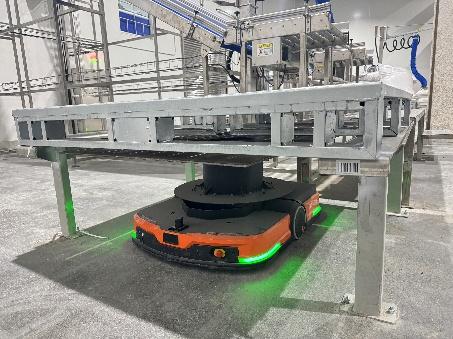
When evaluating potential overseas partners, many businesses stop at the surface level of ISO certificates or industry accreditations. While these documents can indicate a baseline of compliance, they rarely paint the full picture of a supplier’s operational reality. Audits and certifications can be outdated, borrowed, or simply irrelevant to the specific demands of your product category. Instead of treating a certificate as a seal of reliability, dive deeper into the supplier’s actual manufacturing environment, their raw material sourcing practices, and the consistency of their output across multiple production cycles. A factory that truly meets your standards will have no problem facilitating unannounced inspections or providing detailed traceability reports that go beyond the paper trail.
Another critical yet often overlooked aspect is the supplier’s financial health and their track record with other international clients. A supplier might have all the right certifications but still be on the verge of bankruptcy, leading to sudden production halts or compromised quality. Request references from long-term clients in your region, and don’t shy away from asking hard questions about their experience with delays, defect rates, and communication hurdles. Furthermore, investigate the management team’s expertise and the company’s investment in technology and workforce training. A supplier that continuously upgrades its equipment and upskills its workers is more likely to adapt to your evolving requirements and maintain quality over time.
Cultural and logistical alignment is equally important but frequently underestimated. Even a technically proficient supplier can fail if there is a fundamental mismatch in business ethics, communication styles, or expectations around intellectual property protection. Spend time on the ground, if possible, to observe the working conditions and the overall corporate culture. Are workers treated fairly? Is there a genuine commitment to sustainability, or just a polished policy statement? Additionally, assess their logistical infrastructure—port proximity, packaging standards, and capacity to handle peak-season demands. By weaving these qualitative assessments into your vetting process, you build a supplier relationship that goes far beyond what any certificate can guarantee, setting the foundation for a resilient and transparent global supply chain.
Material Science Impacts on Automated Handling Efficiency
The selection of lightweight yet robust materials directly shapes the speed and precision of automated handling systems. Advanced composites and high-strength alloys reduce inertial loads on robotic arms, allowing for faster cycle times without compromising positional accuracy. For instance, carbon fiber reinforced polymers offer exceptional stiffness-to-weight ratios, enabling conveyor components and grippers to move swiftly while maintaining structural integrity under repetitive stress. This intrinsic property minimizes energy consumption per operation, as less power is required to accelerate and decelerate moving parts, directly boosting overall throughput.
Surface engineering at the material level dramatically influences gripper reliability and product safety. Tailored coatings and textured surfaces can regulate friction coefficients, ensuring secure handling of diverse items ranging from delicate glass to oily metal sheets. Anti-static additives in polymer belts prevent dust attraction and electrostatic discharge, which is crucial in electronics assembly. Moreover, self-lubricating materials embedded within sliding mechanisms reduce maintenance interventions, keeping automated lines running continuously and lowering unplanned downtime—a direct efficiency multiplier.
Finally, material durability extends system lifespan and adapts to harsh operating environments. Corrosion-resistant stainless steels in washdown zones withstand aggressive cleaning chemicals without degrading, preserving precise alignment of sensors and actuators. Smart materials like shape memory alloys can enable adaptive gripping without complex actuation, reacting to thermal changes or varying part shapes. By preemptively integrating such material innovations, facilities achieve higher repeatability and fewer stoppages, translating directly into sustained high-efficiency automated workflows.
Custom Engineering for Seamless Fleet Integration
We don't believe in one-size-fits-all solutions. Our engineers dive deep into your operational workflows, vehicle types, and existing infrastructure to craft tailored integrations that feel native to your fleet. Whether you're managing electric delivery vans or long-haul trucks, every bolt-on and software tweak is designed to eliminate friction and keep your teams moving without disruption.
The complexity of modern telematics, telemetry, and onboard systems demands more than off-the-shelf adapters. We build custom middleware and hardware bridges that translate between proprietary protocols, ensuring real-time data flows from any asset into your central dashboard. This means no blind spots, no manual workarounds—just a unified view of your entire operation.
True integration also means sustainability over time. As your fleet evolves, our engineering support adapts with you, providing firmware updates, retrofitting kits, and scalable architectures that dovetail with future acquisitions. You get a partnership that treats your fleet as a living ecosystem, not a static project.
Navigating Hidden Costs in Global Pallet Sourcing
When you first dive into global pallet sourcing, the quoted price per unit can be deceptively attractive. What doesn’t show up on the invoice is the rollercoaster of freight charges—bulk shipping rates that shift with fuel surcharges, port congestion fees, or even peak season surcharges. A container that sailed smoothly last quarter might now require a premium to secure space, and if your order gets bumped to a later vessel, the resulting stockout can ripple through your operations, forcing costly air freight for other supplies just to keep lines running.
Customs and phytosanitary rules add another layer of expenses that rarely make it into the initial budget. Wood pallets need ISPM 15 compliance, meaning they must be heat-treated or fumigated and stamped accordingly. But stamping isn’t always a guarantee—some countries require additional inspection upon entry, and if a shipment gets flagged, you’re suddenly paying for quarantine storage, re-export, or even destruction of the goods. Then there’s the murky area of tariff codes: a pallet might be classified as “wood packaging” or “forest product,” and the wrong choice can lead to backdated duties and fines that wipe out any upfront savings.
Beyond logistics, the pallet’s lifecycle often reveals hidden quality costs. A bargain price might come from unseasoned timber that twists and splinters faster, leading to more frequent replacements and damaged inventory during transit. There’s also the sustainability angle—companies touting green supply chains can face a backlash if the carbon footprint of shipping heavy pallets long-distance contradicts their environmental pledges. Smart sourcing means looking past the unit cost and calculating total landed cost, including the less obvious expenses that materialize weeks or months after the pallets arrive.
Building a Resilient Supply Chain Through Strategic Partnerships
Strategic partnerships transform supply chains from fragile links into resilient networks. By aligning with suppliers who share your commitment to agility and transparency, you create a buffer against disruptions. It's not just about signing contracts; it's about cultivating relationships where both parties proactively share risk forecasts and invest in joint contingency planning. When both sides understand each other's operational rhythms, the entire chain flexes rather than breaks under pressure.
Diversifying your partner portfolio adds another layer of protection. Relying on a single source for critical components is a gamble most industries can no longer afford. Smart businesses build a web of trusted collaborators across different geographies and specialties, ensuring that a regional crisis or a sudden demand spike doesn't halt production. These partnerships aren't merely transactional—they're collaborative ventures where knowledge and resources flow both ways, leading to innovative solutions that strengthen the entire ecosystem.
True resilience comes from shared values and long-term vision. When partners are integrated into your strategic planning, they become more than vendors—they become allies in navigating uncertainty. This means co-investing in technology that provides real-time visibility, designing flexible agreements that adapt to market shifts, and fostering a culture of mutual accountability. In the end, a supply chain built on trust and shared purpose doesn't just survive crises; it emerges stronger, turning potential weaknesses into competitive advantages.
FAQ
AGV-compatible pallets are specially designed for Automated Guided Vehicle systems in warehouses and factories. Unlike standard pallets, they have precise bottom configurations—often with flat or specific runner layouts—to interface reliably with AGV lifting mechanisms, sensors, and navigation. The dimensional accuracy and weight distribution are tighter to prevent misalignment during automated handling, which can cause system downtime.
Material determines load capacity, durability, and compatibility with cleanroom or food-grade environments. Common options include sturdy plastics like HDPE, reinforced wood composites, or metal. Imported pallets must also comply with international phytosanitary standards (ISPM 15) if wood is used, and harsh shipping conditions demand that the material resists warping and moisture damage.
Focus on a double-faced or perimeter-base design that provides stable support for various AGV types. Anti-slip surfaces or rubber grommets help grippers or forks engage securely. Rounded corners reduce the risk of snagging on guide rails, and integrated RFID slots or tracking tags are often necessary for automated inventory systems—confirm the supplier can accommodate these without compromising structural integrity.
Request detailed specs and CAD drawings early, and ask for samples tested on your specific AGV model. Legitimate suppliers will share ISO 9001 certifications, third-party load-test reports, and references from past AGV automation projects. A factory audit—virtual or in-person—should check their injection molding or fabrication precision, especially for flatness tolerances under ±1 mm, which is non-negotiable for AGV stability.
Without planning, you may face pallet deformation due to container stacking pressure during sea freight, unexpected customs delays due to untreated wood packaging, or higher total cost from dimensional weight charges if pallets aren't nestable/stackable. Always simulate the shipping configuration and confirm the Incoterms clearly, as pallets often occupy significant volume and can rapidly inflate freight spend.
Yes, but customization—altered dimensions, embedded sensors, or conductive additives for ESD protection—adds 4 to 12 weeks to standard lead times. Work with suppliers who have in-house design teams and rapid prototyping capabilities. For import, factor in additional time for tooling validation and sea shipping. Avoid over-customization that locks you into a sole-source vendor; retain small dimensional flexibility if your AGV fleet might evolve.
A cheap pallet that fails early or damages AGV sensors is far more expensive in the long run. Calculate the per-trip cost based on lifecycle cycles, repair frequency, and compatibility with automated loading/unloading. Include freight, duties, inspection fees, and potential pallet pooling service integration. A slightly higher upfront cost for thicker wall sections or UV-stabilized material often pays back within two years through reduced replacement and less downtime.
Conclusion
Sourcing AGV-compatible pallets demands attention to design details often overlooked in standard logistics. The pallet’s geometry—including bottom support configurations and dimensional tolerances—must align precisely with automated guided vehicle specifications to prevent jams and misalignments. Without a thorough grasp of these design essentials, even high-quality materials fail to deliver reliable performance. When vetting overseas suppliers, checking certificates is only the starting point; real assurance comes from auditing their production processes, material traceability, and experience with automation interfaces. The materials themselves, from recycled plastics to reinforced composites, directly influence handling efficiency. A resin formulation that resists warping under load or harsh washdown cycles can dramatically reduce downtime in automated environments, making material science a core criteria rather than an afterthought.
Custom engineering bridges the gap between a generic pallet and one that fits your AGV fleet like a key in a lock. It’s not just about dimensions; it involves fine-tuning features like anti-slip surfaces, RFID embedment pockets, and stackability parameters. However, global sourcing introduces hidden costs that can erode these gains—shipping surcharges, import duties, and the expense of local modifications. Smart buyers map the total cost of ownership, including potential retrofitting and inventory fluctuations. Finally, resilient supply chains are built on strategic partnerships rather than transactional buying. Collaborating closely with a supplier who understands your automation roadmap ensures consistent quality and the agility to scale without disrupting operations. This approach turns the pallet supply into a competitive advantage, not a recurring headache.
Contact Us
Contact Person: Johnny
Email: [email protected]
Tel/WhatsApp: +86 18151010686
Website: https://lydstorage.com