

Industrial Ceiling Fan Manufacturing: Advancements Shaping the Industry
2026-07-02
Industrial ceiling fans have come a long way from simple air circulators. Today, manufacturing innovations are redefining efficiency, design, and smart integration. As factories and warehouses demand more sustainable climate control, VINDUSFAN stands at the forefront, blending engineering breakthroughs with real-world performance. This shift isn’t just about bigger blades or stronger motors—it’s a quiet revolution in how we move air. Let’s explore the advancements that are reshaping the industry and what they mean for modern facilities.
Redefining Airflow: How Blade Design Innovations Boost Efficiency
The geometry of a blade dictates how air moves around it, and even subtle adjustments can drastically alter performance. Modern designs leverage biomimicry, taking cues from the silent flight of owls or the efficient propulsion of whale flippers. By incorporating serrated edges, curved winglets, or variable pitch angles, engineers can reduce turbulent wake and direct airflow more precisely. This not only cuts energy loss but also minimizes noise — a critical advantage in everything from ceiling fans to jet engines.
Smart Motors and IoT Integration: The Future of Ceiling Fan Control
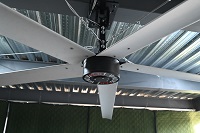
Modern ceiling fans have evolved far beyond simple on-off switches and pull chains. At the heart of this transformation lie smart motors paired with Internet of Things (IoT) integration. These advanced motors, often brushless DC models, offer exceptional energy efficiency and whisper-quiet operation while allowing for granular speed adjustments that weren't possible with traditional AC motors. When connected to a home network, they become part of a larger ecosystem, capable of responding to a variety of inputs that make daily life more comfortable without any manual intervention.
The true intelligence emerges from how these systems communicate. Built-in sensors detect room temperature, humidity, and even occupancy, feeding data to algorithms that automatically adjust fan speed and direction. During a hot afternoon, the fan might spin faster to create a cooling breeze; as the air conditioner kicks in, it can slow down to maintain steady airflow without overcooling. IoT connectivity also means you can control these functions from afar—turning on a fan before you arrive home or integrating it into a “good night” routine that gradually reduces speed as you fall asleep, all managed through a simple app or voice command.
Beyond personal comfort, this technology supports broader energy management goals. By tying into smart grids and real-time utility pricing, ceiling fans can optimize operation during peak hours, reducing strain on the electrical system and cutting costs. Moreover, the data collected over time offers insights into usage patterns, enabling the system to anticipate needs and self-adjust with remarkable precision. It’s a seamless blend of hardware and software that turns a household staple into an intelligent, proactive component of the modern smart home—one that learns, adapts, and contributes to both sustainability and everyday ease.
Sustainable Materials in Manufacturing: A Greener Spin
Manufacturers are increasingly swapping traditional inputs for renewable, recycled, or biodegradable materials, reducing reliance on virgin resources and lowering carbon footprints. From bioplastics derived from corn starch to reclaimed metals and even mushroom-based packaging, these alternatives often require less energy to produce and can break down more safely at end of life. For many companies, the shift isn’t just about compliance—it’s a chance to rethink product design from the ground up, incorporating circular principles that keep materials in use longer.
The move toward sustainable materials also opens up new avenues for innovation in supply chains. Instead of sourcing raw materials from distant mines or oil wells, manufacturers are turning to local waste streams—turning agricultural byproducts into textiles, or construction debris into new building panels. This not only cuts transportation emissions but also builds resilience against price swings in commodity markets. Adopting these inputs often requires re-engineering processes, yet the payoff can be significant: lighter, stronger products and a story that resonates with eco-aware customers.
Of course, replacing conventional materials isn’t always seamless. Durability, performance, and cost can be hurdles, and not every green alternative is truly better when viewed through a full lifecycle lens. Smart manufacturers are tackling this by collaborating with suppliers to develop custom solutions, investing in research, and transparently measuring environmental impact. The goal isn’t perfection on day one, but steady progress—each material swap a step toward a manufacturing model that works in harmony with the planet rather than against it.
Noise Reduction Breakthroughs: Engineering Quieter Operations
Silence isn't just the absence of sound; in modern engineering, it's a deliberate, hard-won achievement. The quest for quieter operations has moved beyond simple mufflers and insulation, diving into the physics of noise at its source. Engineers now manipulate vibration modes with precision, using metamaterials that bend or absorb sound waves in ways natural substances never could. These aren't incremental tweaks but fundamental shifts—turning noisy machinery into something approaching acoustic invisibility.
A key breakthrough lies in active noise cancellation, now scaled up from headphones to entire industrial environments. By deploying arrays of sensors and speakers that emit precisely inverse sound waves, they create zones of destructive interference. But the real magic is in the algorithms: machine learning models that predict and adapt to changing noise signatures in real time, cancelling out the roar of a jet engine test cell or the hum of a power transformer without muffling the important signals that operators need to hear.
On the materials frontier, bio-inspired designs are rewriting the rules. Surfaces modeled after owl wings—serrated, porous, and impossibly soft—disrupt turbulent airflow almost completely. When applied to wind turbine blades or computer fans, these shapes slice through air with a whisper instead of a whoosh. Meanwhile, structural acoustic engineers are embedding micro-perforated panels and resonant chambers into walls and machine housings, trapping specific frequencies without adding bulk. The result isn't just quieter—it's a new kind of mechanical elegance where efficiency and silence become one and the same.
Customization at Scale: Meeting Diverse Industrial Needs
Balancing standard processes with unique requirements is a constant challenge for suppliers serving multiple industrial sectors. Rather than forcing every client into the same framework, effective customization at scale begins by structuring core manufacturing capabilities around flexible modules that can be adjusted quickly. This approach preserves the cost advantages of repeatable production while leaving room for necessary variations in material grades, dimensions, or safety certifications. For a food-grade conveyor system and a heavy-duty mining conveyor, the underlying mechanics may be 80% identical, but the materials, coatings, and documentation paths differ significantly—and those differences must be managed without restarting the design clock.
Achieving this requires smart process architectures that embed configuration logic directly into engineering and quotation workflows. When a new request arrives, predefined rules and parametric models allow teams to generate accurate specifications without custom engineering for every line item. Digital tools that link sales, design, and production data ensure that even highly tailored orders flow through the factory with minimal manual intervention. The result is not just faster delivery, but a portfolio of solutions that genuinely fit the operational realities of industries as varied as automotive assembly, pharmaceutical packaging, and renewable energy component fabrication.
From Factory Floor to Installation: Streamlined Processes
Every journey begins on the factory floor, where precision and planning converge. Here, raw materials are transformed through a choreography of automated machinery and skilled oversight. Components are fabricated with tolerances measured in microns, then meticulously inspected before moving to the next stage. This isn't just manufacturing—it's the deliberate orchestration of quality, each checkpoint designed to catch deviations before they become problems.
From production, items flow into a carefully calibrated logistics chain. Packaging is engineered not merely for protection but for efficient unpacking at the destination. Barcodes and RFID tags link physical goods to digital records, ensuring real-time visibility. Warehousing steps are minimized; instead, components often move directly to staging areas synchronized with installation schedules. The goal is to eliminate idle time and handling, reducing the risk of damage and delays.
At the installation site, the groundwork laid earlier pays off. Pre-assembled modules and clearly labeled parts simplify the work for field teams. Digital instructions, accessed via tablets, guide technicians through each step, while any anomalies are immediately flagged to a central support hub. The result is a seamless handoff from manufacturing to operation—a process so quiet in its efficiency that the complexity behind it remains largely invisible, but the reliability speaks for itself.
FAQ
The shift to brushless DC motors has been huge. They use less energy, last longer, and allow for variable speed control that older AC motors couldn't match. Combined with lightweight, high-strength composite blades, manufacturers can now produce fans that move more air with less noise and lower power draw.
We're seeing a move away from traditional steel and aluminum toward carbon fiber and reinforced polymers. These materials let designers create more aerodynamic blade profiles that weren't feasible before, improving airflow efficiency while cutting overall weight by up to 40%. It also reduces stress on mounting systems, making installations safer and more flexible.
Connectivity is now standard in high-end units. Fans integrate with building management systems over IoT protocols, adjusting speed based on real-time temperature and occupancy sensors. Some models even link to weather forecasts to pre-condition spaces, which can trim HVAC energy use by double digits in large warehouses.
Automated optical inspection and laser-based alignment checks have virtually eliminated human error in assembly. Every motor winding, blade pitch, and balance is verified against digital twins before leaving the factory. This has pushed defect rates below 0.2% for the top producers, which was unheard of a decade ago.
Beyond the motor tech, we're talking about aerodynamic rim designs that recapture air, and integrated variable frequency drives that optimize power use on the fly. New testing standards like AMCA 230 let buyers compare real-world performance, and many facilities now see sub-2-year payback periods from switching to high-efficiency units.
Tall ceilings in warehouses created dead zones, but new destratification modes run fans in reverse at low speeds to pull warm air down in winter. Combined with winglet-equipped blade tips that minimize vortex shedding, they can maintain temperature uniformity within 1°F from floor to 50-foot ceiling, something older models simply couldn't do.
Recent building codes in several states now mandate minimum CFM per watt efficiency ratios for ceiling fans in commercial spaces. That's forced a rapid phase-out of induction motors in favor of electronically commutated motors. Additionally, material recycling targets are making manufacturers adopt modular designs that are easier to disassemble and reuse.
The biggest hurdle is training. Many electricians and facility managers still default to traditional fan sizing and control methods, so manufacturers are investing heavily in app-based configurators and on-site commissioning support. There's also been supply chain tension around rare earth magnets for motors, pushing some to develop alternative rotor designs.
Conclusion
The industrial ceiling fan sector is undergoing a silent transformation, fueled by a wave of engineering and design breakthroughs that reshape performance expectations. Blade geometry is no longer a static compromise; computational fluid dynamics and iterative prototyping have given rise to profiles that maximize air movement while trimming energy consumption, effectively redefining what efficient airflow means for vast factory floors and warehouses. At the same time, the marriage of brushless DC motors with IoT connectivity has turned these utilitarian devices into intelligent assets. Facility managers now adjust speeds via mobile dashboards, schedule operations based on occupancy, and receive predictive maintenance alerts—a far cry from the simple pull-chain control of the past. These advances converge with significant noise reduction innovations, where acoustic engineering has suppressed the hum and rumble traditionally associated with large-diameter fans, making quiet operation a standard feature rather than a luxury.
Shifts in materials and production logic are proving just as impactful. Manufacturers increasingly turn to recycled metals and bio-based composites for blades and housings, cutting carbon footprints without sacrificing durability—a greener spin that aligns with corporate sustainability mandates. The challenge of serving diverse industrial environments, from food processing to heavy machinery assembly, is met through modular customization platforms that allow clients to specify diameter, coating, and control interfaces with minimal lead time. Behind the scenes, lean manufacturing principles and digital twinning streamline the journey from factory floor to installation, slashing waste and ensuring that each fan arrives calibrated to the exact airflow requirements of its intended space. Together, these refinements demonstrate that even mature product categories can be reinvented through meticulous innovation.
Contact Us
Contact Person: Michael Danielsson
Email: [email protected]
Tel/WhatsApp: +1 951 565 7769
Website: https://www.vindusfans.com