
Leveling Jack Supplier Selection Guide for Stable Heavy Equipment Support
2026-11-25
Choosing the right leveling jack isn't just about lifting capacity—it's about keeping heavy equipment stable when a few millimeters of shift can throw off an entire operation. Yet with countless suppliers promising rugged designs, the decision often comes down to details that spec sheets don't reveal. In this guide, we cut through the noise and look at what actually matters for long-term, dependable support. Whether you're outfitting a new trailer or replacing jacks that failed too early, you'll find practical selection criteria here. For teams that prefer working with a manufacturer known for consistent build quality, Homall Industry Limited offers insight into how real-world load conditions shape a jack's design. Let's start with the factors that separate reliable support from expensive guesswork.
Start with Your Heaviest Load, Not the Catalog Rating
Most equipment brochures list a number that looks confident on paper, but those figures rarely survive contact with actual work. Catalog ratings are usually captured under polite conditions: stable voltage, mild temperatures, and a gentle margin that real kitchens, workshops, and job sites simply do not offer. Starting with the heaviest load you genuinely expect to run exposes how a unit behaves when it has no room to hide.
Planning around your biggest draw instead of the printed label leaves fewer chances for surprise. A machine that hits its advertised number on a cool morning may struggle the moment an air compressor or pump demands a sudden surge. By sizing decisions around that harsh, sustained spike, you create the reserve needed to hold voltage steady and avoid tripping breakers. It also forces a more honest comparison, because two products with identical catalog ratings can act very differently under real starting loads.
Watch the first few seconds of heavy demand closely. Dimming lights, sagging rpm, or a brief stumble often reveal weaknesses no spec sheet will ever mention. The catalog number is not worthless; it is simply a beginning. If a unit holds its ground with your hardest-running equipment pulling at once, lighter loads usually take care of themselves.
See the Jack Hold on Uneven Ground Before You Commit
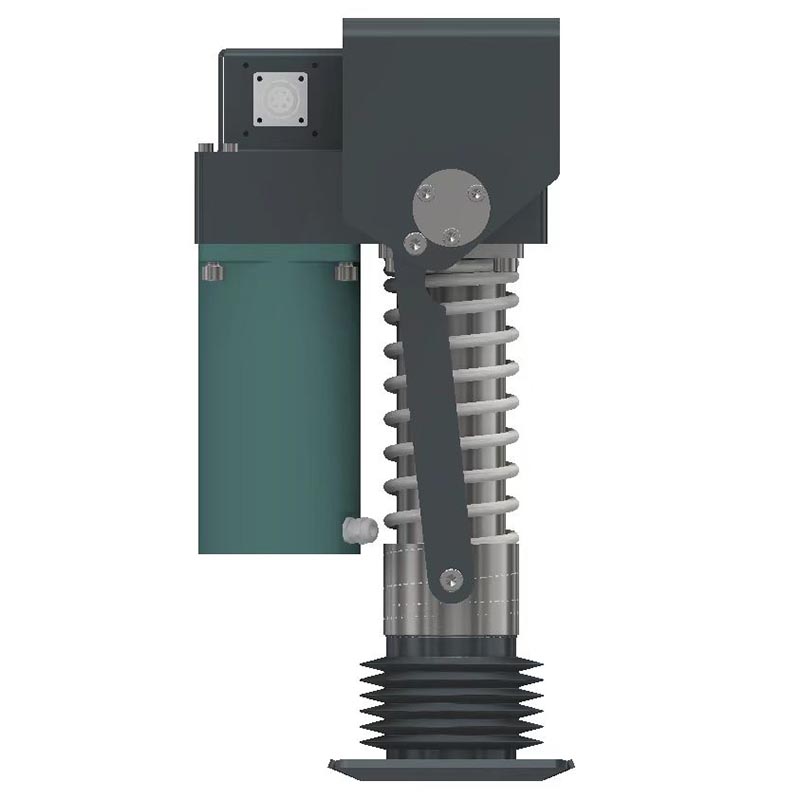
Smooth concrete flatters almost any jack. Before you trust it, set the base on packed gravel, a cracked asphalt edge, or a patch of ground with just enough slope to make you think twice. Watch how the feet settle before you wind anything up. If one corner hovers or the whole unit rocks, that's your answer.
Ground that isn't flat does more than tilt the jack; it can twist the frame once load comes on. A wide, stiff base tends to cope better than a narrow one, but only if it actually stays in contact across the high and low spots. Look for any sideways movement at the lifting point when the first pressure hits.
It takes two minutes on a rough patch to learn what a smooth floor will never show you. If it creeps, digs in, or needs a board under one side just to sit level, keep looking. The places you work won't always be flat, and the jack should be ready for that.
Inspect Weld Quality and Pin Fit Before You Trust the Spec Sheet
A clean spec sheet won’t catch a bad ground, a rushed pass, or a pin that only fits on paper. Before the part goes anywhere near a fixture or load path, put eyes on the actual welds and test the pin fit by hand. The paperwork is a starting point, not a pass.
Look at the weld toes and craters first. Small undercut, trapped slag, or a crater crack can be easy to miss under shop lighting, so use a bright light and a magnifier or dye penetrant on critical joints. Compare the throat size and leg length against the drawing in a few spots, not just the cleanest one. A weld that looks fine from arm’s length often tells a different story up close.
Pin fit is just as telling. Slide the pin in dry and check for binding, slop, or a false start at the chamfer. Use a feeler gauge around the joint if the gap allows, and rotate the pin under light load to feel for tight spots. If the hole is out of round or the pin has a wear ridge, reject it now—it will only get looser or seize after a few cycles.
Ask for Custom Stroke Lengths and Footpad Shapes That Fit Your Fleet
Off-the-shelf specs rarely match the way your crew actually works. Asking for custom stroke lengths lets you tune machine pace to narrow aisles, dense racking, or long open runs, while tailored footpad shapes reduce the awkward repositioning that slows operators down by hour three.
Bring field notes, not just wish lists. When you request a different stroke, reference the exact clearances, floor transitions, and stop frequency your routes demand. For footpads, have taller and shorter operators test a few profiles during a demo period; a subtle taper or extended edge can shift weight distribution and cut fatigue more than a generic larger pad ever will.
Most manufacturers will adjust these details if you ask before the fleet order locks. The goal isn't a one-off prototype for every unit, but a consistent configuration your team can rely on across buildings and shifts.
Find Out What Fails First and How Fast Replacement Parts Arrive
Reliability isn't just about whether something breaks—it's about what breaks first and how long you'll be waiting for the fix. The weakest link often hides in a small O-ring, a specific sensor, or a pump seal. Knowing that part's typical lifespan lets you schedule replacement before it ruins an entire shift.
Once a component does fail, the real test is parts availability. A machine that's down for four hours because a coupling is on a shelf nearby beats one that waits four days for a shipment from overseas. Check local stock, common carrier lead times, and whether the distributor keeps critical spares in the same region.
Warranty terms matter less than actual replacement speed. Brands with regional service vans, third-party repair networks, or overnight airfreight agreements shorten the gap between failure and recovery. Ask for realistic downtime examples from operators running the same equipment, not just catalog promises.
Test the Supplier After the Sale, When It Actually Matters
Anyone can look reliable when the order is on the way. The real signal comes later, when a shipment arrives damaged, a batch falls short of spec, or an invoice doesn't match the quote. That is the moment to watch how a supplier handles pressure. Do they ask questions first or start assigning blame? Do they offer a fix, or do they wait to see how much you will push? These reactions reveal more than any pre-sale promise or polished sample ever could.
A small, deliberate test after the first transaction can be far more useful than a lengthy onboarding checklist. Raise a minor issue, adjust a specification, or request support for a partial return. The goal is not to create conflict but to observe the machinery behind the relationship. Some suppliers treat post-sale requests as an interruption. Others treat them as part of the purchase. The difference becomes obvious quickly, and it determines whether you are working with a vendor or a partner.
It also pays to repeat the test when the stakes are low rather than waiting for a crisis. A supplier who handles a five-unit problem poorly will not suddenly become accountable when the order is five thousand units. Watching behavior after the sale gives you a quiet, practical benchmark. It tells you who will still answer the phone when the easy part is over.
FAQ
Start with load capacity and lift height, but also ask how their jacks behave under off-center loads. Many suppliers quote ideal numbers; you need performance when the ground isn't perfect or the equipment weight isn't evenly distributed.
Request data on settlement and leak-down rates under sustained load. A good supplier will share test results showing minimal drift after 8, 12, or 24 hours, not just a catalog spec.
You can ask for close-up photos or video of critical welds, along with the welding procedure specification and inspector qualifications. Consistent bead appearance, lack of undercut, and traceability of materials tell you a lot.
Not necessarily. A focused range often means the supplier understands a specific application deeply. What matters more is whether they can configure stroke, base plate, and mounting options around your equipment rather than forcing you into an off-the-shelf model.
It is often the difference between a usable jack and a parked asset. Look for clear maintenance intervals, available seal kits, and technical support that can help diagnose instability issues before they become safety problems.
Ask about ground bearing pressure, cribbing, and how their jacks integrate with outriggers or steel mats. Suppliers with field experience will ask you about soil conditions and load distribution, not just tonnage.
They are a baseline. You also need to check whether the jack design has been proof-tested, whether load-bearing components are traceable, and whether the supplier performs batch testing rather than relying only on paperwork.
Give both the same scenario: equipment weight, lift height, floor or ground condition, and duration of support. Then compare their recommended model, blocking requirements, and how they justify the selection. The better supplier usually asks more questions before quoting.
Conclusion
Selecting a leveling jack supplier starts with the equipment you actually run, not the headline capacity on a brochure. Before comparing models, calculate the true static load of your heaviest machine with all attachments, counterweights, and a full tank, then add the dynamic shift that occurs when operators reposition or ground settles. A supplier who only asks for the machine model is guessing. Ask to see the jack under that load on uneven ground, preferably on a slope or loose fill similar to your job sites. Watch how the base plate reacts, whether the cylinder drifts, and whether the locking pins seat without hammering. Weld quality and pin fit often tell you more than a spec sheet: look for full penetration at high-stress joints, consistent beads, and holes that line up without forcing. If the supplier hesitates to let you inspect those details, treat that hesitation as a finding.
Beyond the initial purchase, the useful question is not whether the jack meets a catalog number but how it behaves after months of dirt, rain, and operator abuse. Ask the supplier what breaks first, how often it breaks, and whether common wear parts like seals, pins, and footpads are stocked locally or shipped from overseas. Custom stroke lengths and footpad shapes should be handled without a long engineering review if the supplier truly understands mixed fleets. Finally, test them after the sale: call with a real field problem, request a replacement part, and see if they answer with a person or a ticket number. A leveling jack is a safety item, and the supplier who supports you when a machine is down on unstable ground is the one worth keeping.
Contact Us
Contact Person: Ryan
Email: [email protected]
Tel/WhatsApp: +85259582726
Website: https://www.robomast.com/