

Mesoporous Silica Factory: Inside Advanced Nanomaterial Production
2026-11-03
A single gram of mesoporous silica can harbor a football field’s worth of surface area—and that changes everything from drug delivery to battery life. Inside Zhonglian's mesoporous silica factory, this invisible architecture is produced at scale with nanometer-level control. But how does a facility turn raw silica into precisely engineered pores? The answer lies in a blend of chemistry, automation, and relentless quality testing. We went inside to see how advanced nanomaterial production really works.
Raw Silica, Reinvented at the Nanoscale
For decades, raw silica has been a quiet workhorse in glass, ceramics, and fillers, valued for its abundance and inertness rather than any particular brilliance. But when you shatter it down to particles a few hundred atoms wide, the material stops behaving like ground-up quartz and starts acting like a shape-shifter. Surface area explodes, edges become electrically hungry, and the same silicon-oxygen backbone that once just sat there now bends light, traps molecules, and binds to polymers with unexpected tenacity. It is not a simple size reduction — it is a fundamental rewrite of what silica can be.
The reinvention happens at the interface. Nanoscale silica no longer hides behind bulk passivity; every exposed silanol group becomes a potential hook, every pore a tiny reaction chamber. By tweaking porosity, curvature, and surface chemistry, you can coax hollow spheres that deliver drugs on a timed release, or fumed particles that turn a runny liquid into a stiff gel without adding weight. Some forms are so electron-hungry they act as catalytic sponges, while others, engineered into superlattices, show phonon behavior that bulk glass could never mimic. The raw material is the same, but the rules have changed.
What makes this leap compelling is not novelty for its own sake, but consequence. A coating that scatters UV while staying transparent. A concrete additive that cuts cement use by a fifth and still gains strength. A battery separator that shrugs off thermal runaway. These are not distant promises — they are working demos built from one of the oldest minerals on Earth, rebuilt atom by atom. Raw silica, reinvented at the nanoscale, is less a material story than a reminder that the periodic table still has secrets left to give.
The Sol-Gel Dance: Building Pores Molecule by Molecule
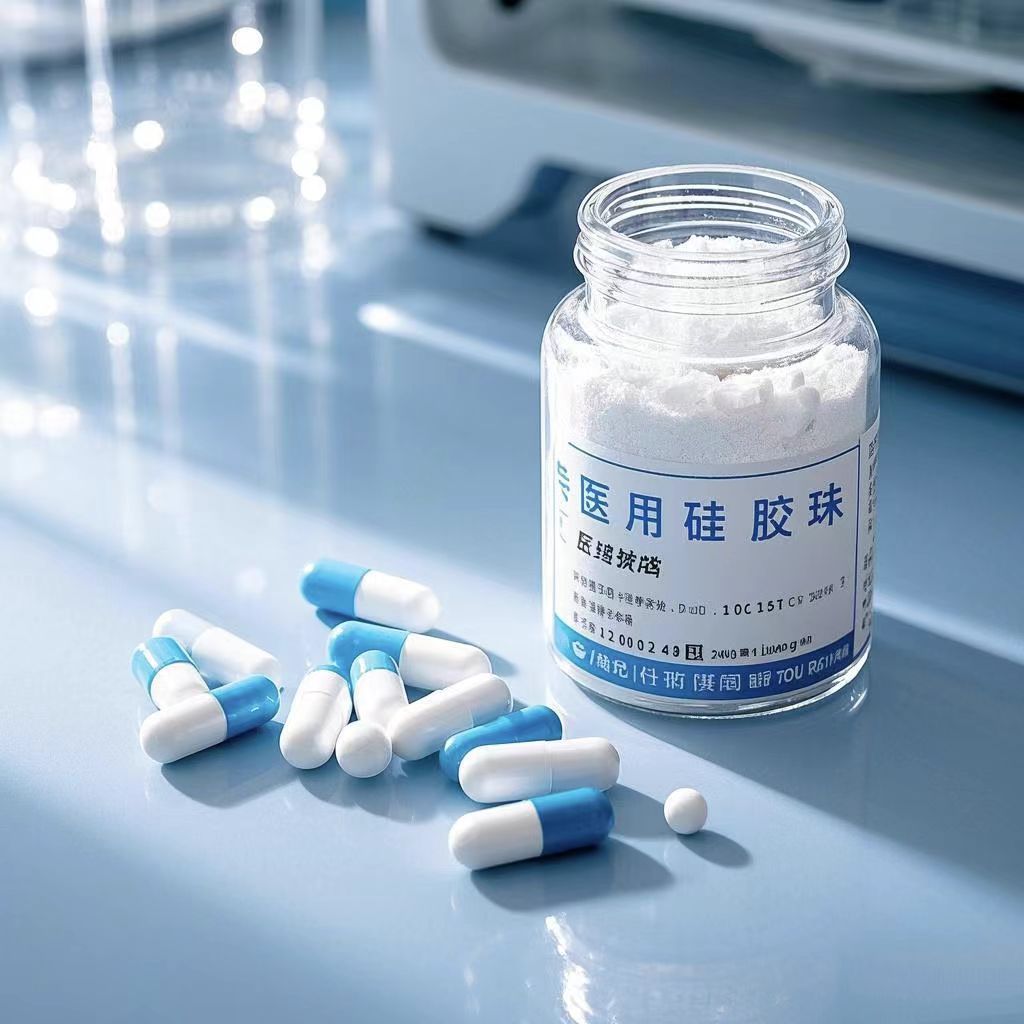
In a sol-gel synthesis, the real choreography starts at the molecular level. Metal alkoxides or metal salts meet water and a mutual solvent, triggering a cascade of hydrolysis and condensation reactions. Each collision between a hydrolyzed monomer and a growing oligomer is a precisely timed step, forming oxo bridges that stretch into a three-dimensional network. The "sol" remains fluid because these clusters stay small and well-dispersed, but as the dance continues, they begin to interlock, raising viscosity until the liquid freezes into a gel — a solid skeleton still brimming with solvent.
What makes this molecular dance so powerful is the way it leaves room for emptiness. As the inorganic network grows, solvent molecules and reaction byproducts become trapped in the interstitial spaces. Later, when the gel is carefully dried or thermally treated, these trapped species depart, leaving behind a labyrinth of pores. The pore size and connectivity are not random: they echo the size of the solvent cages, the length of the oligomer chains, and the tempo of condensation. By adjusting the pH, water ratio, or adding organic templates, you can coax the network to form micropores, mesopores, or a tailored hierarchy of both.
Unlike top-down templating that carves voids out of a solid block, sol-gel builds the solid around the voids, one bond at a time. This inside-out approach yields pore walls with unusually high surface curvature and chemical homogeneity. The result is a material whose porosity is encoded in its molecular assembly — a signature that no etching or drilling can replicate. For catalysts, sensors, and selective membranes, this molecular-level control means the difference between a passive scaffold and an active interface that recognizes molecules by both size and shape.
Pore Size Engineering: Why Two Nanometers Matter
The transition from micropores to mesopores is not a gradual continuum but a sharp boundary at the 2 nm mark, a threshold that fundamentally alters how molecules interact with a porous material. Below this dimension, confinement effects dominate: gases and small molecules experience overlapping potential fields from opposing pore walls, leading to enhanced adsorption energies and size-selective sieving. Above 2 nm, surface interactions weaken rapidly, and transport shifts from activated diffusion to Knudsen or even viscous flow. For catalytic supports, this shift can mean the difference between a reaction controlled by intrinsic kinetics and one limited by pore diffusion, a practical reality that makes precise pore size engineering a cornerstone of modern materials design.
Two nanometers also happens to match the kinetic diameter of many industrially relevant species—light hydrocarbons, small aromatics, and even hydrated ions in aqueous separations. Designing a pore network with a median width just above or below this value can selectively exclude larger contaminants while admitting target molecules, a principle exploited in everything from zeolite membranes to carbon molecular sieves. Yet controlling pore dimensions at this scale is notoriously difficult; a single atomic layer of deposited oxide or a slight change in template chain length can shift the average pore width by several angstroms, completely altering separation performance.
The practical importance of this 2 nm regime is also visible in energy storage. Supercapacitors and battery electrodes rely on pores slightly below 2 nm to maximize accessible surface area while maintaining rapid ion transport. However, if pores are only a fraction of a nanometer too small, desolvated ions can become trapped, leading to irreversible capacity loss. Careful engineering around the 2 nm threshold—often through post-synthesis etching or hierarchical pore architectures—allows materials to balance high surface area with fast kinetics, a delicate compromise that continues to drive innovation in porous solids.
From Lab Bench to Factory Floor: A Controlled Scale-Up
Moving a process out of the lab rarely feels like a simple translation. Bench-scale reactions tolerate quirks that full production cannot, and behaviors that seemed predictable in a flask often shift when vessel geometry, mixing dynamics, and heat transfer change by orders of magnitude. The core challenge is not just repeating a recipe, but redefining it around the constraints and realities of industrial equipment.
A controlled scale-up begins with identifying which parameters actually govern the outcome, rather than assuming every variable scales linearly. Early work focused on dimensionless numbers—mixing time, power per unit volume, surface-to-volume ratios—and on running targeted experiments at intermediate pilot scale. Each step was deliberately small, with analytical data feeding back into the model before the next increase. This staged approach exposed non-obvious failure modes early, such as altered crystal morphology and localized hot spots, without risking a full production batch.
By the time the process reached the factory floor, the operators were not receiving a theoretical transfer package. They had run the same critical control points on the same type of equipment, and the automation sequence had already been validated against real process disturbances. The result was a startup that stayed within specification from the first lot, with no heroic interventions and no silent drift between what the lab promised and what the plant delivered.
Inspection Protocols for Invisible Structures
Inspecting structures that remain hidden after construction—embedded conduits, post-tensioned cables, fireproofing layers, or soil nails behind retaining walls—demands more than a visual sweep. The first rule is to build a traceable map before any covering occurs. Every concealed element gets tagged with its precise coordinates, installation torque, material batch, and the name of the crew responsible. Later, when a wall is closed or a slab is poured, that map becomes the only reliable window into what lies beneath. Without it, even the most advanced scanning tools return ambiguous shadows rather than answers.
Non-destructive testing forms the second layer of the protocol. Ground-penetrating radar, ultrasonic pulse velocity, and infrared thermography each reveal different failure modes—voids in grout, corrosion along rebar, delamination in composite wraps. But these tools only earn their keep when operators calibrate against known reference points and cross-check at least two independent methods. A single radar pass might miss a thin debond; pairing it with a thermal scan under load often exposes the gap. The protocol also sets strict timing: post-tensioned ducts get scanned before stressing, after grouting, and again at 28 days, because invisible problems rarely stay static.
Documentation closes the loop. Every inspection produces a time-stamped record that includes equipment settings, environmental conditions, and raw signal screenshots—not just the final interpretation. When a dispute arises years later, those raw files let a third-party engineer re-run the analysis without relying on someone's memory. The strongest protocols also require a hold point before concealment: no concrete pour, no drywall, no backfill until the invisible work has been signed off by both the installer and the inspector. This simple gate catches most of what later becomes an expensive, destructive excavation.
Beyond the Factory: Where Mesoporous Silica Goes Next
The same pore architecture that made mesoporous silica a workhorse in catalytic cracking and separation columns is now being re-tuned for biological environments. Researchers are loading these particles with small-molecule drugs, siRNA, or imaging agents, then gating the pores with pH-, enzyme-, or temperature-sensitive coatings. The result is a delivery vehicle that stays quiet in circulation but releases its cargo inside a tumor or inflamed tissue, reducing off-target effects without redesigning the drug itself.
Outside the body, mesoporous silica is finding a second life in capture and conversion technologies. Thin films and monoliths with tailored pore sizes are being tested as reversible sorbents for CO2 from dilute streams, while amine-functionalized variants pull heavy metals and phosphate out of contaminated water. In batteries, the material serves as an ion-conducting separator or as a scaffold that keeps silicon anodes from cracking during charge cycles—extending cycle life without adding rare or toxic components.
Less visible but equally practical uses are emerging in agriculture and food packaging. Mesoporous silica can encapsulate pheromones or biopesticides and release them slowly in response to humidity, cutting the number of field applications. In packaging, it scavenges ethylene or moisture to delay ripening and spoilage, replacing synthetic additives with a mineral that is already common in soil. These shifts move the material from a bulk industrial additive to a precision tool in products people encounter daily.
FAQ
Its pores fall in the 2–50 nm range, which puts its internal surface area at hundreds of square meters per gram. That structure changes how it interacts with molecules, making it useful for catalysis, drug delivery, and separation.
You’ll see sol-gel reactors, aging tanks, solvent extraction or calcination ovens, and then milling and classification. The line is often set up for continuous flow to keep batch-to-batch pore structure consistent.
They rely on templating agents—surfactants like CTAB or block copolymers—and tightly controlled hydrolysis conditions. Small shifts in pH, temperature, or stirring can widen the pore distribution, so reactors have inline monitoring.
Usually a silica source like tetraethyl orthosilicate or sodium silicate, a structure-directing template, acid or base catalyst, and a solvent. The template is later removed by calcination or solvent extraction to open the pores.
It needs cleanroom-style filtration for nanoparticle handling, explosion-proof solvent areas, and dust containment. Operators often wear respirators because fine silica dust is a respiratory hazard, even though the final product is not inherently toxic.
They go into drug delivery systems, catalyst supports, chromatography media, thermal insulation, and even cosmetics. Some niche uses include battery separators and controlled-release coatings.
Keeping the mesostructure intact. At larger volumes, heat transfer and mixing become uneven, which can collapse pores or create disordered phases. Teams often redesign impellers and use staged template removal to avoid defects.
Solvents are recovered through distillation and reused. Template removal off-gases pass through thermal oxidizers, and any silica fines are captured by baghouse filters, so very little leaves the facility.
Conclusion
Inside a mesoporous silica factory, raw silica undergoes a radical transformation at the nanoscale, where ordinary sand-derived material is re-engineered into a high-surface-area framework. The sol-gel process acts as a molecular choreography, linking silicate precursors in a controlled hydrolysis-condensation dance that assembles pores one molecule at a time. This precision is critical because pore size engineering—often targeting a tight window around two nanometers—dictates how the material interacts with drugs, catalysts, or adsorbates. A deviation of even half a nanometer can shift loading capacity or diffusion kinetics, so the factory treats every batch as a bespoke synthesis rather than a commodity run.
Scaling from a lab bench to a factory floor demands more than bigger reactors; it requires rethinking mixing dynamics, temperature gradients, and solvent recycling without sacrificing the delicate pore architecture. Inspection protocols for these invisible structures rely on gas sorption, X-ray diffraction, and electron microscopy, but the real challenge is translating those measurements into real-time process control. Beyond the factory gates, mesoporous silica is being tailored for targeted drug delivery, carbon capture, catalysis, and even battery separators—each application pushing production lines toward tighter tolerances and smarter automation. The factory thus becomes a bridge between molecular design and industrial utility, where every nanometer of pore space is a deliberate engineering choice.
Contact Us
Contact Person: Levin Wang
Email: [email protected]
Tel/WhatsApp: 8618668999988
Website: https://www.silicaplant.com/