

ODM Household Air Purifiers: A Buyer's Guide to Cleaner Indoor Air
2026-09-25
Air purifiers are one of those products where the spec sheet says almost nothing about real-world performance. You can copy a CADR number from a competitor and still end up with a unit that's loud, inefficient, or spitting out ozone. For anyone sourcing ODM household air purifiers, that's the quiet risk. This guide strips the category down to the details that actually decide whether a unit delivers cleaner indoor air—filter design, motor quality, airflow geometry, and honest testing. And if you're looking for a manufacturing partner who treats these details as non-negotiable, LUFUTATECH is worth a close look.
The Build Quality Secret Behind Every Decent ODM Purifier
Real build quality starts where most buyers never look: inside the housing. A well-made ODM purifier uses sturdy but not overly thick plastic chassis, with precise snap fits and minimal screws. That matters because any flex or gap lets dirty air sneak past the filter. When the fan ramps up, cheap units rattle and vibrate, but a rigid frame keeps noise low and forces air through the media instead of around it.
Another telltale sign is the filter sealing system. Decent factories add foam gaskets or rubber lips around the filter bay, so the pressure difference actually pulls the filter tight against the frame. This small detail prevents fine dust from blowing out the sides. Look also at the power cord routing and internal cable management—clean, restrained wiring reduces the chance of a wire rubbing against the fan over years of use.
Finally, the exterior finish says a lot. High-quality ODM models use UV-stabilized ABS or PC/ABS blends that resist yellowing and cracking, even near a sunny window. Buttons and display windows sit flush without sharp edges, and the front panel does not flex under a firm push. These are the subtle choices that separate a purifier that feels solid on day one from one that still works quietly after three years.
Why 'True HEPA' Alone Isn't Enough for Real Air Cleaning
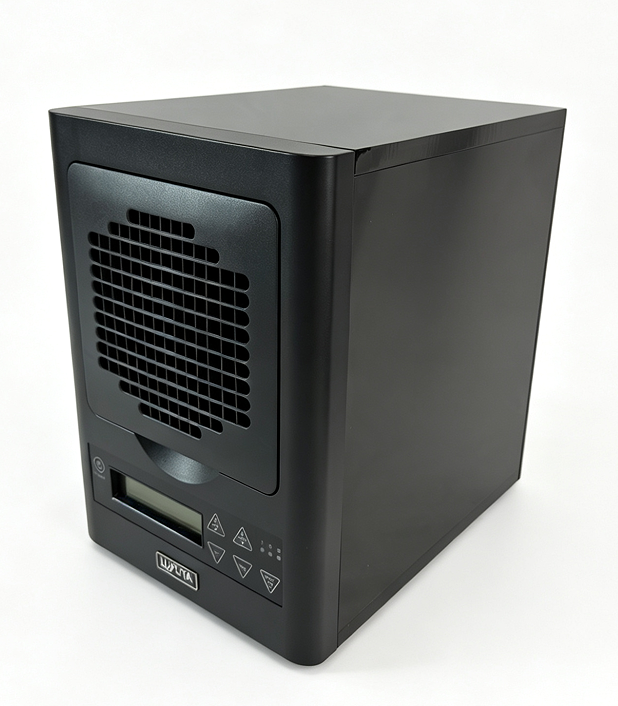
A True HEPA filter does exactly what its testing standard asks: it pulls at least 99.97% of airborne particles at 0.3 microns out of the air that actually passes through it. But real rooms don't behave like laboratory test chambers. Pollutants slip around the filter's edges, settle on furniture before reaching the unit, or stay suspended in dead zones where airflow never reaches. That's why a high-efficiency filter on paper can still leave you breathing visibly dusty or allergen-laden air in practice.
There's another blind spot: gases, odors, and volatile organic compounds don't exist as solid particles, so they pass straight through even the best HEPA media. Fresh paint, cooking smells, formaldehyde from furniture, and outdoor ozone all need sorbent materials like activated carbon or specialized chemisorption layers. Without those stages, a True HEPA purifier is only solving a fraction of what most people expect from "air cleaning."
Finally, HEPA works by trapping, not destroying. Mold spores, bacteria, and viruses can survive on a damp filter and even multiply if humidity is high. Unless the unit includes UV-C, photocatalytic oxidation, or a well-sealed design that keeps collected debris dry, the filter itself can gradually become a source of contamination. True HEPA remains an essential piece, but on its own it's more of a single tool than a complete air cleaning strategy.
Room Size Math You Can Do in Your Head: CADR Made Simple
Forget calculators and complicated formulas. If you know the square footage of your room, you already have the key. A quick mental trick: take the room's area and multiply it by two, then add a little buffer for ceilings taller than eight feet. That gives you a ballpark CADR number to look for on the box. It’s not perfect, but it’s close enough to sort lemons from winners while standing in the aisle.
Real-world rooms aren’t perfectly sealed boxes, and air doesn’t move in neat little loops. So instead of chasing exact decimals, round your room size to the nearest fifty. A 220-square-foot bedroom? Call it 250. Double that to 500. If your windows face a busy street or you’ve got a shedding dog, nudge it up another twenty percent. The goal is a filter that can churn the whole volume at least four times an hour, not once with a sigh.
Here’s the part most shoppers miss: CADR drops as the filter gets dirty. A unit rated for 300 will quietly slide to 180 after a month of dust and pollen. So buy for the room you have, not the room you wish you had, and plan to replace or wash the filter a little early. That simple head-math keeps the air honest and your sinuses happier.
Night Mode Noise: What 25 dB vs. 50 dB Actually Feels Like
At 25 dB, night mode noise hovers at the edge of perception. It's the faint hum of a refrigerator cycling on two rooms away, or a whisper of wind slipping through a cracked window. Most people stop registering it within minutes, letting it dissolve into the quiet like static under a pillow. Unless you're actively listening for it, 25 dB rarely registers as a disturbance—it's more of a texture than a sound.
Push that same nighttime background up to 50 dB and the room suddenly has a voice. You're now hearing something closer to a muted conversation or steady rainfall against the glass, and at 11 p.m. that's enough to pull your attention away from sleep. It's not harsh, but it's present in a way that 25 dB never is—your brain keeps tagging it as a signal rather than letting it fade into the dark. For light sleepers, this is the difference between drifting off and staring at the ceiling.
The real gap isn't just double the loudness, because decibels stack logarithmically. A jump from 25 to 50 dB feels roughly four times as loud, and in a silent bedroom that gap becomes a chasm. What reads as a distant lullaby at 25 dB turns into a neighbor's TV bleeding through the wall at 50 dB. If you're tuning a sleep machine or checking a new appliance, keeping that lower number in mind matters more than the spec sheet suggests.
The Filter Subscription You Didn't Know You Signed Up For
Every time you hit “agree” on a new app or casually tick a box to receive updates, a quiet little filter slips into your inbox. It doesn’t demand attention like a newsletter; it simply reshuffles what you see, nudging certain voices forward and letting others fade. You never consciously chose this curation—it grew out of default settings, algorithmic guesses, and the gentle nudges of autoplay. Before long, your feed feels familiar, but only because it’s been trimmed to echo your last three clicks.
The strangest part? You can’t remember signing up, yet unsubscribing feels oddly difficult. The filter doesn’t announce itself with a clear “manage preferences” link. Instead, it hides in plain sight: your watch history, your location pings, the topics you linger on for an extra half-second. Each small action renews the subscription, and each renewal tightens the loop. What you assume is a broad view of the world is actually a narrow corridor built from your own past behavior.
Breaking out requires noticing the filter exists at all. Start by asking why your feed feels so predictable, why contrary opinions rarely appear, or why you can predict the next video before it loads. These aren’t coincidences—they’re the filter working as intended. You didn’t sign up with a pen and paper, but you did sign up every time you let a recommendation go unquestioned. The first step to canceling is realizing the subscription was never about content; it was about your attention on autopilot.
Auto Mode, Air Quality Sensors, and Other Features Worth Paying For
Auto mode is one of those conveniences that quickly becomes indispensable. Instead of fiddling with fan speed and temperature every few minutes, the system reads cabin conditions and adjusts itself. It can maintain a steady comfort level without the constant manual tweaks, which is especially nice on long drives where your attention should stay on the road. If you've ever experienced a stuffy car on a cool morning or a blast of cold air when you just wanted a gentle warmth, you'll appreciate how auto mode smooths out those rough edges.
Air quality sensors are another upgrade that often flies under the radar. They actively monitor outside pollutants and automatically switch to recirculation when you're stuck behind a diesel truck or driving through a dusty stretch. For anyone with allergies or respiratory sensitivities, this can make a noticeable difference in how you feel after an hour in traffic. It's not just about comfort—it's about breathing cleaner air without having to remember to press a button every time the air gets thick.
Beyond those, there are a handful of other features that genuinely earn their price. Heated side mirrors, a heated steering wheel, and automatic wipers all reduce small daily annoyances. They seem minor until you've lived with them for a winter, and then going back feels like a step backward. Rather than chasing flashy options, look for these quiet upgrades—they tend to pay for themselves in everyday satisfaction long after the initial excitement of a new car has worn off.
FAQ
It stands for original design manufacturer. Basically, the factory already has a working design and you can tweak things like the filter size, fan speed settings, or outer shell to match your brand. You skip the long prototyping stage and get a product that's already been through some testing.
Start with room size and the CADR rating. A unit rated for 300 cubic meters per hour works well in a bedroom but will feel underpowered in an open-plan living area. Also pay attention to noise at the speed you'll actually use most often—many people fixate on max CADR but run the purifier on low at night.
A true HEPA filter is non-negotiable for fine particles, but a decent pre-filter can extend its life significantly. If you're worried about odors or chemicals, you'll want an activated carbon layer with a real weight, not just a thin foam strip. Ask the supplier for the carbon weight in grams.
It depends on who will use it. Basic timer and air quality sensor modes cover most needs. App control, voice assistant compatibility, and Wi-Fi scheduling are nice if your customers expect a premium feel, but they can add points of failure and require firmware maintenance. For a first order, I'd keep it simpler.
At minimum, look for CE and RoHS for the European market, ETL or UL for North America, and maybe Energy Star if efficiency matters to your audience. For the filter and ozone output, CARB compliance is relevant in California. Don't just take the factory's word—ask for copies of the actual certificates and check their validity dates.
Usually you pick from a few existing chassis designs, then choose the control panel layout, color, logo placement, and maybe the filter media. Some factories allow you to adjust the fan curve or add a custom sensor. The more you change, the higher the minimum order quantity tends to go.
It varies widely, but for small desktop units you might see MOQs around 500 to 1000 pieces. Larger floor-standing models can start at 300 or so if you accept a stock design. Some factories will negotiate lower quantities for a first trial order, especially if you're willing to pay a slightly higher unit price.
Don't choose based only on the unit price. Shipping costs, filter replacement pricing, warranty terms, and the factory's communication speed matter just as much. Ask for a sample with the exact filter configuration you plan to sell, and run it for at least a week in a real room before committing.
Conclusion
When shopping for an ODM household air purifier, the first thing to check isn't the spec sheet's "True HEPA" badge—it's how the housing is sealed and whether the fan can maintain consistent pressure. A flimsy frame with air gaps lets unfiltered particles bypass the media entirely, which is why a solid build with a well-fitted filter tray matters more than any marketing claim. Also, HEPA alone doesn't handle gases or VOCs; you'll want a unit that pairs the HEPA layer with a substantial activated carbon bed and, ideally, a pre-filter for larger dust. For sizing, ignore vague room ratings and use CADR: multiply the CADR by 1.55 to get the approximate square footage it can clean at 4.8 air changes per hour. That quick math shows why a 200 CFM unit is fine for a 310-square-foot room, while a 100 CFM unit will leave a large living space under-served. Noise often gets overlooked, but a 25 dB sleep mode is like a quiet library whisper, while 50 dB is closer to a running refrigerator—too loud for a bedroom. Look for units that can drop below 30 dB on the lowest fan speed without sacrificing CADR.
The real cost isn't the upfront price; it's the filter subscription you may not realize you've committed to. Many ODM brands design filters with non-standard shapes or lock chips that force you back to the original manufacturer, so check the replacement cost and availability before buying. A purifier with a generic, widely available filter can save hundreds over five years. Auto mode and air quality sensors are worth paying for if they actually respond to PM2.5 changes, not just a timer. A good sensor should kick the fan up when someone cooks bacon or when pollen spikes, then back down to silent mode in minutes. Avoid units that rely only on a particle counter without a gas sensor if you're concerned about kitchen fumes or off-gassing furniture. Ultimately, the buyer's guide conclusion is simple: prioritize build tightness, paired filtration, real CADR, honest noise specs, and replaceable filters over gadget-count.
Contact Us
Contact Person: Paul Luo
Email: [email protected]
Tel/WhatsApp: 0086-19966314501
Website: https://www.lufutatech.com