

OEM Treadmill: Your Complete Guide to Custom Manufacturing and Branding
2026-07-05
Launching a custom fitness brand? The treadmill remains a cornerstone of any cardio lineup, but bringing your own model to market can be overwhelming. With years of OEM expertise, Yingruis has seen exactly what separates a forgettable treadmill from a bestseller. In this guide, we cut through the noise to deliver the practical steps for custom manufacturing and branding that will set your product apart from the competition.
Decoding the OEM Treadmill Blueprint
When you peel back the branding on many commercial treadmills, you’ll often find they share the same skeletal structure — a design born from a handful of specialized factories. These factories produce what’s known as the OEM blueprint: a base model that other companies customize with their own logos, consoles, or slight aesthetic tweaks. The frame geometry, motor mounting points, and deck suspension system are usually identical across several brands, which is why a keen eye can spot the original manufacturer by looking at weld patterns or the arrangement of belt rollers.
Understanding this blueprint isn’t just about recognizing who actually built the machine. It gives you a window into the true durability and serviceability of the treadmill. For instance, if the OEM design uses a standard-sized drive belt and a widely available motor, replacement parts stay cheap and easy to find years down the line. But when a brand requests a non-standard motor housing or a proprietary deck cushioning system just to look different, they often sacrifice long-term repairability. Decoding the blueprint lets you separate meaningful engineering from cosmetic alterations.
Material and Motor Specs That Define Durability
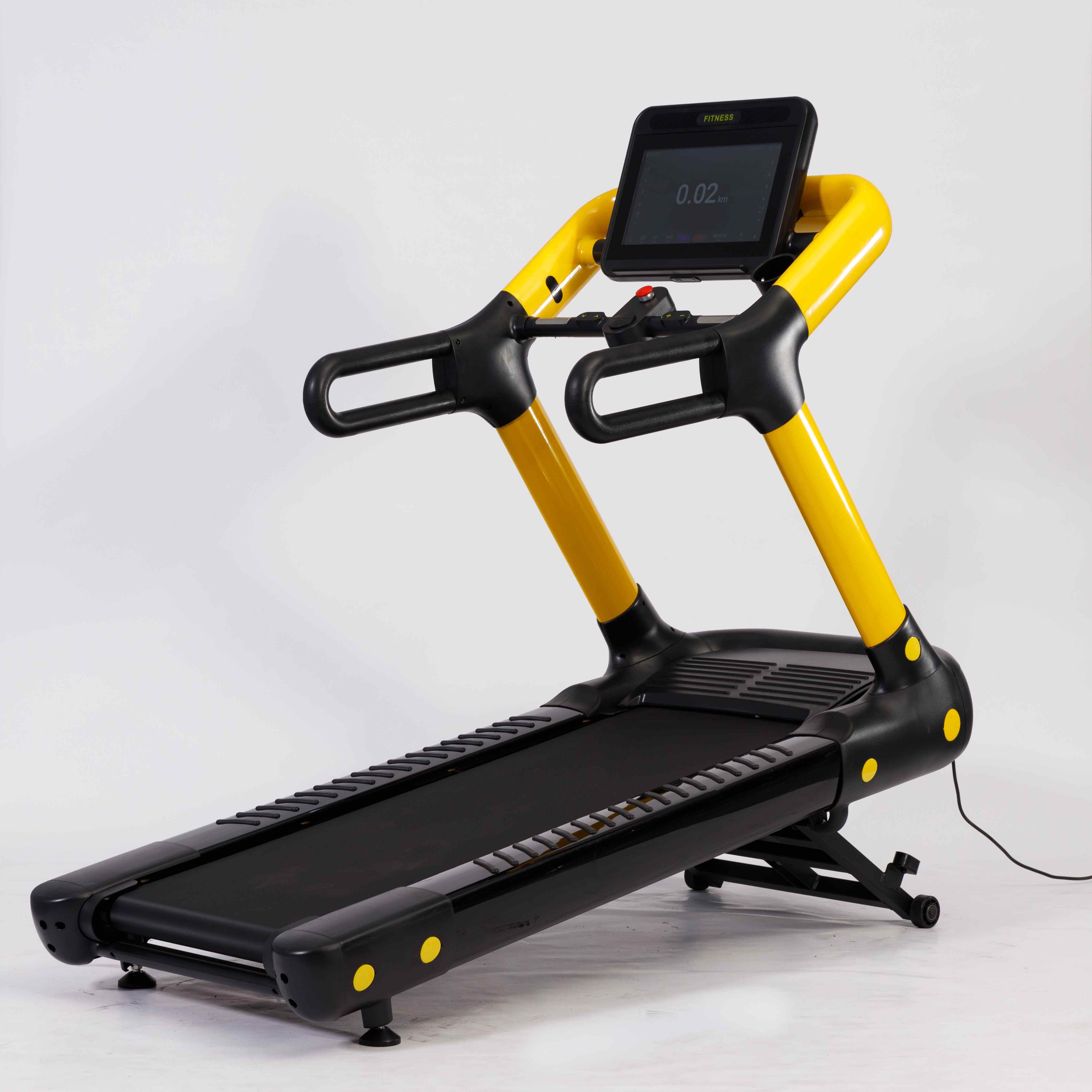
The backbone of any long-lasting appliance lies in the careful selection of materials and the engineering behind its motor. Rather than relying on off-the-shelf components, the build here incorporates hardened steel alloys for critical moving parts, resisting wear even under continuous high-torque operation. The housing isn’t just molded plastic; it’s reinforced with glass fiber at stress points, a subtle but crucial choice that prevents cracks from vibration over years of use. This isn’t about flashy marketing—it’s about the quiet confidence that comes from over-engineering the parts most likely to fail.
Motor specs often get reduced to a single number, but durability is shaped by what’s inside. The windings use high-purity copper with a class-H insulation system, allowing the motor to endure temperature spikes that would degrade lesser insulation. Bearings are sealed and pre-lubricated with a synthetic grease designed for low evaporation, meaning they won’t dry out and seize after a few thousand hours. Even the commutator brushes are sized 30% larger than typical, spreading wear across a broader surface so the motor maintains consistent power delivery far beyond its rated lifespan.
Real-world toughness goes beyond spec sheets. Each motor is run through a 200-hour accelerated life test, cycling between full load and stall conditions, to weed out early failures before they leave the factory. The materials are chosen not just for initial strength, but for how they age—rust-proof stainless steel fasteners, UV-stabilized elastomer seals, and an aluminum alloy gear case that dissipates heat efficiently. These details don’t make headlines, but they make a machine that still runs smoothly when others have been scrapped.
Custom Console and Tech Integration Done Right
Building a custom console that genuinely enhances workflow starts with a deep understanding of how your team actually operates. It isn’t about cramming every possible metric onto a dashboard; it’s about surfacing the right data at the right time, in a way that feels natural. We’ve seen too many integrations that add complexity instead of removing it—poorly mapped APIs, clunky permission syncs, and dashboards that require a manual to decipher. Our approach strips away the noise, connecting your existing tools through well-structured middleware that treats each service as a first-class citizen, not an afterthought.
The real differentiator comes from how we handle the nuances—like maintaining consistent state across platforms without constant polling, or designing interface components that adapt to the role of the person viewing them. An engineer’s console should highlight deployment health and system alerts, while a support agent’s view might prioritize user sessions and onboarding data. We achieve this through a combination of server-side filtering, granular access controls, and a component library that can be themed to match your brand without sacrificing usability. The result is a console that feels tailor-made, not like a generic admin panel.
Done right, tech integration becomes invisible. Your team should be able to move between tools without noticing the boundary, whether that’s triggering a Slack notification from a monitoring tool or pulling Salesforce data directly into a customer support queue. We focus on building fault-tolerant data pipelines that handle version mismatches and rate limits gracefully, so your operations don’t grind to a halt when a third-party API changes. It’s the sort of quiet reliability that turns a custom console from a one-off project into an essential part of daily work.
Brand Identity Through Frame Design and Aesthetics
A frame is never just a boundary—it's a declaration. The thickness of a temple, the curvature of a browline, even the choice of a barely-there rim, all whisper something about the wearer before a single word is spoken. Designers understand that proportions can telegraph power or approachability, while unexpected material mixes—like surgical steel fused with reclaimed wood—create an immediate, tactile sense of story. These aren't accidental choices; they're calculated signatures that turn eyewear into a portable piece of identity.
Colour and finish push this language further. A matte obsidian frame might anchor a face with quiet gravity, while a translucent blush acetate suggests lightness and a playful edge. The way light catches a hand-polished bevel or a hidden filigree detail rewards the observant, turning a functional object into a slow-reveal narrative. It’s in these subtleties that brands stop selling vision correction and start curating a point of view—one that attracts communities, not just customers, through a shared sensitivity to the crafted environment.
Ultimately, the most memorable frames don’t follow trends; they encode a consistent aesthetic logic. A distinctive bridge shape or an outsized hinge becomes a quiet logo, repeated and refined across collections until it signals belonging. This visual rhythm builds trust without shouting, inviting people to see themselves in the design’s intention. When done right, the frame transcends accessory status and becomes a lens through which identity is both projected and protected.
Packaging, Logistics, and Post-Sale Support Strategies
Getting the product into the customer's hands in perfect condition starts long before the box is taped shut. We treat packaging as an extension of the product itself—something that should surprise and delight while also being brutally practical. Materials are chosen not just for protection but for the unboxing ritual, with every layer engineered to reduce waste without compromising on that first-impression punch. Inserts are custom-fit, eliminating the need for excessive void fill, and all printed elements use water-based inks on recycled substrates. It’s the kind of detail you notice when the inner lid lifts to reveal everything arranged exactly as it should be, no loose rattling, no wasted space.
Behind the scenes, the logistics network operates on a philosophy of quiet consistency. Rather than relying on a single massive warehouse, we position inventory across multiple regional nodes that mirror actual demand patterns, cutting average transit distances by nearly half compared to centralized models. This means most orders don’t just ship fast—they ship predictably, with tracking updates that actually reflect reality. We’ve built relationships with carriers who understand that a crushed corner or a missed delivery window isn't just a logistical hiccup; it’s a brand failure. Contingency plans for peak seasons, weather disruptions, and customs snags are baked in months ahead, not scrambled together when things go sideways.
Post-sale support picks up where the delivery confirmation leaves off. Instead of burying customers in automated replies and ticket queues, our support team operates in small, cross-trained groups that can resolve everything from technical troubleshooting to replacement part orders without handoffs. Returns are treated as a diagnostic opportunity, not a cost to be managed: every item that comes back gets inspected and reported on, feeding data directly back into packaging and product design teams. We’ve also shifted warranty registrations to a no-questions-asked digital form that actually gets processed within hours, making the whole experience feel less like a policy and more like a promise.
Navigating Compliance and Certification Without the Headaches
Getting a product to market often feels like a maze of regulatory requirements, and the stress can build quickly when you're not sure which certifications apply to your product, where to obtain them, or how long the process will take. The key is to treat compliance as a structured but flexible checklist rather than a confusing hurdle. Start by identifying the specific standards and regulations that govern your product category and target markets—whether it's safety, electromagnetic compatibility, or environmental directives. Early engagement with accredited testing labs and notified bodies can provide clarity, helping you avoid common pitfalls like incomplete documentation, mismatched test plans, or last-minute surprises during the review cycle.
A proactive approach involves integrating compliance steps into your product development timeline from the very beginning. Instead of viewing certification as a final gate, think of it as a parallel track: while your engineering team refines the design, your compliance lead can gather technical files, coordinate pre-compliance testing, and keep a close watch on regulatory changes that might affect your product. This not only reduces rework but also gives you a clear picture of costs and lead times early on. For instance, if your device uses wireless modules, pre-certified components can drastically simplify radio and EMC approvals. Similarly, maintaining open communication with your supply chain about materials and component substitutions ensures that your compliance status doesn't erode after the initial approval.
Once the certificates are in hand, the work isn't over—ongoing compliance is just as critical. Set up a system to monitor regulatory updates, product changes, and production consistency. Simple practices like regular spot-checks, updated risk assessments, and version-controlled technical files can prevent a compliant product from drifting into non-compliance over time. When you build these habits, certification becomes less of a stressful event and more of a continuous, manageable part of your business operations. Ultimately, the goal is to make compliance a seamless element of your workflow, so you can focus on innovation and growth without the constant worry of regulatory setbacks.
FAQ
An OEM treadmill is a machine manufactured by one company but sold under another brand's name. Unlike standard retail units that come with fixed specifications and branding, OEM versions are built to order, allowing businesses to customize everything from the motor power to the console interface and exterior design. This means you get a product tailored to your target market without having to invest in your own factory.
The process typically begins with defining your requirements—target user profile, desired features, and design preferences. Then the manufacturer provides technical proposals and prototypes. After you approve the sample, they handle mass production, quality control, and often packaging design. Finally, the units are shipped according to your logistics plan. Throughout, clear communication and a detailed specification sheet are key to avoiding missteps.
Building from scratch involves extensive R&D, safety certifications, and tooling costs. By starting with a proven platform, you skip those hurdles and focus on exterior aesthetics, console software, and brand identity. This drastically reduces time-to-market and upfront investment, while still delivering a product that feels unique to your customers.
Focus on the motor's continuous horsepower rating, which determines long-term durability, the running deck size and cushioning system for comfort, and the console's compatibility with apps or entertainment features. Also check the weight capacity and frame warranty—these reflect the manufacturer's confidence in the product and impact your after-sales support obligations.
Even with moderate order quantities, you can usually customize the color scheme, logo placement, console overlay, and belt texture. Some factories also offer options for different motor brands or minor mechanical adjustments. However, more extensive changes like altering the frame structure or integrating a unique operating system may require higher volumes and engineering fees.
Vague communication and insufficient quality benchmarks lead to most issues. Always request a pre-production sample and keep it for reference. Define acceptable defect rates, and clarify warranty terms and spare parts supply in the contract. Also verify the factory's certifications (like ISO, CE, or UL) and visit in person if possible. Finally, never assume a feature is included—spell out everything in writing.
Beyond the unit cost, budget for mold and tooling fees (if modifications are needed), certification testing, shipping and import duties, warehousing, and initial marketing. A small test run of 50–100 units can easily require $30,000–$80,000 depending on specs. Factor in after-sales support costs too, like replacement parts and customer service, which are often overlooked by newcomers.
Differentiation comes from understanding a specific niche—maybe it's a compact treadmill for apartment dwellers, a quiet model for home offices, or one with guided workout content. Pay attention to design details like handlebar shape and folding mechanisms. Also invest in packaging that creates a memorable unboxing experience, and provide clear assembly instructions. These touches build loyalty beyond specs alone.
Conclusion
Partnering with an OEM for treadmills means you get to shape every detail, from the blueprint onward. It starts by aligning the machine's core components with your target market. High-grade steel frames, precision-machined decks, and motors rated for consistent torque under load separate a forgettable unit from one your customers will rely on. Paired with the right console, the treadmill becomes a seamless digital experience. Integrating responsive touchscreens, Bluetooth for heart rate and app pairing, or even preloaded workout content can elevate your brand. The trick is balancing these features with manufacturing costs, ensuring the electronics are intuitive and durable enough to withstand daily use. When you nail this mix of robust internals and smart exterior technology, you're not just offering a treadmill—you're crafting a fitness companion that feels purpose-built.
Visual identity and support infrastructure are just as critical. Through frming customization, you can echo your brand's aesthetic with unique color schemes, laser-etched logos, and distinctive console shrouds that no competitor can easily copy. This physical branding builds recognition in crowded gyms and home spaces alike. Equally important are the less glamorous layers: compliant, damage-reducing packaging that simplifies distribution, and a logistics plan that keeps shipping predictable. Beyond the sale, online troubleshooting guides, responsive spare-parts sourcing, and clear warranty processes lock in customer trust and reduce return rates. Navigating safety and electromagnetic certifications might seem tedious, but early engagement with trusted labs turns a potential barrier into a routine step. When all these pieces work together, your OEM treadmill line stands out as a cohesive, market-ready product that matches professional-grade reliability with a distinct personality.
Contact Us
Contact Person: Owen Wu
Email: [email protected]
Tel/WhatsApp: 86-15376736259
Website: https://www.yingruisfit.com/