

Prefabricated Fence Mold Innovations Shaping the Industry
2026-10-22
What if the future of fencing isn't just built—it's molded? Across the industry, prefabricated fence mold innovations are quietly rewriting the rules of speed, precision, and durability. As demand for customized, high-quality concrete barriers and decorative walls surges, traditional methods are struggling to keep pace. LugongMachinery is at the heart of this shift, pushing mold technology toward smarter designs and longer service life. In this post, we'll explore the breakthroughs that are shaping the next generation of prefabricated fencing—and why they matter for your next project.
How New Materials Are Redefining Precast Fence Molds
For decades, precast fence production leaned heavily on steel and timber molds — reliable but heavy, prone to rust or warping, and limited in the surface textures they could reproduce. The arrival of engineered polymers and fiber-reinforced composites has quietly changed that. Modern molds made from polyurethane, fiberglass, and high-durometer silicone now capture fine wood grain, rough stone, or custom logo impressions with a sharpness that was difficult to achieve before. Because these materials release concrete cleanly and resist abrasion, a single mold can cycle through hundreds of pours without losing detail, which directly lowers per-unit costs for manufacturers.
Another shift is in handling and assembly. A fiberglass or polyurethane mold can weigh a fraction of its steel counterpart, so one worker can often move, clean, and reset sections that used to require a small crew or lifting equipment. That reduction in physical strain also shortens turnaround between batches. Composite molds also absorb vibration more evenly during compaction, helping reduce air pockets on the fence face. The result is a more consistent finish with less hand patching after stripping.
Some fabricators are now experimenting with modular mold systems where interchangeable liners — cast from flexible polymers or CNC-machined from resin boards — let a single base form produce multiple fence styles. Instead of buying a separate rigid mold for each panel design, workshops swap out the textured liner. That flexibility, combined with the longer service life of the new materials, is pushing precast fence production away from one-style-per-mold thinking and toward a model built around quick changes and smaller production runs without sacrificing surface quality.
From One-Size-Fits-All to Customizable Mold Systems
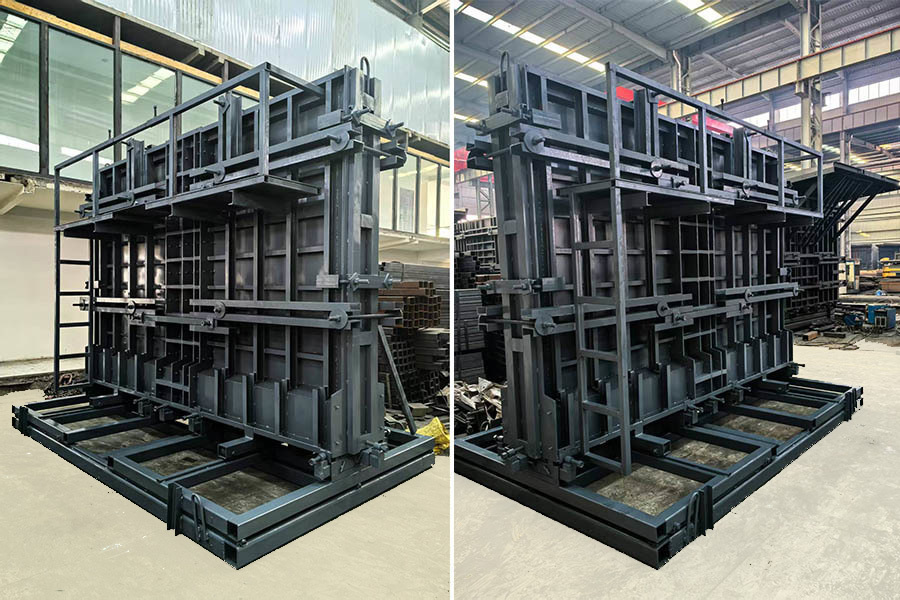
Traditional mold catalogs forced manufacturers to adapt their part designs to a limited set of stock configurations. That worked when production runs were long and variation was rare. Modern order profiles look different: shorter batches, frequent geometry tweaks, and mixed materials quickly expose stiffness and waste in fixed tooling.
Customizable mold systems address this by separating the mold base from interchangeable cavities, cores, and inserts. A single frame can accept multiple insert sets, so switching from one product variant to another takes minutes rather than days. Engineers adjust gate placement, cooling channels, and ejection patterns for each insert without re-machining the entire mold. This modular approach collapses lead times and lets a modest inventory of bases support a much wider product range.
The shift also changes maintenance and lifecycle costs. Instead of storing dozens of bulky dedicated molds, shops keep a smaller set of standardized bases plus lightweight inserts. When a product changes, only the insert set is revised or replaced. Injection molders and die casters report lower storage demands, faster color or material changes, and fewer idle molds waiting for a single customer’s next order.
Faster Turnarounds with Modular Mold Designs
Shaving weeks off a mold build rarely comes from a single breakthrough. It usually happens when the tooling is broken into standardized, swappable segments. Instead of cutting an entire cavity set from one massive steel block, a modular approach uses pre-machined bases and interchangeable inserts. When a product revision lands, only the affected insert needs replacing, not the whole mold. That alone can cut lead times by 30 to 50 percent for many part families, especially in consumer electronics and medical device enclosures where small design tweaks are constant.
Another overlooked advantage is how modular designs let you run multiple part versions in the same press without lengthy teardowns. Because the inserts share a common locating and locking system, operators can swap a cavity set during a lunch break instead of tying up a machine for a full shift. Some shops keep duplicate insert sets on the shelf, so when a cavity wears out or gets damaged, the fix is a ten-minute exchange instead of a two-week re-cut. That kind of uptime directly translates into faster customer deliveries.
There is also a quiet benefit on the engineering side. Modular mold libraries accumulate proven insert geometries, cooling layouts, and ejection details over time. New projects often start by pulling a known base and adjusting only the forming surfaces, which removes a large slice of upfront design risk. The result is not just a faster first article, but a smoother ramp to production because the thermal and mechanical quirks of the base have already been debugged on previous jobs.
Sustainability Gains Traction in Fence Mold Production
Fence mold producers are quietly reworking their material inputs, swapping virgin polymers for regrind and bio-sourced resins that hold dimensional stability across hundreds of cycles. This shift rarely shows up in marketing, but it lowers the carbon footprint of each mold without sacrificing the crisp edges that buyers expect on precast panels.
Energy use is another area where small changes compound. Some shops now run injection units at lower barrel temperatures by fine-tuning gate sizes and runner layouts, while others recover waste heat from hydraulic cooling loops to preheat raw material. These moves trim electricity demand per mold by double digits in retrofit audits.
Durability has become its own kind of sustainability. Modular mold frames with replaceable wear plates and hardened alignment pins extend service life well past the old throwaway benchmark, cutting steel consumption and postponing scrap. When a mold finally retires, more of its metal and polymer content is being separated for reuse rather than landfilled.
Smart Features That Cut Waste and Boost Precision
Real-time material flow sensors track every gram that enters the process, automatically flagging deviations before they turn into scrap. Instead of relying on manual checks, the system adjusts feed rates on the fly, so off-cuts shrink to near zero without sacrificing tolerances.
Auto-calibration routines run between batches, using reference points to correct drift in cutting heads or deposition nozzles. This keeps dimensional accuracy within a few microns while eliminating the trial pieces that used to pile up at shift start.
Predictive alerts for tool wear mean replacements happen at the right moment—not too early, not after a ruined part. The result is less idle material, fewer reworks, and a floor that runs quieter because mistakes are caught upstream.
Why Smaller Shops Are Switching to Lightweight Molds
A bulky steel mold can quietly eat up a small shop’s time and energy. When a single mold weighs close to 200 pounds, you need a forklift or at least two people just to move it into place. Switch to a lightweight aluminum or composite version and that same job becomes a one-person lift. Setup drops from half an hour to a few minutes, and operators stop dreading the next changeover.
Lighter molds also change temperature faster. Aluminum heats up and cools down in a fraction of the time steel requires, which trims cycle times on short runs and prototype work. For a small operation, that speed means more parts out the door before lunch and less idle time waiting for the tool to reach the right temp. You can run the same job on a smaller press, too, which lowers energy use and wear on equipment.
Then there’s the financial side beyond the initial price tag. Shipping a 40-pound mold costs far less than shipping a 400-pound one, and it takes up a corner of a shelf instead of a dedicated rack. Storage, freight, and machine maintenance all drop. For a small shop testing new product ideas or responding to a customer’s quick revision, that kind of flexibility matters more than raw durability.
FAQ
Polyurethane composite liners have replaced bare steel faces on many molds, cutting wear from abrasive concrete mixes. Hard chrome plating on joint edges also prevents chipping during repeated clamping. Some manufacturers now insert replaceable wear plates at high-stress corners, so a damaged section can be swapped without retiring the whole mold.
Instead of unbolting an entire side rail to change a texture or height, crews can swap out small insert panels in minutes. This lets a single mold base produce multiple fence profiles on the same shift. Quick-release clamps and indexed alignment pins mean no re-leveling is needed after each changeover.
Laser-etched polyurethane liners can reproduce rough-sawn wood grain, stacked stone, and even board-formed concrete with sharp detail. The liners flex slightly during demolding, which reduces sticking and tearing on deeper textures. Elastic recoil also helps release fine mortar ridges that older rigid molds would break off.
Aluminum-magnesium frames have cut mold weight by nearly forty percent compared to solid steel, making manual flipping and stacking safer. Ribbed extrusions keep the frame stiff enough to resist bending under wet concrete pressure. Less weight also reduces crane time and lets smaller crews handle larger panels.
Yes, because the mold volume is fixed and matched to a precise mix design, there is far less spillage than with traditional formwork. Self-compacting concrete fills the mold evenly without vibration overflow, and leftover material can be returned to the batch plant instead of being dumped. Some molds include built-in overflow channels that capture excess for reuse.
Segmented mold sections with hinged joints allow a radius to be formed without custom carpentry. Adjustable wedge inserts at the base tilt the panel to follow a slope while keeping the top rail level. For tight curves, flexible polyurethane side forms can be bent around a template and then locked into a rigid outer frame.
A thin, even coat of release agent before every pour prevents concrete from bonding to the liner surface. After demolding, wiping down joint faces and checking seal grooves for grit stops uneven clamping. Molds stored flat on pallet racks, away from ground moisture, avoid warping between uses.
Robotic arms now spray release agents and place reinforcement cages with consistent coverage, reducing human error. Automated vibration tables tuned to the mold's natural frequency compact the mix faster without damaging liners. CNC-machined mold components also arrive with tighter tolerances, so assembly no longer depends on hand-fitting.
Conclusion
The quiet revolution in prefabricated fence production is happening at the mold level, where material science and modular engineering are rewriting what's possible. Advanced composites and high-durability polymers are replacing traditional steel and wood forms, resisting corrosion and thermal warping while cutting maintenance downtime. At the same time, the old one-size-fits-all approach is fading. Shops now expect mold systems that adjust to different panel heights, textures, and post profiles without a complete rebuild, which makes short runs economically viable. Modular designs have pushed this further by letting crews swap out sections in minutes, so turnaround times shrink even as variety expands.
Sustainability is no longer an afterthought. Mold makers are using recycled content and designing for longer service life, reducing both material waste and energy consumption during casting. On the production floor, smart features like integrated sensors and self-aligning joints are trimming overpours and misfits, giving tighter tolerances with less rework. Perhaps most telling is the shift toward lightweight molds. Smaller fabricators, once locked out by heavy steel equipment, can now handle molds that two workers can move without a crane. That lowers the barrier to entry and spreads these innovations beyond large plants. Together, these changes are not just incremental upgrades; they are reshaping who can compete and how fast new fence designs reach the market.
Contact Us
Contact Person: Zhang Zhenlai
Email: [email protected]
Tel/WhatsApp: 8618563210000
Website: https://en.lugongmachinery.com/