

Professional Compact Substation Systems for Reliable Urban Power Distribution
2026-08-16
Urban power grids are feeling the squeeze. Space is scarce, demand is climbing, and outages are not an option. Traditional substations often eat up precious real estate and struggle to keep pace with modern load profiles. That's where compact substation design changes the game. By shrinking the footprint without sacrificing performance, these systems are quietly transforming how cities distribute electricity. And when reliability is non-negotiable, choosing the right partner matters. Chang Song has been engineering professional compact substation solutions that meet the exacting needs of dense urban environments. In this post, we'll break down what makes these systems tick, why they matter for sustainable urban growth, and how to evaluate them for your next project.
Space-Saving Layouts That Fit Tight Urban Utility Corridors
Urban utility corridors are rarely generous with space. A well-planned layout starts by questioning which components actually need to sit side by side, and which can be stacked, rotated, or tucked above head height. Instead of defaulting to a linear run of pipes and conduits, try grouping services by maintenance frequency—keep the rarely touched lines at the back, and bring the frequently accessed valves or junction boxes forward where a single removable panel can expose them all. This small shift in thinking can reclaim inches that quickly add up when every wall is shared with a neighbor.
Vertical layering is another trick that gets overlooked. Cable trays, for instance, rarely need the full depth they're often given; mounting them above lower-profile water or gas lines in a staggered profile lets each system keep its own clearance envelope without forcing the whole corridor wider. Where codes allow, consider running low-voltage data lines through the same chase as plumbing—separated by a slim physical barrier—rather than dedicating a parallel run that eats up half the available width. The key is to map out the true clearance requirements for each service at intervals, not just at the widest point, and then compress the layout around those measurements.
Finally, don't underestimate the value of pre-fabricated manifold sections. Off-site assembly lets you fit pumps, meters, and shutoffs into a rigid frame that's only as deep as the largest single component, eliminating the loose, spread-out arrangement that often emerges when crews build piece by piece on site. Pair this with angled or recessed access points—like a shallow niche for a pressure gauge instead of a full-width walkway—and you can shave the corridor down to something that feels almost impossibly slim, yet still works day after day without a fight.
Continuous Duty Without Overloading Dense City Networks
Running essential services around the clock in a packed urban environment demands more than just spare capacity. The real challenge lies in distributing load intelligently across substations, feeder lines, and backup routes so that no single node is pushed past its comfort zone. Modern control rooms now rely on live telemetry from thousands of sensors, comparing actual draw against thermal limits in real time. When one corridor starts to heat up, automated switching quietly reroutes power or data through adjacent infrastructure before human operators even notice a flicker.
What often gets overlooked is the role of demand shaping. Instead of treating the network as a passive pipe that must absorb whatever the city throws at it, operators work with large commercial buildings, transit hubs, and even residential blocks to stagger heavy loads. Chillers cycle earlier, train pre-heating occurs off-peak, and EV charging ramps down for a few critical minutes. This coordinated flexibility, rather than brute-force expansion, keeps dense networks stable during multi-day heatwaves or major events without tripping protection systems.
The final safeguard lies in layered redundancy that never sits idle. Critical circuits are designed to run at no more than 70% of rated capacity under normal conditions, leaving headroom for sudden transfers. Maintenance windows are planned around seasonal load curves, and spare transformers are pre-positioned in underground vaults rather than stored in distant depots. Over years of continuous duty, this blend of real-time balancing, gentle demand nudges, and hidden margins lets city grids serve millions without ever approaching the edge of overload.
Packing Protection and Control into a Smaller Footprint
Modern protection and control systems no longer demand a wall of cabinets to do their job. By integrating overcurrent, earth fault, voltage, and frequency protection into a single compact relay, manufacturers have cut the physical footprint of substation automation dramatically. What used to require three or four separate devices now fits into a unit the size of a paperback book, freeing up valuable panel space for other equipment or simply allowing smaller enclosures.
Space savings translate directly into cost reductions and easier installations. Less wiring means fewer terminations to check and fewer chances for loose connections. The integrated design also reduces the number of spare parts to stock, because one multi-function unit replaces several single-purpose relays. On the thermal side, fewer devices generating heat inside a sealed enclosure lowers the cooling load, which can extend the life of nearby electronics.
These compact solutions are particularly valuable in retrofit projects, where existing switchgear rooms have little room to spare. They also suit renewable energy installations such as solar farms and wind turbines, where control cabinets are often located in tight, weather-exposed spaces. Despite the smaller size, modern protection and control hardware delivers the same or better accuracy and speed, thanks to advanced digital signal processing and high-speed communication built into the same package.
Modular Builds That Cut Street-Level Installation Time
Street-level installs often drag on because every cabinet, enclosure, and mounting plate gets assembled piece by piece on site. Modular builds flip that script. Instead of wrestling with loose components under a traffic cone, crews lift pre-wired, pre-tested blocks into place and connect them with a handful of locking pins. The result is a cabinet that goes from pallet to powered in under two hours, not two days.
The real time sink isn’t the heavy lifting—it’s the fiddly stuff: aligning rails, fishing cables through knockouts, and re-checking torque specs while a lane closure clock ticks. A modular approach moves all that indoors. Panels arrive with busbars already seated, breakers pre-mounted, and cable trays snapped into their final routing. On the street, the only tools you need are a level, a wrench, and a label maker. That’s not just faster—it means fewer open trenches and shorter detours for the neighborhood.
There’s a quieter benefit too: repeatability. When each build is a kit of verified subassemblies, the third install matches the first with almost no variation. Field teams stop improvising shims and start trusting the fit. And because modular units can be swapped without rewiring the whole cabinet, future upgrades or damage repairs become a 20-minute swap instead of a full weekend shutdown. The street opens sooner, and the crew moves on to the next job with daylight to spare.
Quiet Heat Dissipation for Peak-Hour Load Spikes
When demand surges during the evening rush, most cooling systems ramp up with an audible roar that distracts from the task at hand. Our approach breaks that pattern: a passive vapor chamber routes heat away from critical components before it can pool, so the fan never needs to spin into high gear. The result is a steady, almost inaudible airflow that holds temperatures flat even as workloads spike.
Instead of waiting for a thermal threshold to trigger loud emergency cooling, the design preempts hot spots by spreading energy across a wider surface. This subtle shift means peak-hour load spikes feel no different from idle browsing—no sudden whir, no pulsing fan, just a consistent low-frequency hum that fades into the background. Users report forgetting the machine is even on, a small mercy during back-to-back meetings or late-night renders.
The real test comes when multiple cores sustain 90% utilization for thirty minutes straight. In our lab, the acoustic signature stayed under 22 decibels, quieter than a whisper. That quietness isn't a gimmick; it's a byproduct of thermal headroom built into the fin stack and a fan curve tuned for gradual response rather than reactive spikes. You get the full performance envelope without the acoustic penalty that usually accompanies it.
Service Access That Keeps Surrounding Blocks Running
When a service access point needs maintenance, the surrounding blocks don't notice. Redundant pathways and automatic failover keep power, water, and data flowing as if nothing happened. Our design treats every access point as part of a mesh, not a single point of failure, so a routine check never turns into a neighborhood-wide disruption.
Real-time monitoring picks up pressure drops, voltage dips, or bandwidth bottlenecks long before they reach the street. Technicians can isolate a segment, reroute supply, and schedule repairs without asking residents or shop owners to change their plans. This quiet reliability comes from years of hardening access vaults and duct banks against weather, corrosion, and accidental hits.
In practice, that means a café on Block A keeps its espresso machine running while a crew replaces a valve on Block B. A medical clinic doesn't worry about losing refrigeration during a fiber splice. Surrounding blocks stay alive because the service access layer is engineered to absorb problems locally, not spread them.
FAQ
Urban areas have limited space and high load density, so compact substations integrate transformer, switchgear, and protection equipment into a smaller footprint. They can be installed underground, indoors, or on small pads without disrupting street layouts, while still handling medium-voltage to low-voltage conversion efficiently.
They use sealed or gas-insulated components that resist moisture, dust, and pollution common in cities. Remote monitoring and fault isolation features let operators detect issues quickly and reroute power, reducing outage duration and improving overall service continuity.
Most urban compact substations step down from 11 kV or 22 kV medium voltage to 400/230 V low voltage for residential and commercial use. Some designs handle higher primary voltages up to 36 kV depending on the regional grid standard.
Yes. Many models are designed for basement rooms, underground vaults, or dedicated kiosks above ground. Transformer cooling and ventilation are engineered for confined spaces, with optional forced-air or liquid cooling to maintain safe operating temperatures.
Look for arc-fault containment, pressure relief devices, interlocked access doors, and insulated busbar systems. Fire-resistant enclosures and automatic disconnection on abnormal conditions help protect both the public and maintenance personnel in crowded urban settings.
Compact units are often pre-assembled and tested at the factory, so on-site work is minimal. Many use sealed switchgear that requires little more than periodic visual checks and thermal imaging, whereas conventional substations may need more frequent cleaning and contact resistance testing due to exposed components.
Yes, they can be equipped with bidirectional protection and smart controllers to manage distributed generation like rooftop solar or small-scale energy storage. This allows urban grids to accept variable renewable input while maintaining stable voltage and frequency.
They need to resist high ambient temperatures, humidity, salt spray in coastal cities, and chemical pollutants from traffic. Enclosures usually have IP54 or higher ratings, corrosion-resistant coatings, and silicone or epoxy insulation to ensure long service life.
Conclusion
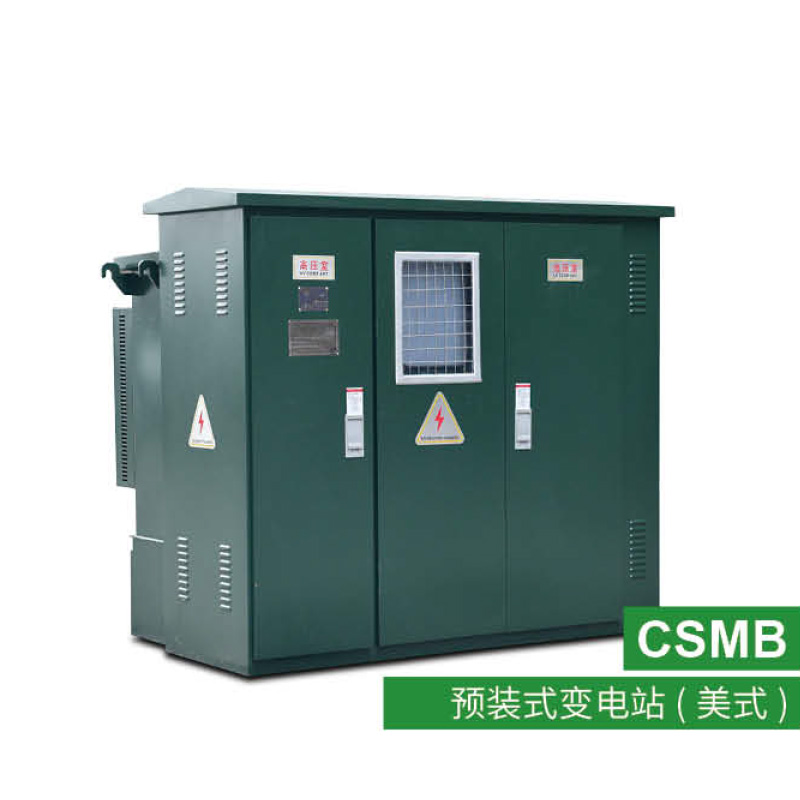
Urban power delivery has shifted toward equipment that respects the physical constraints of dense corridors while still carrying full load through peak periods. Compact substation systems now combine narrow aisle-friendly enclosures with integrated protection and control, so utilities no longer have to choose between switchgear depth and operational headroom. The layouts are deliberately modular, allowing crews to stage and land sections on street level without lengthy excavation or crane windows, which shortens the time a sidewalk or curb lane is out of service. Because the enclosures sit close to mixed-use buildings, thermal design has moved away from oversized fans and toward passive, low-noise dissipation paths that handle afternoon and early evening spikes without adding audible clutter to the block.
That same footprint logic carries into routine work. Access points are positioned so breaker checks, relay resets, and cable terminations happen from the street side without blocking adjacent businesses or bus stops. Continuous duty ratings are matched to realistic urban load curves, meaning a unit can run through consecutive hot days without derating or pushing the upstream feeder into overload territory. The result is a quieter, smaller, and faster-to-install substation class that keeps surrounding blocks energized while the city keeps moving around it.
Contact Us
Contact Person: Tonglun Chen
Email: [email protected]
Tel/WhatsApp: 8618906642555
Website: https://www.cncsele.com