

Professional MCM Flexible Stone for Interior Walls Brings Natural Stone Elegance Indoors
2026-08-23
Most interior walls settle for paint or wallpaper because real stone feels like a construction project. Magic Stone flips that assumption with professional MCM flexible stone: a slim, bendable surface that carries the genuine texture of natural stone into living rooms, retail spaces, and feature walls without the weight, mess, or structural guesswork. If you’ve ever wanted the quiet luxury of stone but dreaded the installation, this is the moment to look closer. In this post, we’ll walk through how flexible stone works, where it shines, and why it’s becoming the interior designer’s shortcut to timeless elegance.
A Closer Look at the Stone Texture and Finish
Run your fingers across a honed limestone surface and you'll notice something photographs rarely capture—the faint, almost dusty drag that softens every edge and diffuses light into a low, quiet glow. It's a finish that doesn't shout for attention, but it makes a room feel settled, as if the stone has been there for decades.
Flip the same slab over to a polished face and the story changes entirely. Veins that looked muted suddenly snap into focus, their mineral layers catching light like thin ribbons of glass. This isn't just a glossy coating; it's the result of grinding the surface down to a near-mirror flatness, revealing the stone's internal architecture in crisp, almost architectural detail.
Then there's the flamed or bush-hammered finish, where a rough, granular texture turns walking surfaces into a tactile experience. The stone's natural cleft and crystalline sparkle become more pronounced, offering grip without sacrificing character. Choosing between these textures isn't about right or wrong—it's about how you want the stone to behave under light, underfoot, and under your hand.
Why Lightweight Panels Work Better Indoors
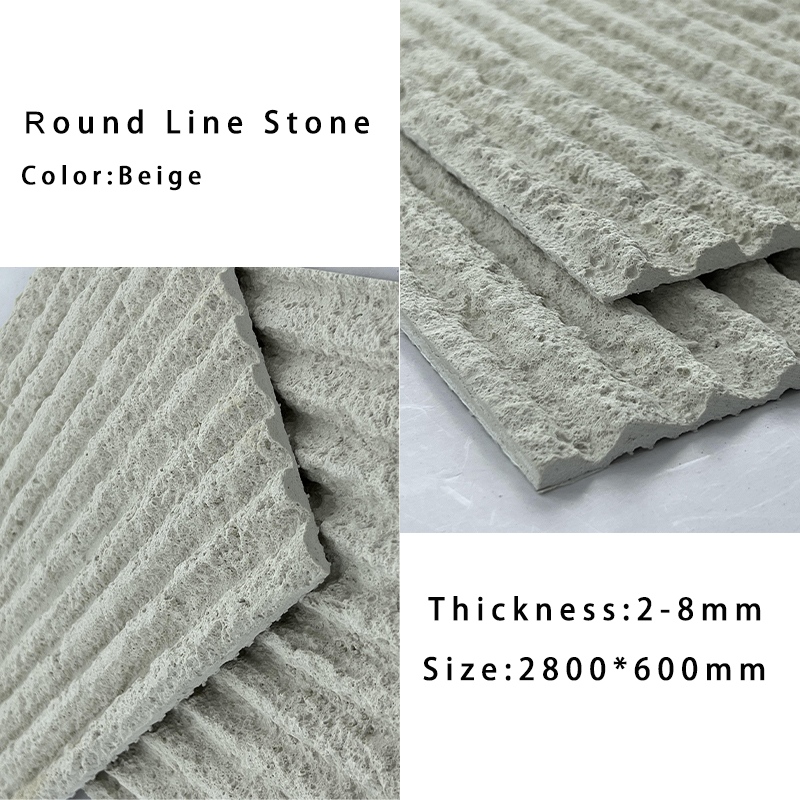
Indoor spaces come with a set of constraints that heavy materials often struggle to meet. Lightweight panels, by contrast, fit into these environments without forcing designers to compromise on layout or load-bearing capacity. Because they exert far less stress on existing structures, they allow for creative wall partitions, ceiling treatments, and even furniture integration in older buildings where adding substantial weight could be risky. This flexibility makes them a practical choice for renovations and adaptive reuse projects.
Beyond structural ease, lightweight panels simplify handling and installation in confined interior areas. There is no need for heavy lifting equipment or large crews, which reduces disruption to occupied spaces and shortens project timelines. The reduced mass also means fewer concerns about moisture retention or thermal bridging when panels are used as interior cladding or acoustic baffles. In many cases, these panels can be cut and fitted on site with basic tools, giving contractors the ability to make precise adjustments without returning to the workshop.
Acoustic performance is another reason these panels shine indoors. Many lightweight options are engineered with porous cores or perforated surfaces that absorb sound, improving speech intelligibility in offices, studios, and residential living areas. Unlike dense, solid materials that reflect noise back into a room, lightweight panels can be tuned to target specific frequency ranges. This combination of low physical weight and high acoustic value makes them a favorite for creating comfortable, quiet interiors without overbuilding the space.
Install It Yourself Without Specialized Tools
You won't need to rent a single specialized tool or call in a favor from a contractor friend. The entire assembly relies on hardware that's already sitting in most household toolboxes: a Phillips screwdriver, an adjustable wrench, and a bubble level. Everything else is included in the box, down to the last washer. This decision wasn't an accident—it means you can start the job on a whim, take a break whenever you like, and finish without ever leaving the house.
Each fastener is a standard size, so there are no oddball drill bits or metric-only adapters to track down. If a bolt feels like it's binding, stop and realign the parts instead of forcing it; the design tolerates a bit of wiggling. Should you realize a bracket is upside down halfway through, undoing a few screws takes seconds. That kind of forgiveness keeps the project moving instead of turning it into a rescue mission.
A clean, flat surface and a small bowl for loose hardware go a long way. Lay out all the components before you begin, and you'll quickly see how the pieces relate. Expect the entire install to take under an hour, even if you're taking your time. When you set the final piece in place, use the bubble level on two adjacent edges, then give each connection a gentle quarter-turn more than hand tight. The result is solid, square, and entirely your own work.
Combining Stone with Wood and Paint for Depth
Stone carries a certain weight in a room—cool under the hand, faintly uneven, holding light in a way that feels almost geological. Left on its own, it can read as cold or imposing. Bringing in wood shifts that mood. A slab of walnut against a stone fireplace, or oak shelving mounted on a limestone wall, gives the eye somewhere softer to land. The grain lines move, while the stone stays still.
Paint does the quieter work of tying those two surfaces together. A wall color pulled from the stone's undertones—think a warm greige or a dusty blue—keeps the contrast from becoming too stark. You might also paint a single wood element, like a window frame or a baseboard, in a tone that echoes the stone's mottling. It's less about matching than about letting one material borrow a note from the other.
Depth comes from how these layers sit next to each other, not from any single finish. A dark stone floor with pale oak furniture and a chalky plaster wall reads differently than a bright marble backsplash against cherry cabinets. The trick is to vary the visual temperature and texture without letting any one element shout. When stone, wood, and paint each keep a bit of their own character, the room starts to feel assembled over time rather than decorated in a day.
Keeping the Surface Clean and Looking Fresh
A quick pass with a dry microfiber cloth every day or two keeps most surfaces from building up that dull, hazy film. If you spot a smudge or a sticky ring, dampen the cloth with warm water and a single drop of mild dish soap, then wipe the area and follow with a dry buff. Avoid soaking the surface or letting liquid sit along the edges, since moisture tends to sneak into seams and cause warping or discoloration over time.
To bring back that just-finished look, match your maintenance product to the material instead of grabbing an all-purpose spray. A thin coat of hard wax on wood, a dedicated stainless cleaner on metal, or a pH-neutral stone polish on natural surfaces does more than remove grime—it evens out the way light hits the texture. Work in small sections and wipe away excess before it dries, otherwise you’re just trading one kind of buildup for another.
Small habits prevent the worst wear. Use felt pads under heavy decor, keep coasters within reach, and wipe up spills before they have a chance to evaporate and leave mineral spots or ghostly white rings. A surface that stays clean without constant deep scrubbing is usually one that gets a few seconds of attention at the right moment, not a full restoration every weekend.
Where This Material Shines Beyond Accent Walls
Most people relegate this material to a single accent wall in the living room, but its real value shows up in smaller, less expected places. A sliver of it inside an alcove or along the side of a staircase draws the eye without overwhelming the space. Even a windowless powder room feels more finished when it wraps just one corner rather than the whole room.
Consider how it behaves on built-in elements. Facing a set of open shelves or a media niche with it gives the whole unit a custom look that flat paint rarely achieves. On a hallway ceiling, a subtle treatment can add warmth and make the passage feel less utilitarian. It does not need a large footprint to change the mood; a thin vertical strip behind a console table or a reading chair does the job.
It also works well as a backdrop for functional areas, like a home office nook or a drop zone by the back door. Instead of a full wall, you can use it to define the boundary of a workspace or highlight a floating bench. Because it reads as intentional rather than decorative, it helps small architectural moves feel like design choices, not afterthoughts.
FAQ
MCM stands for modified inorganic powder composite material. It's a lightweight, bendable panel that replicates the look and texture of natural stone without the weight or rigidity of real rock.
Yes, the surface detailing is quite convincing. Up close you’ll see subtle color variations, pits, and grain lines that make it hard to tell apart from quarried stone, but it feels warmer and far easier to work with.
It works beautifully for both. A single feature wall can anchor a living room or entryway, while full-room application creates a cozy, cave-like ambience without overwhelming the space due to its relatively thin profile.
Real stone often means heavy lifting, sealing, and structural concerns. This flexible alternative gives you the same organic charm, from sandy travertine to dark slate looks, but installs like a high-end wallpaper with adhesive.
It leans into rustic, modern farmhouse, and minimalist organic aesthetics. Pair it with warm wood, matte black fixtures, or soft linen fabrics, and the stone texture becomes the quiet focal point of the room.
Many people do. Since the panels are lightweight and can be cut with a utility knife, you don't need specialized masonry tools. Just a clean, flat surface, the right adhesive, and a bit of patience to align the seams.
Not much. A soft brush or vacuum attachment removes dust, and a damp cloth handles occasional smudges. Unlike real stone, you won't need to reseal it, and it resists common indoor stains fairly well.
Conclusion
Professional MCM flexible stone brings the irregular depth of natural stone indoors without the weight or complexity of quarried slabs. The surface reads as genuine split-face stone because the mineral coating is pressed from real rock layers, leaving subtle fissures, tonal shifts, and a dry, matte grain that catches light unevenly across a wall. That texture matters most in tight interior spaces where full-thickness stone would feel heavy or require reinforcement. The panels are thin and flexible enough to carry up a stairwell alone, score with a utility knife, and press onto a primed surface with adhesive. No wet saws, no metal lath, no specialty crew. You can run a feature wall behind a bed, then stop the stone halfway and let a painted edge or a stained oak slat wall take over; the contrast between raw stone and smooth wood or matte paint keeps the room from feeling one-note.
Maintenance stays simple because the sealed surface repels dust and resists staining, so a vacuum with a soft brush or a damp microfiber cloth is usually enough. Spills wipe off without leaving a film, and the color doesn't need resealing every year. Beyond a living room accent wall, the material works in entries, home offices, bathroom vanities away from direct spray, and even ceiling soffits or bar fronts where traditional stone would be impractical. Its low profile also means you can wrap columns, line the back of open shelving, or frame a fireplace without losing floor space. The result is a consistent stone look that feels collected rather than applied, giving interiors the quiet heft of limestone or slate while keeping the room bright and easy to live with.
Contact Us
Contact Person: Vito
Email: [email protected]
Tel/WhatsApp: 86 13088879266
Website: https://www.magicstonemcm.com