

Programmable Power Supply Supplier Evaluation Criteria Every Engineer Should Know
2026-08-28
When a programmable power supply goes down mid-test, the last thing you want to discover is that your supplier's support only exists on paper. Yet many engineers still choose vendors based on glossy datasheets alone. This post cuts through the noise and lays out the evaluation criteria that actually matter—from load regulation and transient response to firmware update policies and long-term calibration support. Along the way, you'll see how a supplier like TPS approaches these challenges, so you can make a decision that holds up under real bench conditions.
Insist on Bench-Level Proof, Not Just Datasheet Promises
A datasheet can list impressive figures that were captured under near-perfect lab conditions. Bench-level proof means running the part in a real circuit, with real loads, at the temperatures and voltages your design will actually see. Without that, you're betting on marketing rather than measurement.
When you push for bench data, ask for results from sustained full-load runs, thermal cycling, and line/load transient response. Those numbers rarely show up in a glossy PDF, but they reveal how a component behaves after an hour of heat soak or when the input rail dips. Real bench work exposes quirks that nobody puts on the first page.
If a vendor can't or won't provide bench-level evidence, go get it yourself. Build a small test board, load it to spec, and watch what happens over time. The hour you spend probing a prototype can save you from a field failure that no datasheet guarantee would ever cover.
Evaluate Thermal Design and Component Margins Under Full Load
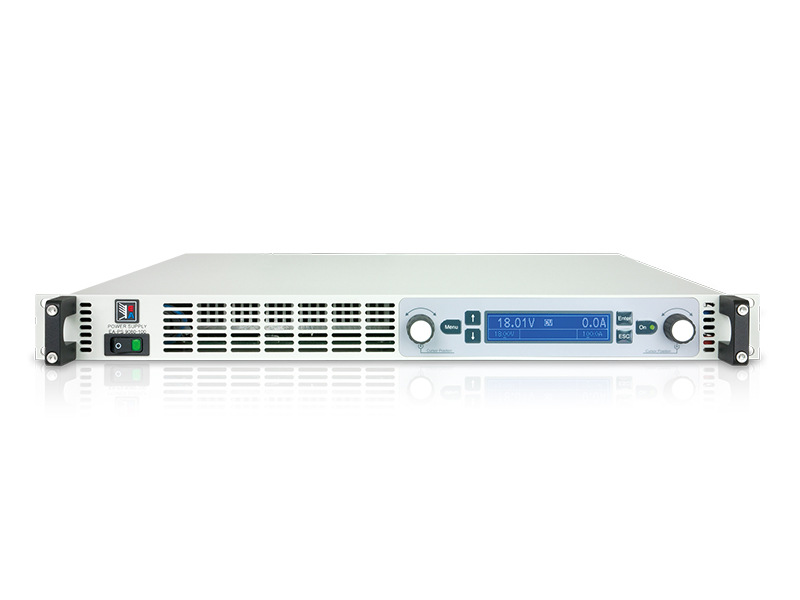
Running a system at its maximum sustained load reveals the true limits of every thermal interface, airflow path, and heatsink contact. Marginal assumptions made during schematic review often collapse under the steady-state heat flux that only a full-load bench test can expose. Component case temperatures climb, derating curves shift, and the gap between simulated junction temperature and actual silicon behavior becomes painfully clear.
The practical approach is to instrument the board with thermocouples at critical nodes—voltage regulators, inductors, power stages, and the processor package itself—while logging supply currents and ambient conditions. Comparing those readings against the manufacturer's absolute maximum ratings gives a raw margin figure, but the more useful metric is the spread between rated limits and the measured value at the worst-case ambient you expect in the field. A part sitting at 92°C in a 25°C lab might be acceptable on paper, yet it leaves almost no headroom when the enclosure bakes in a 45°C telecom closet.
Component margins degrade unevenly. Electrolytic capacitors lose lifetime exponentially with temperature rise, while MOSFETs may survive brief excursions beyond their nominal operating point if the thermal impedance of the package allows quick heat spreading. A proper full-load evaluation should therefore include a duration test—holding the load for hours, not minutes—to capture thermal runaway effects in poorly bonded interfaces or undersized copper pours. Only after mapping every critical hotspot against its derated specification can you decide whether the design needs a larger heatsink, a revised fan curve, or a board spin with relocated power stages.
Probe Customization Depth: Firmware, Interfaces, and Control Loops
Customization rarely starts at the surface. The deepest gains come from understanding how firmware constraints shape every layer above. A probe's boot sequence, memory map, and register-level behavior determine what can be altered without destabilizing core functions. Teams that treat firmware as immutable often miss opportunities to adjust timing tolerances, buffering strategies, or even voltage thresholds that directly affect measurement stability in noisy environments.
Interfaces matter just as much as the hardware itself. Whether it's a serial console, a vendor-specific API, or a raw JTAG connection, the access path dictates how far changes can propagate. Some tools expose only configuration flags, while others allow scripted reflashing of microcode. The real customization depth emerges when you can inject custom logic into the control loop itself—bypassing default filtering, altering PID coefficients, or swapping sensor fusion routines entirely.
Control loops are where customization becomes tangible. A closed-loop system tuned for one application will behave erratically under another. Adjusting loop rate, damping, or error integration windows can turn a general-purpose probe into a specialized instrument. The most flexible designs separate loop parameters from signal processing code, letting engineers swap algorithms without touching the acquisition pipeline. That separation is what separates superficial tweaks from genuine deep customization.
Check Long-Term Firmware Support and Update Transparency
A device that launches with great features can quickly become a liability if the manufacturer quietly abandons firmware updates a year later. Before investing in any connected hardware, dig into the vendor's track record: how many years of security patches do they actually promise, and do they stick to that timeline? Look for public end-of-life policies, release notes that mention CVEs, and forums where owners report whether patches arrive on time or get silently delayed. Some brands publish a formal support window (e.g., five years from product launch), but the real test is whether they honor it for older models rather than just flagship devices.
Transparency matters just as much as the update itself. A vendor that posts detailed changelogs, distinguishes between functional bugs and security fixes, and gives advance notice before dropping support earns trust. Beware vague statements like "supported for the lifetime of the product" — that lifetime is often defined by sales targets, not actual hardware capability. Check whether firmware is signed with a verifiable chain of trust, and whether the company has a track record of rushing out hotfixes when a serious flaw is disclosed. If the update page goes blank for a model that's only two years old, that's a red flag no amount of marketing can cover.
Finally, look beyond the manufacturer's own site. Community forums, independent vulnerability databases, and reverse-engineering projects often reveal the true state of long-term support. A device that still receives occasional OTA updates but never addresses critical Bluetooth or Wi-Fi flaws is no better than one abandoned entirely. When comparing two products with similar specs, the one with a clean, public, and realistically maintained update timeline should win every time — because firmware is not a one-time feature; it's a years-long commitment that determines whether your smart device remains safe or becomes a silent backdoor.
Match Certifications to Your Target Markets Before Signing
Signing up for a certification because it looks impressive on paper is a fast way to waste money. Before you commit, dig into what your actual target market respects. A project management cert that carries weight in the US might be barely recognized in parts of Europe or Asia, while a local trade association's credential could open more doors. Check job postings, talk to people already working in that niche, and ask potential clients directly which certifications they actually look for. If nobody in your desired market mentions it, skip it.
Also think about timing and cost. Some industries shift their preferred certifications every few years, so a credential you earn today might be outdated before you've recovered the fee. Trying to match a cert to your market isn't just about the name—it's about whether the training, exam, and renewal requirements align with how that market operates. For example, a certification that requires in-person workshops won't help if you're targeting a remote-first client base that values digital badges and quick verification. Make a short list of three target markets, write down the certifications that show up repeatedly in their hiring posts or vendor requirements, and only sign when you see a direct overlap with what you can realistically complete.
One more thing: certifications can sometimes lock you into a specific methodology or toolset that your target market doesn't use. If you're aiming at startups that run on agile, a heavyweight traditional cert might signal you're out of touch. Matching before signing means reading the fine print on renewal fees, continuing education requirements, and geographic restrictions. A cert that's cheap upfront but demands expensive annual updates will hurt your margins later. So treat certification shopping the way you'd treat any business investment—check the return in your specific market, not just the logo on your website.
Assess Supply Chain Resilience and Lead Time Realism
Mapping every supplier and transport lane is only the first step. The real question is whether the network can bend without breaking when a port closes, a key component goes out of stock, or a regional power grid fails. Instead of relying on static risk matrices, run tabletop simulations that inject sudden demand shifts or a two-week factory shutdown. Look for single points of failure where a second source isn’t just on paper but has actually produced a sample batch within the last six months. Resilience isn’t a score—it’s the measurable time to recover 80% of normal output.
Lead time realism demands more than asking a vendor for a number. That figure often ignores customs variability, inspection holdbacks, or the quiet assumption that raw materials arrive exactly when promised. Pull twelve months of actual purchase order data and compare the quoted lead time with the delivered lead time, not the average but the spread between the 10th and 90th percentile. A supplier who averages four weeks but occasionally delivers in nine is a different risk than one who consistently delivers in five. Factor in buffer stock levels, reorder triggers, and the time it takes to switch a production line if a shipment fails.
Finally, tie both resilience and lead time to cash flow. A robust supply chain that doubles inventory costs is not sustainable, and a short lead time that depends on air freight for every order is a margin killer. Run what-if scenarios showing how a three-week delay affects customer delivery promises, expediting fees, and stockout penalties. The goal is to know which nodes can absorb a shock and which ones quietly pass the cost downstream. That kind of clarity lets you invest in the right weak link instead of spreading resources thin across every possible disruption.
FAQ
Burn-in results at elevated temperatures and full load. Many vendors publish room-temperature spot checks, but real failures show up only after thermal cycling and extended operation. Ask for a summary of units tested, duration, and failure modes—not just a pass/fail stamp.
Request a trial of the command set and driver library before purchasing. Connect it to your existing test executive and run a loop of voltage changes, current readbacks, and status queries. If the driver needs constant restarts or the latency jumps under load, the hardware is irrelevant.
The declaration of conformity, test report numbers, and any conditions or limitations listed in the approvals. For example, some safety certifications apply only up to a certain ambient temperature or with specific input fusing. Overlooking those details can invalidate your system-level certification.
The difference usually comes down to whether they have a modular platform and an engineering team that handles small firmware changes without excessive charges. Ask for an example of a recent custom build and the time from request to prototype. A vendor that hesitates to share that may see customization as a burden.
A production line may need the same model or a drop-in replacement for five to ten years. If a supplier obsoletes a unit with only a three-month notice, you could be forced into a costly redesign or stockpile spares. Ask for a written continuity guarantee or a pin-compatible successor path.
At minimum, clarify response time for technical inquiries, availability of calibration procedures, and whether firmware bug fixes are included. It is also worth asking if the supplier can provide a loaner unit while yours is being repaired, because downtime in a test rack can cost far more than the supply itself.
Look for derating curves at common rack temperatures, efficiency at the load points you actually use, and audible noise at those loads. If a vendor only provides ideal-condition specs and cannot explain thermal protection behavior, assume the unit will limit output sooner than the datasheet suggests.
Neither is automatically better. A local office often gives faster engineering feedback during prototyping, while a global distributor can handle multi-site deliveries and localized service contracts. The key is to verify who owns calibration equipment and spare part inventory in your region.
Conclusion
Start by ignoring glossy datasheets and demanding a bench-level demonstration at full rated output into your actual load profile. Watch thermal images, ripple, transient response, and control-loop stability while the unit is hot and loaded, not sitting idle on a showroom table. Many supplies collapse near maximum because heatsinks, fan curves, or capacitor ratings were quietly shaved during cost reduction. Check derating on MOSFETs, diodes, magnetics, and every connector; genuine headroom means the design survives tight enclosures and blocked airflow, not just a 25°C bench test. Customization depth is another strong tell. A supplier that treats firmware, communication protocols, and control-loop parameters as untouchable black boxes will never let you tune startup sequences, add custom telemetry, or compensate for a weird load signature. Ask exactly how they handle PID adjustments, remote sense options, and integration with your test executive. The quality of their answers reveals whether they truly own the design or just resell a generic platform.
Next, examine firmware longevity and certification scope. Request at least two years of update history: how many bugs were patched, how fast critical issues were resolved, and whether field updates can be applied without shutting down production. Vague lifetime-support promises are worthless without release notes, a defined escalation path, and a track record of actually shipping fixes. Certifications must match every target market before you sign anything; a CE mark alone is meaningless if the equipment also heads to North America, South Korea, or marine environments. Demand the actual test reports, not just wall certificates, and confirm they cover your specific input voltage range and altitude. Finally, pressure the supplier on supply-chain resilience. Get written confirmation of alternative component sources, safety stock levels, and realistic lead times under both normal and constrained conditions. If they quote eight weeks today but have no fallback plan for a magnetics or semiconductor shortage, they will eventually stall your production line. The best partners flag risks early and offer workable alternatives instead of handing you excuses after the fact.
Contact Us
Contact Person: Lily
Email: [email protected]
Tel/WhatsApp: +49 (0) 2161 49526-0
Website: https://tps-elektronik.com/en/