
Silicone Water Cup Manufacturer for Custom Reusable Drinkware
2026-11-02
Let's be honest: most 'custom' drinkware isn't all that custom. If you're serious about reusable silicone water cups that reflect your brand, you need a manufacturer that treats design as more than a stamp. Qunhao has built its name on exactly that—flexible production, thoughtful material choices, and a process that doesn't make you chase every detail. In this guide, we'll look at what makes their approach different and how to get started.
Why Food-Grade Silicone Is the Smart Base for Everyday Drinkware
Food-grade silicone isn't just another material—it's engineered to meet strict safety requirements for repeated contact with food and drinks. Unlike some plastics that can break down or leach compounds when exposed to heat, acids, or daily wear, high-quality silicone holds up across a wide temperature range. That means it's just as reliable in a freezing cold smoothie as it is in a piping hot coffee. It also doesn't absorb flavors or odors, so your water won't taste like yesterday's lemonade, and your morning brew won't carry a trace of last night's herbal tea.
Beyond safety, silicone brings a practical set of physical traits to everyday drinkware. It's soft enough to give your hands a comfortable, slip-resistant grip, yet dense enough to keep its shape after repeated squeezing or knocking around in a bag. Drop it on a tile floor or bang it against a counter edge, and the material flexes and absorbs the impact instead of cracking like glass or denting like metal. It also shrugs off mineral buildup and staining far better than many stainless steel or plastic liners, so a quick rinse usually leaves it looking and smelling fresh.
There's also a quiet durability at play. Food-grade silicone doesn't peel, dry out, or turn brittle with regular washing and reuse. Whether it's a collapsible cup, a bottle sleeve, or a lid gasket, the material keeps its flexibility and seal after hundreds of cycles in the dishwasher or sink. That kind of longevity means fewer replacements over time, which makes it a sensible base for drinkware that gets used hard and often.
Turning Your Cup Concept into a Ready-to-Use Prototype
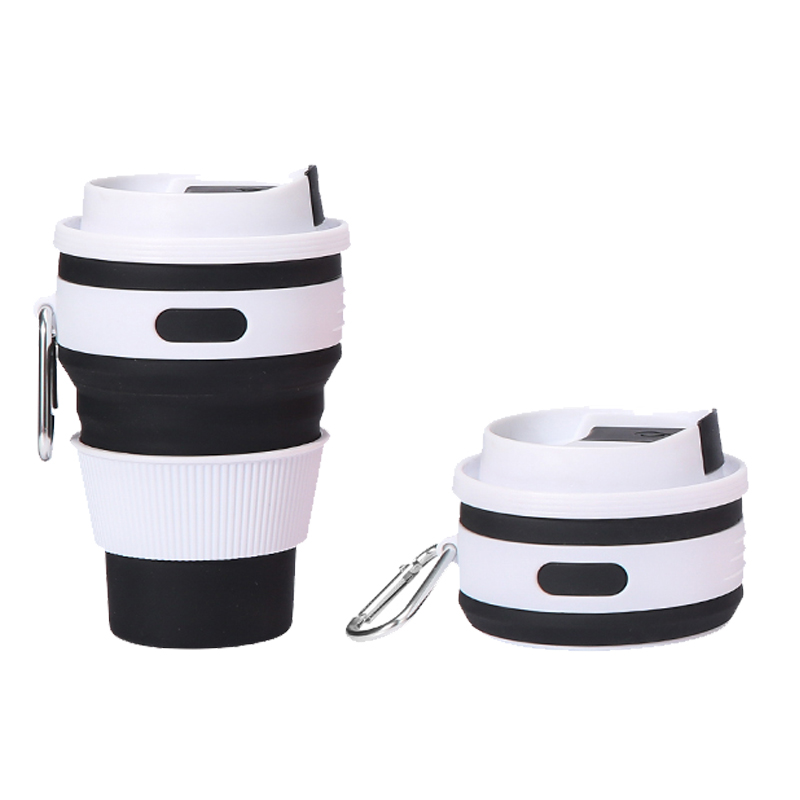
A sketch or a mood board can only take you so far. The real test begins when you commit to building an actual cup you can hold, fill, and sip from. Start by narrowing down the one core feature that defines your concept—maybe it’s the curve of the handle, the way the lid seals, or the texture of the outer surface. Then pick a material that behaves like your final choice, even if it’s not perfect. Clay, foam, or 3D-printed plastic often works better than expensive tooling at this stage.
Expect your first attempt to feel clumsy. That’s normal. Prototyping is not about getting it right on day one; it’s about learning which parts of your idea survive contact with physical reality. Pour water into it, drop it lightly on a table, run it through a dishwasher cycle if you can. Each small failure will point to a clearer adjustment. Keep the prototype rough enough to modify quickly—sand it, carve it, add or remove material without hesitation.
Once the basic form feels good in your hand, invite a few people to use it without explaining your intent. Watch where they grip, how they pour, whether they struggle with the rim or the base. Their unspoken habits will teach you more than any design guide. Refine the prototype again, then document everything: dimensions, material thickness, weight, and the exact changes you made. That record becomes your bridge from a clever cup idea to a version someone can actually use every morning.
Custom Mold Options That Break Away from Standard Shapes
Standard mold shapes assume your part is a box, a disc, or something that can be squeezed into one. The moment a design needs a tapered helical boss or a thin wall that wraps around an off-center axis, the standard library becomes a liability. Custom mold options remove that constraint by letting you define gate locations, parting lines, and ejection strokes around the part’s actual geometry rather than forcing the part to fit a pre-cut cavity.
A practical approach is to start with a modular base and machine only the inserts. This lets you experiment with asymmetric cores, side actions that follow a compound curve, and even conformal cooling channels routed close to deep ribs. Because the base stays unchanged, the cost of breaking away from a standard shape comes mainly from the insert machining, not from rebuilding the entire mold frame.
You can also borrow from low-volume tooling: 3D-printed mold inserts with steel or aluminum frames handle undercuts and organic surfaces that would be impossible or prohibitively expensive with traditional milling. The result is a mold that matches the product’s silhouette, not the other way around, without locking you into a single permanent shape.
Durability Testing That Goes Beyond the Expected Drop Test
Most people assume a rugged phone just needs to survive a few falls onto concrete. We threw that assumption out the window early on. Our test benches subject every prototype to a gauntlet of real-world abuse: repeated tumbles inside a rotating drum loaded with keys and coins, pressure points from a hydraulic ram pressing against the screen at awkward angles, and a vibration table that simulates months of riding in a truck glovebox in just a few hours. The goal isn't just to pass a checklist, but to find the failure point that no one else bothered to look for.
What surprised our engineers wasn't the cracked glass or bent chassis—it was the tiny stuff. A loose microphone seal after 10,000 micro-drops. A power button that started double-clicking after exposure to fine desert dust. So we built custom jigs to recreate those exact annoyances, then redesigned the button mechanism and swapped the seal material. Now every batch goes through a 48-hour torture routine that includes salt fog, thermal shock from -20°C to 60°C, and a cement mixer filled with gravel. If a device survives that, it's ready for your pocket.
The result? Our phones don't just survive the standard drop test—they laugh at it. We've had units come back from a six-month construction site trial with scratches deep enough to catch a fingernail, yet they still charge, call, and take photos flawlessly. That's the kind of durability you can't advertise with a single slow-motion clip. It's earned through thousands of hours of trying to break our own product before you do.
Low-Waste Production Methods for Reusable Cup Lines
Instead of treating trimmed edges and rejected preforms as waste, many lines now feed them directly back into the extrusion feed as a controlled percentage of regrind. The key is keeping the polymer chain intact through low-shear screws and precise temperature bands, so the recycled fraction doesn't weaken the cup wall.
Modular mold inserts allow a single base to run multiple cup sizes without swapping entire cores, cutting both metal waste and setup scrap. Quick-change stations are aligned so that purge material from the hot runner is captured in small trays and returned to the material supplier rather than being swept into general trash.
Water-based or UV-cured inks have replaced solvent-heavy pad printing in many facilities, and the cleaning process for screens uses a closed-loop filtration unit that extends water life. Even the cardboard dividers and stretch film are now sized to the exact pallet footprint, reducing offcuts and secondary wrapping.
Coordinating Color, Finish, and Branding for a Cohesive Look
A cohesive look doesn't happen by accident. It starts with picking a color palette that feels intentional rather than matchy-matchy. You might choose a deep navy for your primary pieces, then let brass or matte black finishes tie the room together. The trick is repeating those tones in different textures—a velvet cushion here, a lacquered tray there—so the eye moves smoothly without hitting a jarring note.
Finish matters just as much as color. Mixing polished chrome with aged wood can feel off unless you bridge them with something in between, like a brushed nickel or a soft leather. Branding, when done right, becomes part of that mix. A small logo on a discreet label or an embossed pattern on a ceramic base adds depth without shouting. It's about consistency: the same muted gold thread in a woven throw, the same satin sheen on a lamp base.
What separates a curated space from a catalog one is restraint. Pick two or three finishes and stick with them. Let your brand's visual cues show up in unexpected spots—inside a drawer, on the bottom of a vase—so the cohesion feels discovered, not stamped. That way, the whole room reads as one quiet, deliberate statement.
FAQ
You’re not limited to a single shape. We can produce tumblers, collapsible travel cups, sport bottles, and even kids’ cups with spill-proof lids. Each style can be tweaked in size, wall thickness, and finish to match your target market.
For stock designs, we usually start at 500 pieces. If you want a fully custom mold, the minimum rises to around 2,000 units because of the tooling involved. Smaller trial runs can sometimes be arranged if the design is close to an existing mold.
Yes. The food-grade silicone we use holds up from -40°F to 450°F, so it won’t warp with hot coffee or crack in the freezer. It’s also BPA-free, phthalate-free, and passes FDA and LFGB standards.
Both are possible. Debossing gives a subtle, tone-on-tone look that won’t fade. For multicolor logos, we use screen printing or pad printing with inks that bond to silicone and survive frequent washing.
Absolutely. Once the digital mockup is approved, we make a physical sample within 5-7 days and ship it to you. You can check the color, weight, logo placement, and lid fit before we start mass production.
Our cups are tested to FDA 21 CFR 177.2600 and LFGB standards. We also offer REACH compliance and CPSIA testing for children’s products if needed. Test reports can be shared with your order.
We add a small amount of platinum-cured silicone in the base material, which creates a denser, less porous surface. That means the cups resist staining and odors far better than standard peroxide-cured silicone, even after hundreds of uses.
Conclusion
Food-grade silicone changes what a reusable cup can feel like in daily use. It resists stains and odors, handles hot and cold without warping, and brings a soft grip that hard plastics simply cannot match. A capable manufacturer treats this material as more than a surface detail, shaping it around a genuine drinking experience. From the first rough idea, a working prototype comes together quickly, allowing you to test lip feel, lid fit, and overall balance before committing to tooling. Instead of forcing your design into an existing mold, the production team builds cavities around your silhouette, whether you want a tapered tumbler, a collapsible cup, or an asymmetric profile with integrated grip ridges.
What sets a focused silicone drinkware partner apart is how far it pushes reliability. Testing moves past the standard drop onto concrete and includes repeated squeeze cycles, dishwasher heat exposure, and long-term flex fatigue so the cup keeps its shape and seal over years of use. On the factory floor, low-waste methods matter just as much: precision dispensing trims excess material, regrind streams recycle clean offcuts, and water-based release agents lower chemical load. Color mixing, matte or gloss finishing, and debossed brand marks are then tuned together so the final product reads as one consistent object. The result is a reusable cup line that carries your identity without falling back on generic silhouettes.
Contact Us
Contact Person: Cecilia
Email: [email protected]
Tel/WhatsApp: 8619057488653
Website: https://silwatbottle.com