

Slate Flexible Stone Veneer Original Manufacturer Reveals Top Benefits for Modern Spaces
2026-09-10
When design demands the raw texture of slate but installation realities push back, flexible stone veneer changes the conversation. As an original manufacturer, Magic Stone has spent years refining this lightweight alternative, and the payoff for modern spaces is bigger than most architects expect. From seamless curves to faster timelines, the top benefits below explain why this material is quietly replacing rigid panels on high-end projects.
A Real Slate Look That Won't Weigh Down Your Walls
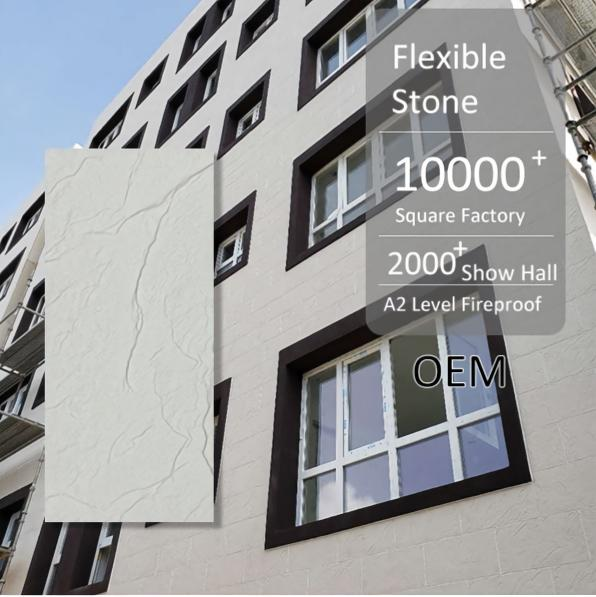
Natural slate brings depth and texture to a room, but the weight and installation hassle often stop people before they start. These panels capture that same layered, uneven surface without asking your walls to carry the load. The color shifts and rough edges are modeled from real stone, so from a normal viewing distance, it’s hard to tell the difference.
Because each piece is lightweight, you can cover a full accent wall in an afternoon with basic adhesive and a utility knife. No extra framing, no reinforcement—just measure, cut, and press into place. The joints disappear when the panels interlock, leaving a clean, continuous finish.
For renters or anyone hesitant about permanent changes, this is a practical way to get that slate accent without the long-term commitment or structural worry.
Bends and Curves Without Cracking or Compromise
Most materials fail on a curve because the outside surface stretches while the inside surface compresses. That imbalance creates tiny stress risers that eventually turn into cracks. To avoid this, woodworkers steam or laminate thin layers around a form, metalworkers use mandrels or controlled annealing, and plastics engineers adjust wall thickness or add impact modifiers. Each method works because it lets the material redistribute strain instead of concentrating it at one point.
A reliably curved part starts with the material's memory. Some alloys and thermoplastics can be heated past a specific threshold, shaped, and then cooled or cured to lock in the new geometry without internal fractures. The radius you can achieve depends less on brute force and more on matching the forming temperature, speed, and support to the material's glass transition or recrystallization behavior.
When done right, a bend becomes a structural asset rather than a fragile corner. Continuous fibers, grain alignment, or ribbing along the curve can carry loads smoothly from one leg to the next, eliminating the need for brackets or welds. That kind of seamless flow is what separates a design that only looks curved from one that actually works curved.
Installation That Feels More Like Wallpaper Than Masonry
The surface arrives in rolls, not slabs. You unroll it across a prepared wall, peel back the backing, and smooth it into place with a plastic scraper. Corners wrap instead of mitering, and a utility knife is all you need for outlets and trim. There is no mortar mixing, no grout haze, no waiting for thin-set to cure before you can touch the face.
Up close, the texture still reads as stone or brick or scored plaster—whatever finish you chose—but the weight is a fraction of what real masonry would be. A single person can carry enough material for an accent wall under one arm. And because it flexes, it forgives walls that are slightly out of plumb, settling into hollows rather than bridging them the way rigid tile does.
Removal is just as low-impact. Warm the adhesive with a hair dryer and the panels release without tearing drywall or leaving behind a demolition mess. That makes it practical for renters, temporary retail displays, or anyone who wants the look of a solid surface without committing to one for the next decade.
Built to Take Everyday Knocks and Moisture in Stride
The shell shrugs off scuffs from door frames, zipper snags, and the occasional drop onto rough pavement. A dense ripstop weave handles friction without immediately showing wear, while the reinforced base keeps sharp edges from digging through when you set it down on gravel or concrete.
Rain and spills bead up instead of soaking in, thanks to a water-repellent finish that doesn't turn the fabric stiff or crinkly. Seams along high-exposure areas are taped, so a sudden downpour or a tipped drink doesn't leave your gear sitting in a damp spot. It's the kind of protection that fades into the background until the weather turns, then quietly proves its worth.
The Low-Upkeep Secret Behind That Natural Stone Finish
Most people assume a natural stone surface means constant sealing, wiping, and worrying over every drop of water. The low-upkeep secret sits right in the finish. A honed or leathered texture doesn't reflect light the way a glossy polish does, so smudges, water spots, and faint scratches simply don't register. Instead of fighting the stone's surface, you're letting the matte quality absorb those small daily marks.
The real workhorse is the stone's natural variation. Veining, mineral speckles, and subtle color shifts break up the visual field. A crumb or a bit of dust that would stand out on a solid white slab vanishes among those irregular patterns. So the surface never looks "dirty" in the usual sense; it just looks like stone.
Maintenance drops to almost nothing once you stop chasing a mirror shine. Sweep or vacuum loose grit, and wipe with a damp cloth using a pH-neutral cleaner when needed. No waxes, no resealing schedule, no special polishes. That's the quiet secret: the finish and the stone's own inconsistencies handle the visual upkeep for you.
One Material That Moves Effortlessly From Indoors to Out
A single surface can erase the line between your kitchen and the patio when you choose the right material. Porcelain pavers, for instance, handle both heated indoor floors and freeze-thaw cycles outside without cracking or fading. The same matte finish that feels soft under bare feet inside stays slip-resistant around a pool after rain.
The trick lies in how the material is made. Dense, low-porosity bodies don't absorb moisture, so they won't swell or develop mildew when exposed to morning dew or a summer downpour. Unlike natural stone that needs sealing every season, this option keeps its color and texture with little more than a rinse from a garden hose.
Design-wise, it lets you run large-format tiles through a sliding door and onto an outdoor lounge, making a small living area feel twice its size. Choose a subtle stone or concrete look with a slightly textured surface, and the transition becomes invisible to the eye while standing up to everyday wear from pets, furniture, and foot traffic.
FAQ
It uses a thin layer of real slate bonded to a flexible backing, so it bends around curves and corners without the weight or thickness of conventional slabs.
Yes, as long as the surface is clean, dry, and stable. Many projects apply it directly over old tiles or painted drywall without demolition.
Accent walls, reception areas, kitchen islands, bathroom feature walls, and even curved columns or fireplace surrounds gain texture and depth without heavy structural support.
Real slate is naturally tough and scratch-resistant. The flexible backing helps absorb minor impacts, so it holds up well in hallways, lobbies, and commercial settings when sealed properly.
Often yes. Working directly with the source can give you access to custom panel dimensions, edge finishes, and a wider range of slate tones than standard retail options.
It can be used outdoors on covered areas like porch walls or exterior feature walls, but full exposure to constant rain and freeze-thaw cycles may require additional sealing and proper substrate preparation.
Occasional dusting and a damp cloth are usually enough. For long-term protection, a penetrating stone sealer every few years helps maintain color and stain resistance.
Cutting out middlemen lowers material costs, and direct communication allows you to order exact quantities, receive consistent batches, and avoid extra markups or delays.
Conclusion
Slate flexible stone veneer flips the script on what natural stone can do in a modern build. Instead of wrestling with heavy slabs or worrying about structural support, you get a genuine slate finish that sits light on the wall—no special reinforcement needed. That alone changes the game for renovations and upstairs rooms. What really sets it apart, though, is how it handles curves. Columns, arched doorways, rounded feature walls—this material bends right along with them without snapping or showing stress lines. It keeps the rugged, layered texture of real slate but moves like a far more forgiving product. And when it comes to installation, the process feels closer to hanging wallpaper than doing masonry. No wet mortar, no chiseling, no crew of specialists. A clean surface, a good adhesive, and you can wrap a room in stone-like character over a weekend. That kind of simplicity is rare for a finish this convincing.
Beyond the easy install, the veneer is built for real life. It shrugs off bumps, scuffs, and everyday knocks that would chip or crack traditional stone. Moisture isn't an issue either, so kitchens, bathrooms, and covered outdoor areas are all fair game. You don't have to baby it with sealants or special cleaners—just a wipe now and then keeps the surface looking sharp. That low-upkeep quality is huge for busy households and commercial spaces alike. And because it's so versatile, the same material can flow from a living room accent wall to an exterior entryway without breaking visual continuity. Interior designers love that kind of flexibility. You get the tactile depth and natural variation of slate without the weight, the upkeep, or the installation headaches. For anyone chasing that organic stone look in a contemporary setting, this product quietly checks every box.
Contact Us
Contact Person: Vito
Email: [email protected]
Tel/WhatsApp: 86 13088879266
Website: https://www.magicstonemcm.com