

Solar Fan Manufacturer Reveals Essential Guide to Choosing High-Performance Eco-Friendly Fans
2026-07-27
In an era where sustainability meets innovation, the demand for energy-efficient cooling solutions has never been higher. But not all eco-friendly fans are created equal—some promise efficiency yet fail to deliver, while others cut corners on durability. That’s where SRS steps in, redefining what it means to stay cool without costing the earth. Whether you’re outfitting a home, office, or industrial space, understanding the subtle but critical differences in design, motor technology, and materials can make or break your investment. In this guide, we reveal the insider secrets that separate true high-performance solar fans from the rest, helping you choose a solution that’s both kind to the planet and uncompromising on power.
Solar Fan Basics: How They Work and Save Energy
At their core, solar fans operate on a straightforward principle: they convert sunlight into electricity to power a motor that spins the blades. A small photovoltaic panel, usually mounted on the fan's housing or connected via a cable, captures sunlight and generates direct current (DC). This DC electricity is either fed directly to the motor or stored in a rechargeable battery, allowing the fan to run even when the sun isn't shining. Because the system bypasses the need for a conventional power grid, it’s an elegantly simple setup with very few parts that can fail.
The way these fans save energy is twofold. Firstly, they consume zero utility-supplied electricity during operation, which directly lowers your carbon footprint and energy bills. More interestingly, solar fans often replace or supplement air conditioning units in spaces like attics, garages, or RVs. By continuously moving air and venting hot air out, they reduce the workload on your AC system, leading to significant cooling cost savings over time. This passive-cooling approach is especially effective in well-insulated spaces where managing heat buildup makes a noticeable difference.
Modern designs also incorporate smart features like adjustable solar panels for optimal sun tracking, built-in LED lights for evening use, and efficient brushless motors that squeeze more airflow out of each watt. These innovations mean a solar fan isn’t just a novelty—it’s a practical, low-maintenance tool that keeps spaces comfortable while drawing almost nothing from the environment beyond daylight. Whether you’re trying to cool a greenhouse, a chicken coop, or a stuffy room, the technology has matured to the point where it meets real-world demands without the gimmicks of early models.
Key Features That Define a High-Performance Solar Fan
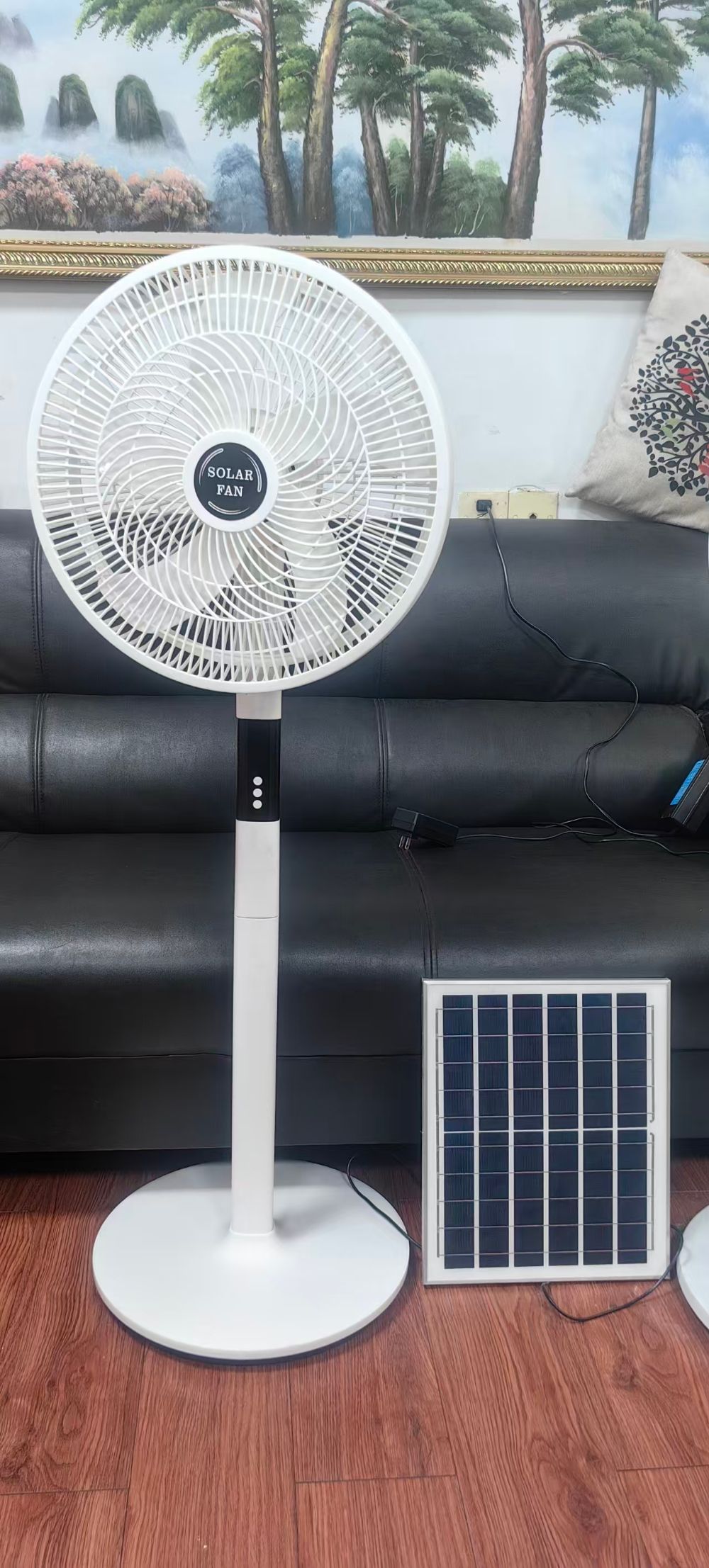
A truly high-performance solar fan relies on cutting-edge photovoltaic cell technology that maximizes energy conversion even under less-than-ideal sunlight. These panels often incorporate monocrystalline silicon with anti-reflective coatings, capturing more light throughout the day and delivering steady power to the fan motor without sudden drops in speed. Combined with an integrated MPPT charge controller, the system adapts dynamically to shifting cloud cover, ensuring that airflow remains consistent whether you're dealing with midday glare or hazy afternoon skies.
Beyond the solar cells themselves, what sets an exceptional solar fan apart is its energy storage and motor efficiency. Premium models embed lithium-iron-phosphate batteries that endure thousands of deep cycles without notable degradation, storing excess energy for dusk or overnight use. The brushless DC motor then translates every watt into optimal airflow, operating whisper-quiet while generating impressive cubic feet per minute. This synergy between storage and motor design means you get robust ventilation around the clock—cooling attics, greenhouses, or RVs—without ever touching the grid.
Durability and adaptive controls form the third pillar of a standout solar fan. Weather-sealed housings with corrosion-resistant hardware protect internal components from rain, dust, and salt spray, making these units suitable for coastal installations or off-grid cabins. Meanwhile, integrated thermostatic triggers and adjustable speed profiles allow the fan to self-regulate based on ambient temperatures, ramping up automatically when heat builds and dialing back as conditions stabilize. Such intelligent behavior eliminates the need for manual tweaking while prolonging the system's overall lifespan, truly defining what it means to be high-performance.
Matching Fan Size and Airflow to Your Space
Choosing the right fan isn't just about picking a model that looks good; it's about ensuring the blade span and airflow capacity align with the room's dimensions. A fan that's too small will struggle to circulate air effectively, leaving you with stagnant pockets and uneven temperatures. Conversely, an oversized fan in a compact space can feel overwhelming, both visually and in terms of the downdraft it creates. The goal is to achieve a gentle, consistent breeze that makes the room feel cooler without turning it into a wind tunnel.
As a rough guide, rooms up to 75 square feet pair well with a fan diameter of 29 to 36 inches. For spaces between 76 and 144 square feet, a 36- to 42-inch fan usually fits the bill. Medium-sized rooms from 144 to 225 square feet benefit from a 44- to 50-inch option, while larger living areas up to 400 square feet need a 52- to 56-inch fan. If your room exceeds 400 square feet, consider a 60-inch or larger model, or even two strategically placed fans to cover the entire area. Remember to factor in ceiling height, too—higher ceilings may require a downrod to position the fan at the optimal level for air movement.
Beyond square footage, think about how you use the room. A busy kitchen might require stronger airflow to combat heat from cooking, so a fan with a higher CFM rating is key. Bedrooms, on the other hand, often prioritize quiet operation and a subtle breeze. Also, consider the fan's blade pitch and motor quality, as these directly influence how much air gets moved. A well-matched fan doesn't just cool; it ties the room together, creating a more comfortable and inviting atmosphere without drawing attention to itself.
Battery Backup and Off-Grid Reliability
When the grid goes down, having a dependable battery backup system means your daily routine doesn't have to skip a beat. Modern lithium‑ion batteries paired with smart inverters react in milliseconds, seamlessly taking over the load without lights flickering or appliances resetting. You won’t even notice the switch—your home keeps running as if nothing happened.
Off‑grid living demands more than just a pile of batteries; it requires a system that accounts for real‑world variables—cloudy streaks, seasonal demand shifts, and unexpected loads. We design our setups with deep‑cycle batteries that thrive under partial state‑of‑charge cycling, so they handle irregular top‑ups from solar or wind without losing capacity over time. This isn’t theory—it’s tested in remote cabins and rural clinics that can’t afford a single day of downtime.
Reliability also means having clear visibility into stored energy. That’s why we avoid mysterious “black box” estimates and provide real‑time monitoring you can read at a glance. Know exactly how many hours of autonomy you have left, when to shed non‑essential loads, and whether the upcoming weather will replenish your reserves. It’s not about hoping the system works—it’s about knowing exactly what it can do, no matter what the grid throws your way.
Durability and Weather Resistance for Long-Term Use
Our products are built to last, no matter what Mother Nature throws their way. We've seen enough gear fail after a single season, so we engineered these with real-world resilience in mind. The materials aren't just tough—they’re practically stubborn when it comes to rain, UV rays, or salty air. No flimsy coatings that peel off after a few months; instead, the protection runs through the core of every fiber and component. This isn’t about lab tests that look good on paper—it’s about surviving years of actual use in harsh climates, from desert sun to coastal storms.
Sun damage and moisture are the silent destroyers of most outdoor equipment, but we tackled both at the molecular level. The outer layer repels water like a duck's back, yet remains breathable enough to prevent internal condensation—a balance that took years to perfect. Meanwhile, UV inhibitors are blended into the polymer itself, not just sprayed on top. That means no fading, no brittleness, even after prolonged exposure. We've seen units left out in the Arizona sun for three years come back looking barely used, and that’s the sort of quiet confidence you deserve.
Temperature swings can cause cracking, warping, or seal failures in lesser products. Ours laugh at extremes. The materials hold their shape from sub-zero freezes to scorching heat, thanks to a carefully selected blend of reinforcements. Fasteners and joints are tested beyond what seems reasonable, because we know that a sudden cold snap or heatwave shouldn’t mean a sudden failure. After all, “long-term” isn’t just about time—it’s about standing up to the unexpected and still performing like day one.
Installation Tips and Placement for Maximum Efficiency
Positioning your unit near a central area can drastically improve airflow distribution. Avoid corners or spaces directly behind furniture, as these can block intake and exhaust paths. Even a few inches of clearance around the device can make a noticeable difference in performance and energy consumption.
When mounting or placing the unit, take advantage of natural temperature gradients. For warm air systems, low placement often works best; for cooling, higher spots can help capture rising heat. Check the manufacturer’s clearance guidelines, but don’t be afraid to experiment with slight angle adjustments if you notice uneven output. Subtle tweaks often lead to smoother operation and longer filter life.
FAQ
It comes down to the motor efficiency and blade design. A quality solar fan uses a brushless DC motor that converts more sunlight into airflow without wasting energy as heat. The blades are often aerodynamically curved to push more air even when the sun isn't blazing. Cheaper models skimp here, so they feel weak on cloudy days.
Look beyond the wattage rating. Check the panel's efficiency rating—monocrystalline panels usually outperform polycrystalline in the same footprint. Also, consider if you can add extra panels or if the built-in one can tilt. A 20-watt panel might be fine for a small greenhouse, but a large workshop might need 50 watts or more. Always match the panel to the fan's voltage and current requirements.
Absolutely, if you pick one with a battery backup or a hybrid power option. Some fans store excess energy in a lithium battery so they run during cloud cover or at night. Others let you plug into an AC outlet as a fallback. Without storage, a fan might only run sporadically, which frustrates many first-time buyers.
Mounting the panel flat instead of angled toward the sun is a classic error. Even a 15-degree tilt can boost output significantly. Another is placing the fan too close to a wall, which chokes airflow. And people sometimes forget to clean the panels—dust buildup can cut performance by 20% or more.
Yes. Look for fans built with recyclable housings, like certain ABS plastics or aluminum. Variable speed controllers help you use only the power you need. Some models even have a ‘night purge’ mode that vents hot air after sunset without draining the battery. Also, longer warranties mean less waste from replacements.
Ask for the decibel rating at full speed, not just idle. Brushless motors are quieter, but blade shape matters just as much. Sickle-shaped blades with serrated edges can hush the hum. A fan above 50 decibels might be annoying in a bedroom, while a greenhouse can handle 60-plus. If possible, hear a demo—recordings don't always capture the real sound.
It depends on your usage. Smart fans with thermostats can automatically kick in when a room hits a certain temperature, which saves energy and hassle. They're great for attics or RVs where you can't constantly adjust settings. But if you just need basic ventilation in a shed, a simple on/off with a manual speed dial might be all you need and more reliable long-term.
Conclusion
Solar fans harness sunlight through photovoltaic panels, converting it directly into power to drive the fan motor without relying on grid electricity. This self-sustaining cycle not only slashes energy bills but also reduces carbon footprints, making it a smart step toward greener living. A truly high-performance model goes beyond basic functionality—look for brushless motors that run quieter and last longer, intelligent charge controllers to maximize solar harvest, and blades designed with aerodynamic curves that push more air with less effort. These features work together to deliver consistent cooling while sipping minimal power, a combination that defines what a premium eco-friendly fan should be.
Choosing the right fan isn't just about power; it’s about fit. Measure your space and match it to the fan’s cubic feet per minute (CFM) rating—too small and it struggles, too large and you waste energy. For areas prone to cloudy days or off-grid use, integrated battery backup becomes crucial, storing excess solar energy for round-the-clock reliability. Outdoor installations demand weather-resistant housing and corrosion-proof materials to withstand rain, dust, and UV exposure. Finally, smart placement is half the battle: angle the panel to catch peak sunlight hours and position the fan to create cross-ventilation, avoiding obstructions that choke airflow. Thoughtful installation ensures your solar fan performs at its best for years, blending efficiency with real-world durability.
Contact Us
Contact Person: kitty
Email: [email protected]
Tel/WhatsApp: +8618676039824
Website: https://www.srssolargroup.com/