

Steel Casting Factory Operations and Advantages Explained
2026-11-02
Steel casting looks simple from the outside: heat metal, pour it into a mold, done. But the gap between a casting that survives a stress test and one that fails quietly in the field comes down to operations most buyers never see. At Supreme Machinery, those hidden steps—pattern engineering, pouring temperature control, heat treatment sequencing—are treated as a single connected system, not a checklist. In this post, we break down how a modern steel casting factory actually runs and where the real advantages hide, from tighter tolerances to faster lead times. If you’ve ever wondered why two identical drawings can produce wildly different castings, the answer starts here.
From Furnace to Mold: The Core Daily Workflow Inside a Steel Casting Plant
The day starts with scrap steel and alloy additions being loaded into the induction furnace, where temperatures climb past 1,600°C. Operators watch the melt closely, taking samples for spectrometry to confirm the exact chemical composition before any pouring happens. This isn't a process that forgives guesswork—one wrong percentage of carbon or manganese can compromise the entire batch, so adjustments are made carefully, often by feel as much as by instrument reading.
Once the molten metal passes the lab check, the real coordination begins. A ladle is preheated to prevent thermal shock, then filled and carried by overhead crane to the mold line. Here, sand molds have already been prepared—compacted around patterns, cores set for internal cavities, and vents cleared. The pour is fast but controlled, with two workers guiding the stream while another skims slag from the surface. The metal flows into the sprue, rising through runners and into the mold cavity, and the sound changes from a hiss to a low gurgle as the cavity fills.
After pouring, the molds sit for cooling—anywhere from twenty minutes for small parts to several hours for heavy castings. Shakeout comes next, where the sand mold is broken apart, and the casting is pulled free, still glowing faintly in the dark. The sand gets screened and recycled for the next mold, while the casting moves to shot blasting, grinding, and inspection. By the end of shift, the cycle has repeated dozens of times, each loop tightening the rhythm between furnace, ladle, mold, and knockout.
Why Steel Castings Still Outperform Alternatives in Heavy Industry
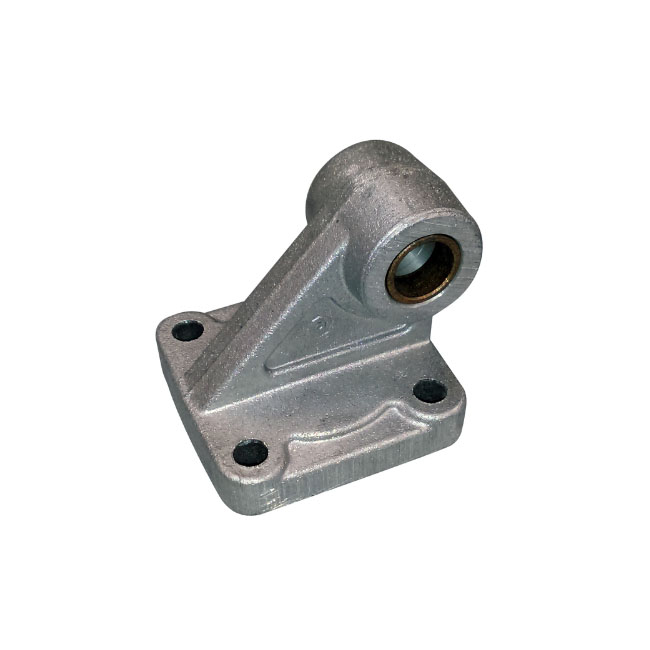
Walk through any mining operation, shipyard, or rail maintenance depot and you'll notice a quiet consistency: the parts that endure the harshest punishment are almost always cast steel. There's a reason for that. Unlike welded fabrications or machined forgings, a steel casting puts metal exactly where stress demands it, without the weak points that come from joining separate pieces. The grain structure flows with the load path, not against it. That means a cast steel excavator bucket can shrug off impacts that would crack a weldment after a few thousand cycles.
Substitutes like ductile iron or aluminum alloys look attractive on paper—lighter, cheaper to machine, faster to source. But heavy industry doesn't run on paper. It runs on uptime, and downtime from a failed component costs more than the component ever did. Steel castings tolerate thermal shock, abrasive wear, and sudden overloads better than most alternatives because of their inherent toughness. A pump housing cast from low-alloy steel will keep its dimensions in a hot, corrosive slurry long after a fabricated stainless assembly has warped or leaked. When you're moving ore, pumping ash, or lifting structural loads, reliability isn't a spec; it's the only spec that matters.
The real edge, though, is design freedom. Engineers often treat casting as a last resort because pattern costs feel steep upfront. But once you stop forcing a design into the constraints of plate bending and welding, you discover shapes that save weight, simplify assembly, and extend service life. Complex internal passages, blended fillets, variable wall thickness—all possible in a casting, all awkward or impossible in other processes. Heavy industry has learned this lesson repeatedly: the lowest-cost material isn't the cheapest alloy; it's the one that doesn't need to be replaced on a midnight shift in the middle of nowhere.
Quality Control Hidden Costs and the Inspection Points That Matter Most
Quality budgets usually stop at inspector wages and gauge calibration. The hidden damage shows up later: rework benches piled with torn-down units, lines waiting on replacement parts, and freight charges for overnight replacements. None of that lands in the quality cost report, but it erodes margin faster than any salaried inspector. Moving checks upstream is almost always cheaper than discovering defects at final audit.
The points that matter most are rarely the final inspection dock. High-risk incoming materials need a hard look before they reach the floor, because a bad batch of fasteners or capacitors can poison a week of production. First-article sign-off after any tooling or setup change prevents a full shift of scrap from a single offset. And a quick check right after a critical operation—like solder paste before reflow or torque after assembly—catches what downstream tests will miss. Final inspection is just a backstop.
Engineering changes and new supplier ramps are where hidden costs spike hardest. The first run after a revision carries old assumptions, and a new vendor's first shipment often differs from its samples. Concentrating inspection on those transition points, instead of spreading it evenly across lines, stops quality problems from becoming schedule problems. Let past defect data move the checkpoints to where failures actually start.
How Modern Steel Foundries Balance Efficiency with Custom Orders
Modern steel foundries don't treat every custom order as a disruption. Instead, many have quietly moved toward a hybrid workflow where standard base castings and modular cores are produced on the same lines as fully bespoke parts. The trick lies in how patterns and rigging are staged: a foundry might pour several near-net-shape shells in a single heat, then use customer-specific finishing and machining paths to turn those blanks into distinct components. This lets the melt shop sustain longer runs and better energy use without sacrificing the flexibility that custom work demands.
Scheduling is where the balance gets real. Rather than segregating custom jobs into a separate, slower lane, planners now mix them into production based on alloy family, pouring temperature, and solidification time. A single induction furnace can sequence a run of standard pump housings followed by a specialty valve body for a different client, simply because both share a similar chemistry and cooling window. Digital tracking of every mold from shakeout to heat treatment also helps shops spot idle capacity and slot in low-volume orders without idle labor or excessive overtime.
There is also a cultural shift among foundry engineers. Decades ago, custom work meant high touch and low speed; today, it often rides on the same data-driven rigor as volume production. Patternless molding, rapid sand printing for one-off cores, and parametric tooling files let a custom order enter the queue with nearly the same setup overhead as a repeat part. The result is not a compromise between efficiency and customization but a deeper integration where each custom pour actually sharpens the shop's ability to handle variability.
From Scrap to Finished Part: How Material Recycling Cuts Production Costs
Every machining operation leaves behind chips, turnings, and offcuts that once went straight into the scrap bin. Those leftovers still carry the same alloy composition and mechanical properties as the original bar stock, but treating them as waste means paying twice: once for the raw material and again for disposal. A growing number of shops now send those scraps back through a dedicated recycling loop, where they are cleaned, sorted, and remelted into near-identical feedstock. The result is a closed material cycle that can reduce raw material purchases by 30 to 40 percent on high-volume production runs.
Cost savings go beyond the obvious drop in new metal orders. Disposal fees for industrial scrap are rising, and some regions impose surcharges on mixed or contaminated waste. By separating alloys at the source and working with a local recycler, a manufacturer can negotiate a buyback rate or direct credit toward the next shipment of recycled bar stock. Inventory carrying costs also shrink because there is less need to hold large reserves of certified virgin material. In some cases, recycled feedstock performs identically to primary metal, allowing the shop to keep the same tolerances and surface finishes without extra tool wear.
Implementing this approach does not require a full foundry on site. Partnerships with specialty recyclers that return processed ingots or continuous cast bar stock are common, and many suppliers now offer take-back programs for their own alloys. The key is to treat scrap not as a byproduct but as a raw material stream that feeds back into production. Shops that make this shift often discover that their per-part cost drops by a noticeable margin, while their dependence on volatile primary metal markets weakens. Over the course of a year, the savings can fund new tooling or additional capacity, making recycling a practical financial lever rather than just an environmental checkbox.
Overlooked Operational Details When Choosing a Steel Casting Supplier
When evaluating a steel casting supplier, most procurement teams drill into price per kilogram and delivery dates, but they rarely ask who actually maintains the patterns and core boxes. Pattern wear is slow and silent; after a few hundred molds, dimensional drift can start showing up in machined surfaces that no longer clean up. A supplier worth keeping will have a dedicated tooling storage area, a log of pattern inspections, and a clear schedule for preventive maintenance. Without this, you are essentially gambling that the next batch will fit the same fixtures as the last one.
Another blind spot is the handoff between casting, heat treatment, and any secondary operations. If the foundry outsources normalizing, non-destructive testing, or rough machining, your lead time now depends on a third party that has no direct relationship with you. Even worse, responsibility for a defect becomes a circular argument between the pour, the oven, and the machine shop. Ask for a single internal flow from shakeout through final dimensional inspection, and request sample records that show how heat numbers and test results are linked to each individual casting.
FAQ
A typical day starts with melting scrap and alloying elements in an electric arc or induction furnace. Once the melt hits the right chemistry and temperature, it's poured into sand or ceramic molds. After cooling, castings are shaken out, runners and risers are cut off, and they go through heat treatment, shot blasting, and machining before final inspection.
Steel castings offer design freedom that welding can't easily match. You can create complex internal passages, smooth contours, and variable wall thicknesses in one piece, which reduces stress concentrations and avoids weak points at weld seams. It often cuts assembly time and improves structural integrity.
They handle high loads, impact, and wear better than many alternatives. The isotropic properties of cast steel mean strength is uniform in all directions, unlike rolled plate. That's a big deal for parts like excavator buckets, crusher jaws, and rail components that take punishment from every angle.
Most use a mix of spectrometry to verify chemistry before tapping, non-destructive testing like radiography or ultrasonic inspection after casting, and mechanical testing on test coupons. Some also use simulation software to predict shrinkage and adjust gating before pouring.
It can be, especially when using a high percentage of recycled scrap steel. Modern foundries also reclaim sand, filter emissions, and use energy-efficient furnaces. The ability to cast near-net shapes reduces machining waste compared to cutting from solid billet.
Mining, construction, railways, oil and gas, power generation, marine, and defense all depend on steel castings for critical components. If a part needs to survive harsh conditions, chances are a steel casting is involved.
Initial tooling for patterns can be pricey, so steel casting shines in medium to high volumes or when the part's complexity would make other methods even more expensive. For one-off prototypes, it may be less economical, but for production runs, the total cost often comes out lower.
Digital simulation, automated pouring, and robotic grinding have cut defects and labor costs. Better alloys and heat treatment recipes have also expanded what steel castings can do, allowing thinner walls and higher strength without cracking.
Conclusion
Inside a steel casting plant, the rhythm rarely changes: scrap and alloys are melted down, chemically adjusted, then poured into molds that have been prepped for hours. What separates a decent foundry from a reliable one isn't the furnace size but how well it reads temperature, slag chemistry, and pouring speed. Recycling plays a bigger role than outsiders assume—clean scrap, risers, and gating systems get re-melted, which keeps material costs down without weakening the final part. At the same time, modern shops juggle custom orders by using flexible pattern storage, digital simulation, and short runs that don't punish the production schedule. Inspection isn't a final checkpoint; it's woven into sand testing, dimensional checks after shakeout, and ultrasonic or radiographic scans on high-stress sections.
Steel castings hold their ground in heavy industry because they combine strength, wear resistance, and design freedom that welded or forged alternatives often can't match under shock loads and high temperatures. But the real cost story lives in the details buyers forget: heat treatment consistency, surface finish allowances, and whether the supplier tracks scrap rates per pattern, not just per ton. Hidden costs surface later as rework, delayed shipments, or field failures if those inspection points are skipped. A supplier worth keeping will openly discuss its re-melt ratio, non-destructive testing limits, and how it handles deviations—not just quote a lower price per kilogram. Those overlooked operational details, from sand reclamation to pattern maintenance, often determine whether a custom order arrives on time and performs as designed year after year.
Contact Us
Contact Person: Paul
Email: [email protected]
Tel/WhatsApp: 8615067447509
Website: https://www.spironcasting.com