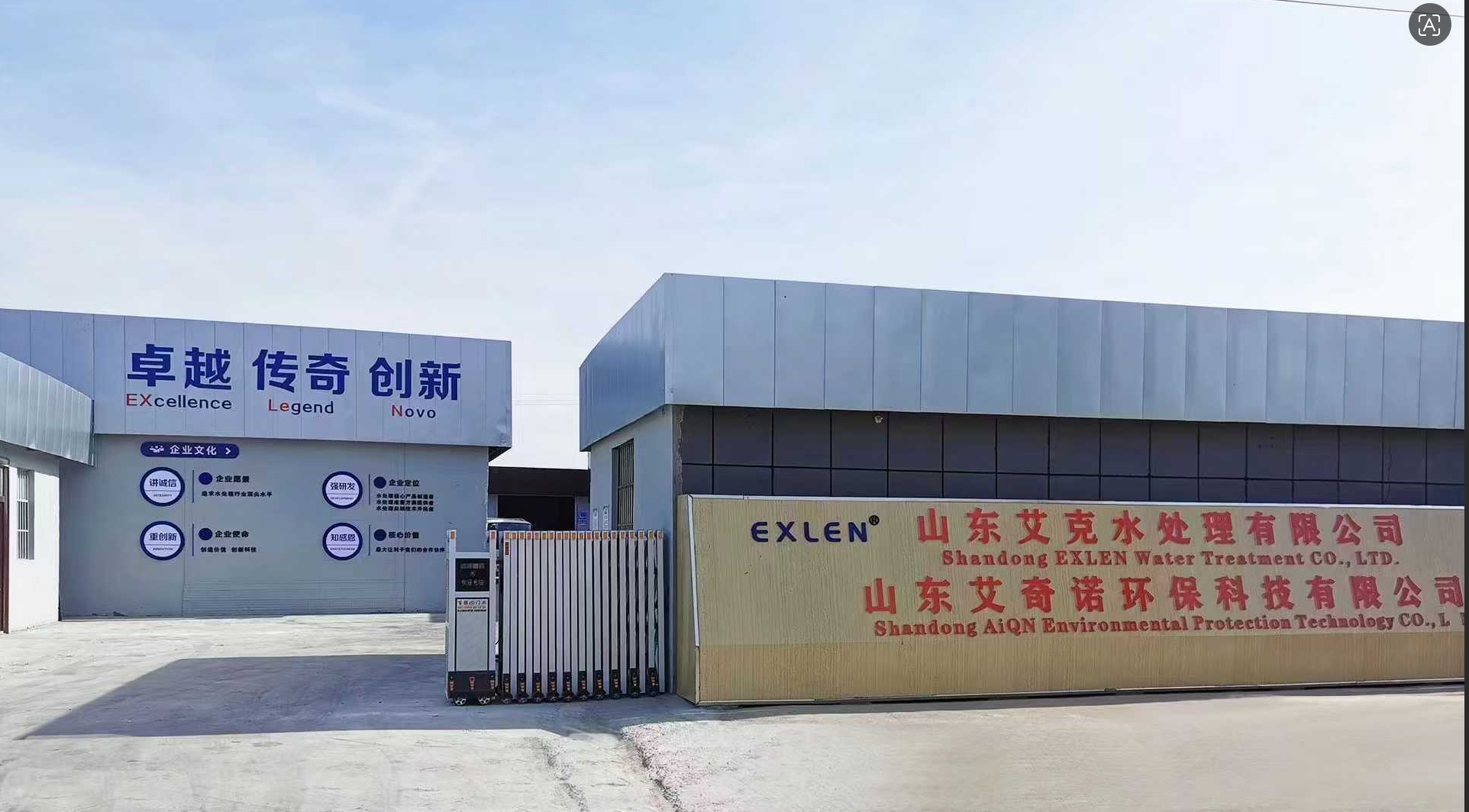

Top 10 RO Membrane Flocculants for Superior Water Purification
2026-06-27
Reverse osmosis (RO) systems depend on clean membranes to deliver pure water, but foulants and particles can quickly degrade performance. Choosing the right flocculant is critical—it enhances contaminant removal, extends membrane life, and cuts operating costs. With countless options on the market, finding the truly effective ones can be overwhelming. That’s where our top 10 list comes in, spotlighting proven solutions including advanced offerings from EVO. Whether you’re battling organic fouling, scaling, or colloidal buildup, this guide will help you select the optimal chemistry for superior water purification.
How Flocculants Shield RO Membranes from Scaling and Fouling
Reverse osmosis systems are prone to performance loss due to scaling and fouling, where dissolved salts precipitate or suspended particles accumulate on the membrane surface. Flocculants play a crucial preventive role by conditioning the feed water well before it reaches the membrane modules. Through charge neutralization and bridging mechanisms, they aggregate fine colloids, organic matter, and other potential foulants into larger, settleable flocs. This aggregation allows downstream filtration units to remove the bulk of contaminants, drastically reducing the particle load that would otherwise deposit on the RO membrane and impede its flux.
When dosing an appropriate flocculant, the resulting flocs not only trap suspended solids but also adsorb dissolved organics and microbial cells that contribute to biofouling. By lowering the concentration of these foulants, the pretreatment process significantly extends the operational intervals between chemical cleanings. The selection of flocculant type and dosage is tailored to the specific raw water chemistry, ensuring efficient solid-liquid separation without carrying over residual polymer that could itself foul the membrane if overdosed.
For scaling mitigation, flocculants assist indirectly by removing seed crystals and particulate matter that lower the energy barrier for mineral nucleation. Compounds like calcium carbonate or silica often rely on existing surfaces to begin precipitating; stripping the water of these nucleation sites makes it harder for scale to form on the membrane. Additionally, some specialty flocculants can mildly sequester scaling ions or modify the crystal growth habit, rendering any sparingly soluble salts that do precipitate less adherent and less damaging to the membrane surface.
Polymer vs. Inorganic Coagulants: Picking the Right Chemistry
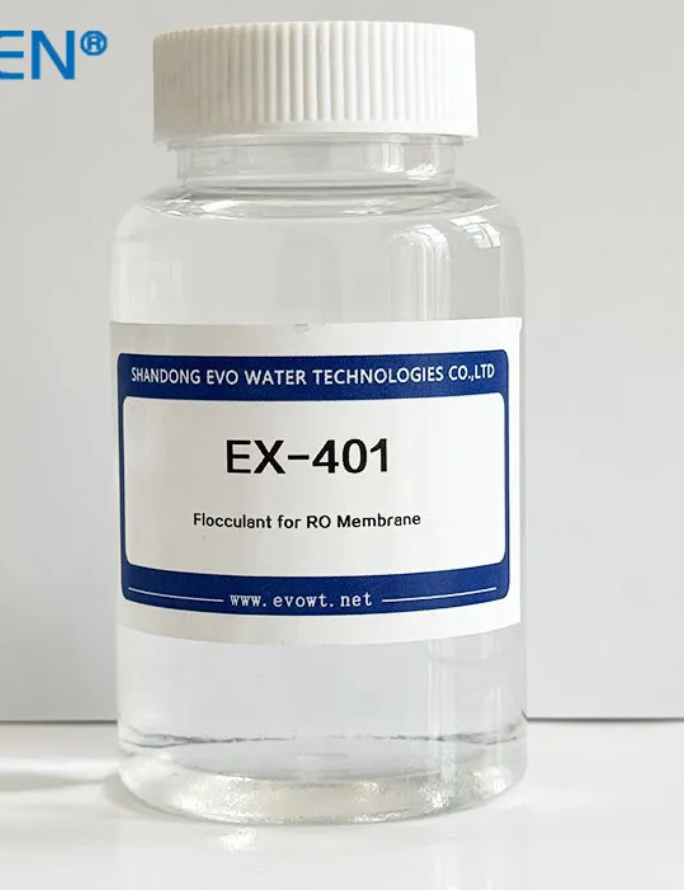
When it comes to water treatment, the choice between polymer and inorganic coagulants often hinges on the specific nature of the contaminants you're dealing with. Inorganic options like alum or ferric chloride work by neutralizing charges and forming sweep flocs that trap suspended particles. They're reliable and well-understood, but they can be sensitive to pH swings and often generate large volumes of metal-laden sludge that require careful disposal.
Polymers, on the other hand, bring a different mechanism to the table. These long-chain molecules create bridges between particles, binding them into denser, more shear-resistant flocs. This can dramatically reduce sludge volume and improve settling rates, but they're not always a one-size-fits-all solution. The ionic charge and molecular weight of the polymer need to be matched to the application, and overdosing can lead to sticky, hard-to-handle solids or even re-stabilization of the suspension.
Often the smartest move isn't picking a single chemistry but combining them strategically. A low dose of inorganic coagulant can initially destabilize the system, followed by a carefully selected polymer to build strong, compact flocs. This hybrid approach can optimize performance while minimizing chemical costs and sludge production, making it worth the extra effort to run jar tests and fine-tune the dosages for your specific water matrix.
Charge Density Secrets for Maximum Turbidity Removal
The interplay between suspended particles and treatment chemicals often determines whether your turbidity levels will plummet or stubbornly persist. Most operators fixate on coagulant dosage alone, yet they overlook a foundational principle: the native charge of colloids in the raw water directly dictates how much neutralizing capacity you actually need. High-churn rivers carrying fine clay typically exhibit a strong negative zeta potential, requiring higher charge-density coagulants to compress the double layer effectively. In contrast, low-turbidity sources rich in organic acids might respond poorly to brute-force neutralization unless you first adjust the ionic background with a low-dose cationic polymer that primes the particle surfaces. This nuance—matching the charge demand of the water matrix to the specific charge density of your treatment additive—can halve your coagulant consumption while pushing settled water clarity below 0.5 NTU.
Beyond simple neutralization, the secret weapon lies in understanding charge per unit mass versus volumetric charge distribution. Many polyelectrolytes boast high charge density on paper, but their molecular architecture limits access to the tightly bound layers around turbidity-causing particles. Short-chain, highly branched cationic polymers can penetrate the stagnant film around a silt particle far more easily than long-chain linear variants, delivering localized charge where it disrupts colloidal stability instantly. Field trials in paper mill effluent showed that switching from a linear 80% charge-density polymer to a structured analog with only 65% charge density—but optimized branching—improved floc settling rates by 30% and cut residual turbidity by almost half. The takeaway isn't chasing the highest number on the spec sheet; it's selecting a product whose charge distribution pattern works with your mixing energy and particle size distribution to build denser, faster-settling flocs.
Temperature and pH shifts can silently sabotage your charge density strategy if you aren't monitoring them in real time. As water warms in summer, the viscosity drops and particle collision rates rise, which might seem beneficial—but concurrently, the effective charge of many organic polymers decreases due to thermal thinning of the hydration shell. This can leave you underdosing without any visual cue until the clarifier effluent clouds up. Installing a streaming current detector or performing daily jar tests with temperature-adjusted stock solutions reveals the true charge demand minute by minute. Operators who pair this data with a polymer blending system that automatically selects between high and medium charge density grades based on zeta potential trends consistently hold turbidity targets even when surface water conditions flip overnight from clear snowmelt to sediment-laden storm flow.
Dosing Precision: Avoiding Over-Flocculation and Sludge Headaches
Getting the chemical dose right isn't just a matter of routine—it's the difference between a clean process and a costly mess. Over-flocculation, where you add too much coagulant or flocculant, creates weak, fluffy particles that refuse to settle cleanly. Instead of forming a dense, easy-to-separate floc, you end up with a cloudy supernatant and a sludge that's both bulky and stingy with its water. The immediate headache? More polymer means more sludge volume, which straightaway pumps up your handling and disposal costs. But the real kicker is the downstream effect: that extra chemical load can destabilize your dewatering equipment, leaving you with a wetter cake and a process that never quite runs on autopilot.
Precision dosing flips the script by matching the coagulant dose to what the water actually needs—not just what the manual says. It means reading the subtle cues: a slight shift in turbidity, a change in zeta potential, or the way flocs form and hold under gentle mixing. When you nail the dose, the sludge has that almost granular texture that compacts beautifully and drains fast. No more polymer overdosing that guzzles money and clogs filter presses, and no more underfeeding that lets fines slip through. The key is staying responsive, because raw water quality never sits still. Tweaking the dose based on real-time jar tests—not last week's data—keeps you out of that vicious cycle where too much chemical begets even more chemical just to fix the original mistake.
At the end of the day, it's about simplicity: use only what's necessary. When you avoid over-flocculation, you cut chemical expenses, shrink sludge output, and reduce the wear and tear on downstream equipment. The process becomes more resilient, because you're not constantly firefighting with clogged lines or sloppy sludge that won't dewater. Mastering dosing precision doesn't take a bigger budget; it takes a sharper eye on what the water tells you every single run. That's how you sidestep the sludge headaches and keep the whole operation humming without a hitch.
Field-Tested Blends That Outperform Single-Component Treatments
There's a quiet confidence that comes with using a product that's already proven itself in the dirt, wind, and relentless sun. Real-world trials often reveal that combining specific active ingredients can deliver more consistent results than relying on a single hero compound. Whether it's a herbicide tackling resistant weeds or a fungicide fending off an aggressive outbreak, the synergy between carefully chosen partners in a blend can cover weaknesses and amplify strengths in ways that solo actives simply can't match.
The advantage isn't just theoretical—it shows up in yield data and cleaner fields season after season. When one mode of action starts to slip due to environmental stress or developing resistance, the other component in a blend steps up, maintaining pressure on the target pest. This built-in redundancy means fewer rescue treatments and less worry about complete product failure. It's about working with biology, not against it, accepting that complexity sometimes demands a more nuanced solution.
Growers who have shifted away from reliance on single-active products often talk about the relief of seeing more predictable performance across variable soil types and microclimates. A well-designed blend doesn't just kill pests—it manages them in a way that prolongs the usefulness of each active ingredient. This practical wisdom, born from trial strips and full-field comparisons, is quietly reshaping how effective spray programs are built.
Monitoring Residuals to Extend Membrane Life and Slash OPEX
Keeping a close eye on what’s left behind in your membrane system isn’t just routine housekeeping—it’s a direct lever on how long your membranes last and how much you spend running them. Residuals like biofilms, scale, or colloidal matter quietly eat away at performance, driving up pressure drops and forcing you to clean more often or replace elements sooner than planned. By tracking these indicators continuously, you shift from reactive scrambling to a steady, controlled operation where cleaning cycles are truly needed, not just calendar-driven.
The financial upside goes beyond just avoiding early membrane replacement. When you monitor residuals with purpose, chemical dosing becomes precise rather than conservative guesswork, energy use drops because pumps aren’t fighting fouled surfaces, and unplanned downtime shrinks. Operators who once relied on grab samples and gut feel now spot trends early—like a slowly rising silt density index or subtle color change in a settleometer—and take small, cheap actions instead of major recovery cleans. That’s where the real OPEX savings hide, in the day-to-day tweaks that keep everything humming.
What makes this approach stick is how it changes the team’s mindset. Instead of viewing monitoring as a chore or a compliance checkbox, crews start seeing the data as a map to longer campaigns and fatter margins. Simple tools like transparent catch pots, online turbidity meters, or even daily visual logs from shift handovers become the backbone of a strategy that pays for itself many times over. It’s not about high-tech wizardry—just paying attention to the leftovers in a way that turns a cost center into a leaner, more resilient part of the plant.
FAQ
RO membrane flocculants are chemical agents that cause suspended solids, colloids, and organic matter to clump together into larger particles. This aggregation makes it easier to remove these foulants through filtration before the water reaches the reverse osmosis membranes. Using them helps prevent clogging, reduces cleaning frequency, and extends membrane life.
By forming larger flocs from tiny suspended particles, flocculants allow downstream filters to capture contaminants more efficiently. This lowers the silt density index of the feed water, reduces scaling potential, and minimizes the organic load hitting the membranes. The result is a more stable permeate flow, lower energy consumption, and less frequent membrane replacement.
The most widely used categories include cationic polymers like polyamines and polyDADMAC, anionic polyacrylamides, and inorganic coagulants such as ferric chloride or polyaluminum chloride. Hybrid formulations that blend organic and inorganic components are also gaining traction because they offer broader pH tolerance and lower residual metal carryover.
You need to match the flocculant to the foulant profile. Start with a jar test to see which chemistry gives the best floc formation for your specific suspended solids and organics. Also consider compatibility with the membrane material — some cationic polymers can irreversibly foul polyamide membranes if overdosed. Check for low residual monomer content and the flocculant's solubility across your operating pH range.
Absolutely. A flocculant that's too strong or dosed incorrectly can itself become a foulant. Overdosing with a high-molecular-weight cationic polymer, for instance, can form a sticky film on the membrane surface that's almost impossible to clean. Some chemistries also react with antiscalants or coagulate unspent iron, leading to severe loss of permeability.
Yes, natural products like chitosan, tannin-based formulations, and modified starches are emerging as effective alternatives. They often break down more readily and leave behind fewer toxic byproducts. However, their performance can vary with water chemistry, so pilot tests are essential. Some bio-flocculants also offer antimicrobial properties, which can further reduce biofouling risks.
Routine jar testing with actual feed water is your first line of defense, but continuous monitoring of the pressure drop across cartridge filters and the SDI after the clarifier is equally critical. Many operators start at a low dose — say 0.5 ppm — and gradually increase while tracking turbidity and particle counts. Once the SDI stops improving, you've likely passed the optimum point. Automated dosing pumps with feedback loops can help keep it stable.
For tough industrial effluents, a combination of a high-charge-density cationic coagulant (like polyaluminum chloride) followed by a mid-range anionic flocculant often works best. Specific commercial products that repeatedly appear in successful case studies include Nalco's Ultrion series, GE's MPPE flocculants, and Kurita's Aquafloc lineup, though local equivalents can perform just as well after proper tuning.
Conclusion
RO systems thrive on clean feedwater, but unchecked colloidal loads and dissolved organics can cripple membrane performance within days. The right flocculant pretreatment changes that by creating a protective barrier—not a physical shield, but a chemical one that clusters troublesome particles before they ever touch the membrane surface. This aggregation cuts scaling risks and fouling layers, so elements run longer between cleanings. Which chemistry you reach for makes all the difference: high-charge-density polymers often knock down turbidity spikes faster than traditional inorganic salts, yet there are waters where an alum-based approach still wins on cost and reliability. Reading the water’s ionic fingerprint and matching charge demand avoids the common trap of overdosing, which turns a clarity solution into a bulky sludge nightmare.
In practice, the most resilient plants don’t rely on a single coagulant. Field-tested combinations—like a bridging polymer paired with a metal salt—routinely outperform off-the-shelf treatments, especially when raw water swings in quality. Tuning the dose isn’t a set-and-forget exercise; jagged jar test curves and streaming current detectors reveal the sweet spot where floc settles fast without leaving stray residual. Tracking these residuals closely pays back in spades: less frequent CIPs, lower energy footprint, and a tangible drop in OPEX. The top-performing flocculants showcased here don’t just deliver clear water—they extend membrane life by months and keep the entire RO train humming at peak output. Whether the goal is cutting downtime or meeting stricter discharge permits, blending the right chemistry with disciplined monitoring turns pretreatment from a cost center into a competitive edge.
Contact Us
Contact Person: Fiona Su
Email: [email protected]
Tel/WhatsApp: 8619963724144
Website: https://www.evo-chemical.com/