

Top EPDM Granule Production Line Features That Improve Manufacturing Consistency
2026-11-17
Consistency in EPDM granule production often comes down to the smallest mechanical details that separate a standard line from one that holds tolerance batch after batch. From precise feeding units to controlled cooling stages, each feature affects density, color uniformity, and surface texture in ways that are easy to overlook until rejects start piling up. SFC has focused on these overlooked variables through refined equipment design at SFC, helping manufacturers reduce variation without constant manual adjustment. The following features show where modern EPDM granule lines gain their real process stability.
Precision Dosing Keeps Formula Ratios Inside a Narrow Band
In production, small drift in ingredient ratios can have outsized effects. Precision dosing addresses this by continuously metering each component against a target band rather than relying on batch averages. Even when raw material density or moisture shifts, the line adjusts in real time so the final mix stays within a few tenths of a percent.
The narrow band is not arbitrary. It tracks the functional limits of the formula—too much of one input changes texture or stability, too little changes activity. Operators monitor trend lines instead of waiting for out-of-spec results, and the dosing system makes micro corrections long before a deviation becomes visible in a lab sample.
The result is less waste from rejected lots and fewer reformulation surprises. Because each run sits inside the same tight window, downstream filling and packaging conditions remain predictable, and the product behaves the same from one batch to the next.
Closed-Loop Heat Management Stops Cure Variability at the Mixer
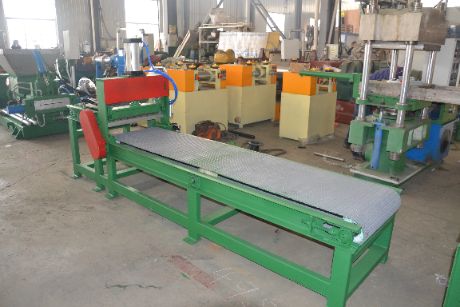
A mixer running on a fixed temperature schedule rarely accounts for the heat generated by the batch itself. Shear from high-viscosity material, changes in ambient plant conditions, and slight variations in raw ingredient temperature all push the actual material temperature away from the setpoint shown on the panel. By the time the thermocouple catches up, the batch may already be drifting into an early cure or staying too cold for the curative to activate evenly. That lag is what turns a repeatable formula into a series of slightly different compounds.
Closing the heat management loop changes the logic entirely. Instead of waiting for a deviation to trigger an alarm, the system reads temperature and mixer load continuously and adjusts cooling water, heating elements, or jacket flow in real time. The response is proportional, not just on-off, so the batch temperature stays inside a narrow window where curative latency remains predictable. If the material starts building heat faster than expected, the loop pulls energy out immediately rather than allowing the batch to coast into a scorch risk.
The practical difference appears in downstream consistency. When the mixer holds the compound in the same thermal band batch after batch, flow characteristics, green strength, and final cure state stop shifting run to run. Operators no longer have to compensate with manual adjustments or extended mixing times. The cure profile becomes a property of the closed-loop control rather than an outcome that depends on operator attention or the season.
Automated Size Classification Delivers a Repeatable Granule Spread
The real payoff from automated size classification shows up at the spreader, not just in the lab. Instead of relying on operator judgment to nudge screen settings or adjust feed rates, the system locks onto predetermined size bands and holds them across every batch. That consistency removes the subtle drift that tends to creep into manually adjusted lines, where one shift's close enough becomes the next shift's out-of-spec granule mix.
A repeatable spread begins with tight control over the fines and overs that are allowed to pass. Automated classifiers continuously measure particle dimensions and reject material outside the target envelope, so the blend reaching packaging carries the same bulk density and surface area from lot to lot. For downstream handling, that translates into fewer bridging problems in hoppers and more uniform distribution across a field or bed.
Operators still oversee the line, but they are no longer making constant corrections. Alerts only surface when a wear part or feed irregularity pushes the stream toward the control limit. Because the classification set points are stored digitally, repeating a proven granule profile on a later run becomes a matter of retrieving a recipe rather than rebuilding the trial-and-error work from scratch.
Inline Density Feedback Corrects Batches Before They Harden Into Problems
Density problems rarely announce themselves until the batch has already turned unusable. Inline feedback changes that by catching a drift while the material is still moving, before curing or hardening locks the mistake in place. A small offset in solids content or a touch too much solvent becomes visible in real time, so the operator can adjust the feed rate or add a corrective dose instead of writing off the whole vessel.
The real value shows up in how small corrections compound. Rather than chasing a perfect final density after the fact, the line starts steering early with a narrow tolerance band. Each adjustment prevents the mixture from entering the zone where settling, air pockets, or uneven crosslinking begin. As a result, the hardening step becomes more predictable, and the occasional destructive sample check turns into a confirmation rather than a rescue mission.
This kind of early correction only works when the sensor placement and response time match the actual mixing dynamics. A probe mounted too far downstream or a control loop that reacts too slowly can still miss the window where the batch is fluid enough to fix. Placed well, though, the measurement becomes a production safeguard—one that keeps a normal variation from hardening into a costly defect.
Gentle Conveying Paths Stop Fillers and Rubber From Separating
Material blends that rely on a careful balance of fillers and rubber can lose that balance quickly when transfer lines push too hard or too fast. A gentle conveying path keeps the mixture moving without sharp impacts, steep drops, or sudden accelerations. By reducing shear at bends and lowering impact points, the fine filler particles stay embedded in the rubber matrix instead of being thrown out of suspension.
Even small design changes make a noticeable difference. Wide-radius elbows, gradual transitions, and low-velocity pickup zones help the blended material keep its original ratio from hopper to press. This matters most with high-loading compounds, where a separated filler can clog downstream equipment or leave cured parts with inconsistent hardness and surface finish.
Operators who adjust conveying air speed and feed rate to match the blend's natural flow tend to see fewer rejects and less downtime. The goal is not to force the material through the line, but to let it travel as a unified mass. When the path respects the mixture's fragility, separation becomes rare instead of routine.
Fast Purge and Cleanout Sequences Cut Cross-Batch Carryover
Switching product lines used to mean stopping for long, manual rinse-downs that still left traces of the previous formula in bends and dead legs. The new purge sequence changes that. Timed bursts of solvent and compressed air move through the fill heads, transfer pipes, and valve clusters in a set order, pushing out residual material before it can settle. Because each step fires automatically, operators do not have to guess whether a line is actually clear.
Cleanout ports near the most stubborn hold-up points let rinse fluid enter at higher velocity, and the drain path stays open until the last of the displaced batch has left the system. That combination shortens the gap between runs and keeps cross-batch carryover below detectable limits, even when moving from a heavily pigmented product to a clear one.
FAQ
Automated loss-in-weight feeding and closed-loop temperature control along the extruder usually make the largest difference. They keep the rubber compound's viscosity stable and prevent material flow surges that lead to off-spec granules.
EPDM compounds are sensitive to heat history. If barrel and die temperatures drift, cure level and melt flow change, so granules can vary in density and shape. Multi-zone heating and cooling with real-time PID adjustment keeps every batch within a narrow thermal window.
Small errors in filler, oil, or curative ratios become visible later as differences in hardness, elasticity, and color. Gravimetric feeders that recalibrate continuously prevent these drift errors and make recipe execution repeatable across shifts.
Sensors for torque, melt pressure, and die temperature give operators an early warning before waste is produced. Trending this data also helps identify when screws, screens, or pelletizer blades need attention.
Yes, multi-deck vibratory screens remove oversize and undersize particles before packing. Some lines also use optical or air classifiers to catch irregular shapes, so customers receive a narrower particle size distribution.
Underwater or strand pelletizing with controlled water temperature and blade speed creates uniform granule geometry. If blade wear or water flow drifts, the system either adjusts automatically or alerts maintenance.
Quick-change screen packs, accessible die plates, automated lubrication, and condition monitoring on gearboxes and pelletizer bearings reduce unplanned downtime and slow degradation that quietly changes product quality.
Look for integrated recipe management, accurate feeder calibration, closed-loop thermal control, real-time process trending, and automatic sampling or particle analysis. These features reduce dependence on operator judgment.
Conclusion
EPDM granule lines become predictable when the controls are built around the actual failure points rather than a single machine’s output. Precision dosing holds filler, rubber, and curative ratios in a narrow band, so minor feed drift does not turn into hardness or rebound differences later. Closed-loop heat management at the mixer removes the cure variability that open-loop systems allow when ambient conditions shift. Just as important is the path the material takes: gentle conveying prevents dense fillers from separating from the rubber matrix, keeping the compound identity intact before it reaches the cutter.
After granulation, automated size classification produces a repeatable particle spread instead of relying on manual screening that can widen the distribution through operator habit. Inline density feedback works as an early correction point, flagging off-target batches while they can still be adjusted rather than after they harden into rejects. Fast purge and cleanout sequences then limit cross-batch carryover during recipe or color changes, which reduces contamination-driven inconsistencies. Taken together, these line features create tighter lot-to-lot control across the entire process, from dosing through final cleanup, and that is what makes the difference between a granule supplier that matches a specification and one that only occasionally does.
Contact Us
Contact Person: Chen Zhengwei
Email: [email protected]
Tel/WhatsApp: +86-13963975727
Website: https://www.sfcrubbermachine.com