

Top Oil in Water Emulsifier Suppliers for Reliable Formulations
2026-06-26
When it comes to crafting stable and effective oil-in-water emulsions, the choice of supplier can make or break your formulation. From cosmetics to agrochemicals, the right emulsifier ensures peak performance and reliability batch after batch. Among the industry leaders, MingYa stands out with tailored solutions that blend innovation and consistency. But what truly sets a top-tier supplier apart in a crowded market? Let’s dive into the essentials you need to know.
What Sets Apart a Trusted Emulsifier Supplier
A supplier worth sticking with doesn’t just ship drums of polysorbate or lecithin and call it a day. The real difference shows up when you’re reformulating a whipped topping at midnight and need someone who picks up the phone, knows your current spec by heart, and can walk you through a tweak without making you feel like a nuisance. That kind of hands-on technical partnership—where the supplier’s food scientists have actually worked on production lines—transforms a commodity vendor into an extension of your R&D team.
Beyond the lab bench, a trustworthy source proves itself through dull but critical paperwork: lot-to-lot traceability that holds up during an audit, honest lead times even when a container is stuck at port, and certifications that aren’t just photocopies. It’s about consistency you can bank on—seven reorders in, the functional performance doesn’t drift. When a supplier treats your emulsion’s shelf stability like their own problem, not a footnote in a contract, you’ve found the one.
The Chemistry Behind Stable Oil-in-Water Blends
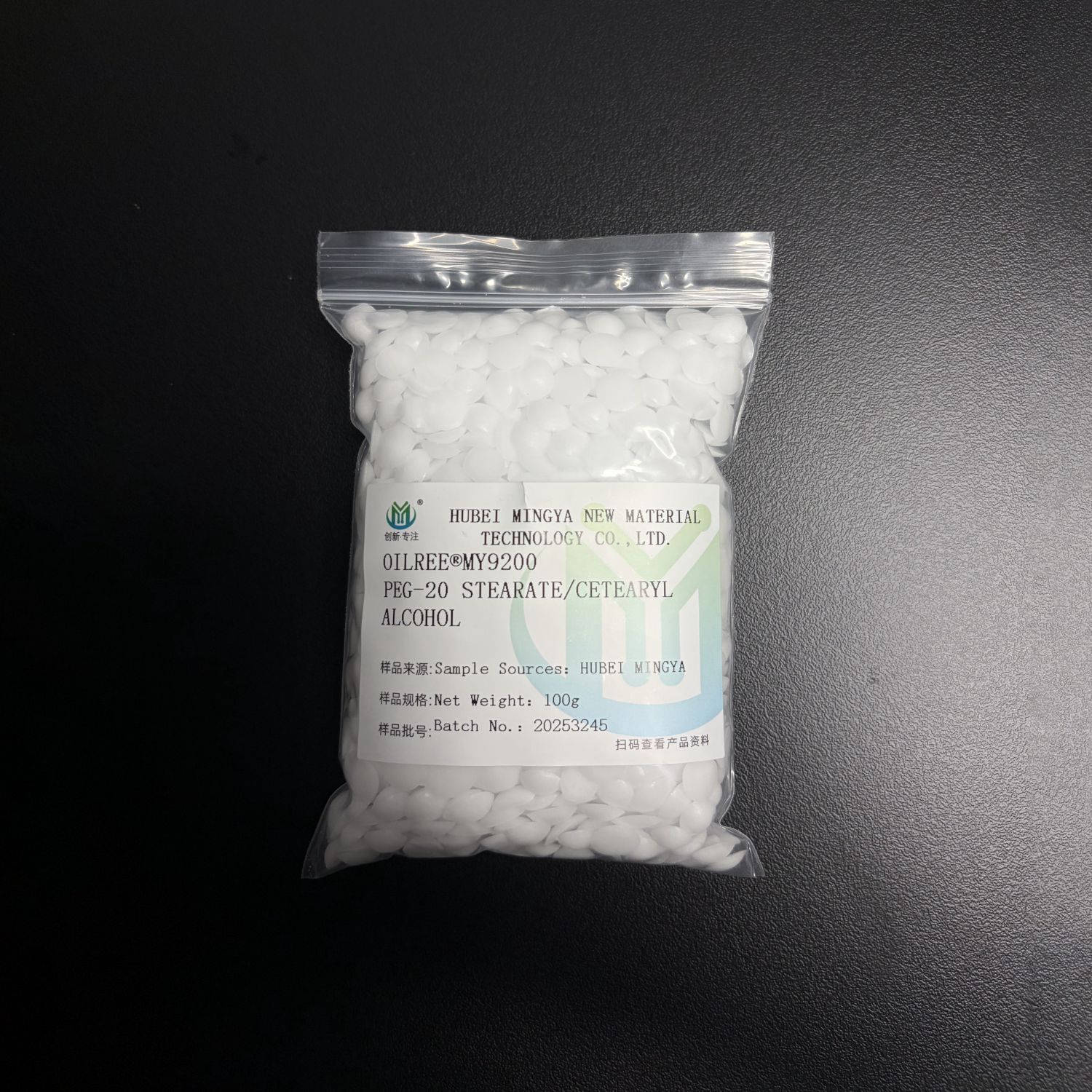
The stability of oil-in-water blends hinges on the delicate interplay between hydrophobic and hydrophilic molecules. Emulsifiers, which possess both oil-loving and water-loving segments, position themselves at the interface to lower surface tension. This arrangement prevents the dispersed oil droplets from coalescing, keeping the mixture uniform.
Choosing the right emulsifier is critical and depends on its hydrophilic-lipophilic balance (HLB). A higher HLB value, typically above 8, favors oil-in-water emulsions. The emulsifier's molecular structure determines how effectively it wraps around oil droplets, forming a protective film that resists separation over time.
Beyond emulsifiers, factors like droplet size, viscosity, and charge further influence stability. Smaller droplets create a more homogeneous texture and reduce creaming, while thickeners can increase the continuous phase's viscosity, slowing down droplet movement. Electrical repulsion between similarly charged droplets also helps maintain dispersion.
How Technical Collaboration Strengthens Formulations
Bringing diverse expertise together early in formulation development often exposes hidden synergies that a siloed approach would miss. Chemists, process engineers, and application specialists engage in rapid prototyping cycles, testing combinations of ingredients, conditioning parameters, and application methods side by side. This cross-pollination not only accelerates the refinement of product texture, stability, and sensory profiles but also uncovers unexpected performance leaps, such as improved dispersion under shear or enhanced freeze-thaw resilience, that arise only when perspectives merge.
When raw material suppliers participate as true co-developers rather than transactional vendors, the formulation process gains a layer of problem-solving agility. Access to proprietary data on molecular interactions, solubility thresholds, and long-term compatibility transforms into precise adjustments—replacing guessing with calculated decisions. A formulator might, for instance, discover that a minor shift in emulsifier ratio, suggested by a supplier’s rheology lab, drastically reduces separation tendency during extended shelf life, while preserving the clean sensory payoff the brand demands.
Beyond the lab, joint troubleshooting sessions lay the groundwork for resilient scale-up. Production floor realities—temperature fluctuations, pump shear, mixing speed constraints—are fed back into the formulation stage before a formula is locked. This iterative feedback loop, built on mutual trust and open communication, turns potential manufacturing nightmares into smooth transitions, ultimately delivering a product that not only performs beautifully in the bottle but also remains robust through every stage of its lifecycle.
Real-World Demands for Emulsifiers Across Industries
In food production, the quiet work of emulsifiers shapes everything from the creaminess of a salad dressing to the airy crumb of a packaged cake. A bakery technologist might spend weeks fine-tuning a mono- and diglyceride blend just to stop a low-fat muffin from turning into a rubbery disappointment on day three. Meanwhile, the plant-based boom has thrown up fresh puzzles—how do you keep almond milk from separating in a coffee cup without resorting to a long list of additives that scare off clean-label shoppers? The answer often lies in citrus fiber or modified starches that pull double duty as texture builders and stabilizers, but only if the shear forces in the homogenizer are dialed in perfectly.
Outside the kitchen, industrial emulsifiers face equally unforgiving conditions. A pesticide formulation might sit in a warehouse through sweltering summers and freezing winters, yet it’s expected to pour evenly and mix with water the moment a farmer opens the drum—failure means clogged spray nozzles and ruined crops. In metalworking fluids, an emulsifier’s job is brutally utilitarian: keep oil droplets suspended in water while withstanding extreme pressure and heat at the cutting edge, then resist bacterial growth during idle weekends so the sump doesn’t become a biohazard. These are not glamorous applications, but they keep supply chains moving.
Personal care and pharmaceuticals push the boundaries in a different direction. Here, the emulsifier is often a sensory gatekeeper—a poorly chosen system can leave a face cream feeling waxy or a topical gel pilling on the skin. Formulators chase the elusive “lightweight” texture for sunscreens packed with mineral filters, blending polyglyceryl esters with subtle co-emulsifiers until the product disappears on contact. In oral solid dose drugs, poloxamers do more than help dissolution; they can modulate drug release rates, meaning the right emulsifier isn’t just an excipient but a functional tool that gets absorbed alongside the active ingredient and requires rigorous biocompatibility data. The common thread across all these worlds is that no emulsifier works in isolation—it’s always a negotiation with pH, ionic strength, processing equipment, and the ever-present pressure to reduce cost without sacrificing stability.
Ensuring Every Batch Meets Your Exact Needs
From the moment raw materials arrive, our team dives into a thorough inspection process that goes well beyond a simple checklist. We look at the little details—texture, consistency, and even the subtle color shifts that others might miss—because we know these nuances can make a real difference in the final product. It’s a hands-on approach, shaped by years of practical experience rather than textbook procedures.
Every production run gets its own tailored review, adapting to the unique characteristics of the order instead of relying on a one-size-fits-all test. This means a batch destined for a humid climate gets extra scrutiny on moisture resistance, while a specialized industrial order undergoes stress tests that mimic its real-world use. It’s this flexible mindset that keeps our output reliably aligned with what you actually need.
We also hold back samples from each batch, stored in conditions that mirror your own warehouse or shelf environment, and revisit them weeks later to confirm nothing has slipped. That extra step often catches slow-developing issues before they ever leave the facility, giving you a layer of confidence that standard rush-to-ship protocols simply can’t offer.
Next-Gen Ingredients Shaping Modern Emulsions
Biosurfactants are quietly redefining what stability means in emulsions. Derived from microbial fermentation, these molecules self-assemble at oil–water interfaces with a precision that synthetic surfactants only approximate. Their structural diversity lets formulators achieve ultralow interfacial tension without the harshness often tied to traditional petrochemical options. More intriguingly, certain glycolipid biosurfactants alter their packing behavior in response to environmental triggers like pH or temperature, opening doors to responsive skincare and precision drug delivery.
Pickering particles have shifted from a laboratory curiosity to a practical tool. By using finely divided solid particles—modified starches, silica, even food-grade wax microparticles—to stabilize droplets, emulsions can be made without any classical surfactant. This not only eliminates surfactant-induced irritation but also creates mechanically robust interfaces that resist coalescence under extreme conditions. The newest twist involves Janus particles with dual wettability, which lock onto droplet surfaces with remarkable tenacity, enabling unusually high internal phase volumes and clean-label formulations.
Polymer technology is moving beyond simple thickeners. Amphiphilic block copolymers now serve as both emulsifier and structurant, creating gel-like networks within the continuous phase that immobilize droplets without the sticky, tacky feel of conventional hydrocolloids. Ingredients like polyglycerol esters are being fine-tuned at the molecular level to match specific oil polarities, yielding emulsions that remain fluid during processing but set into luxurious, break-resistant textures upon cooling. These advances allow for simpler ingredient lists while delivering sensory experiences that were once only possible with complex multicomponent systems.
FAQ
Oil-in-water emulsifiers allow oil droplets to disperse evenly within a water base, creating stable mixtures that would otherwise separate. They're essential in everything from light moisturizers to sprayable emulsions because they lower surface tension and prevent phase separation over time. Without a well-selected emulsifier, you end up with a greasy mess rather than a elegant, functional product.
Look beyond the marketing sheets. Start by checking if they provide detailed technical documentation and sample support without dragging their feet. A trustworthy supplier will openly share data on batch consistency, ingredient purity, and real-world formulation guidance. Ask them point-blank about their quality control protocols and whether they have experienced formulators on staff who understand your specific industry challenges.
Definitely. If a supplier is vague about where their ingredients are manufactured or can't provide a certificate of analysis upfront, that's a warning sign. Also, pay attention to how they handle communication. Slow responses, reluctance to answer technical questions, or pressure to buy bulk quantities without allowing you to test first are all indicators that they might not have your best interests in mind.
You'll find them everywhere, but the personal care and cosmetics sector probably leads the pack because they need emulsifiers that deliver light, non-greasy textures. Pharmaceuticals use them for topical creams and ointments that require precise drug delivery. The food industry relies on them for dressings, sauces, and beverages. Even agriculture and industrial lubricants use these emulsifiers to formulate concentrates that mix readily with water.
While I can't endorse specific companies directly, many formulators I've spoken with consistently mention names like Croda, BASF, and Evonik as heavy hitters in this space. They're known for wide portfolios and strong R&D support. But don't overlook mid-sized specialty suppliers like Lucas Meyer Cosmetics or smaller regional players who often provide more personalized technical service and flexibility in smaller minimum order quantities.
The HLB value is a starting point, but don't get fixated on it. Instead, zero in on the emulsifier's behavior in your specific oil phase, its required usage level, and whether it plays nice with other ingredients like thickeners or actives. Ask for stability data under temperature cycling and varying pH conditions. A good supplier will have this information readily available and can help you avoid common formulation pitfalls.
It's becoming non-negotiable for many brands. A supplier that's serious about sustainability will offer bio-based or readily biodegradable options and back them up with certifications like RSPO for palm-derived ingredients or COSMOS approval. But also investigate their manufacturing practices—do they minimize waste and energy use? Ultimately, the best suppliers combine eco-responsibility with uncompromised performance, so you don't have to sacrifice texture or stability.
Start with a small-scale trial mimicking your exact process conditions. Prepare the emulsion, then stress test it: subject it to multiple freeze-thaw cycles, store it at elevated temperatures, and check for any signs of creaming or separation. Also, examine how it behaves in your final formulation over at least three months. A truly reliable emulsifier will maintain its integrity through all this, and a supplier that stands by their product will actively help you with this testing phase.
Conclusion
In the realm of oil-in-water emulsions, the choice of supplier can fundamentally shape the consistency and performance of end products. A truly reliable partner brings deep knowledge of interfacial chemistry, ensuring surfactants and co-surfactants interact to create stable, finely dispersed systems. Beyond raw ingredient quality, what sets leading suppliers apart is their commitment to technical co-development—working alongside formulators to fine-tune HLB values, optimize processing parameters, and solve phase separation challenges before they escalate. This collaborative approach bridges the gap between theoretical emulsion science and practical, scalable production, embedding their expertise directly into prototype testing and scale-up trials to avoid costly reformulations and accelerate time-to-market.
Meeting real-world demands across industries—from personal care to agrochemicals—requires a supplier who understands that a facial lotion and a crop spray demand vastly different stability profiles and rheological behaviors. Top-tier suppliers therefore implement rigorous batch-to-batch consistency checks, leveraging advanced analytics to guarantee that every delivery mirrors the last. At the same time, they anticipate market shifts by pioneering next-generation ingredients: bio-based emulsifiers, polymeric stabilizers, and stimuli-responsive molecules that align with sustainability goals and novel application requirements. Whether stabilizing a vitamin-rich cream or a concentrated herbicide, the fundamentals of droplet size control and coalescence inhibition remain paramount, and top suppliers provide not just ingredients but a holistic reliability framework. It is this fusion of stringent quality control and forward-looking innovation that empowers formulators to develop reliable, high-performing products that stand out in competitive markets.
Contact Us
Contact Person: Miss Pei
Email: [email protected]
Tel/WhatsApp: 8618620409116
Website: https://www.mingyachemicals.com/