

Top Photovoltaic Combiner Box Solutions for Reliable Solar Energy Management
2026-08-11
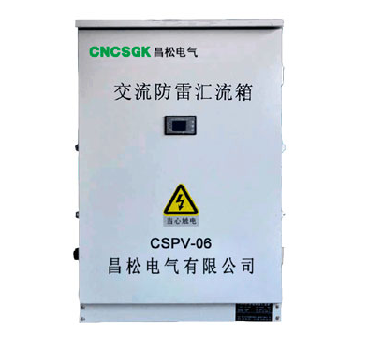
As solar energy systems scale, the unsung hero ensuring safety and efficiency is the combiner box. In an industry where a single point of failure can cascade into costly downtime, choosing the right solution isn't just technical—it's strategic. Leading this charge is Chang Song, whose innovative photovoltaic combiner boxes are redefining reliability in solar management. But what separates a robust combiner box from the rest? This article unpacks the top solutions shaping the future of solar energy, with insights that challenge conventional thinking.
Why Combiner Boxes Are the Backbone of Solar Arrays
Think of a solar array as a living organism: the panels are its skin, absorbing sunlight, but without a nervous system to channel that energy efficiently, it’s just scattered potential. That’s where combiner boxes step in. They gather the output from multiple strings of panels, fuse them safely, and send a single, consolidated DC current downstream. This isn’t just about tidiness—it’s about creating a manageable, fault-tolerant flow. Without them, you’d be running dozens of individual cables over long distances, inviting voltage drop, wire fatigue, and a troubleshooting nightmare.
Beneath their unassuming metal enclosures, combiner boxes do a lot of heavy lifting to protect your investment. Each input typically gets its own fuse or breaker, so a fault in one string won’t cascade into a full system shutdown. Surge protection, often built-in, shunts lightning-induced spikes away from sensitive electronics. And by reducing the number of home-run cables, they slash both copper costs and the labor hours needed for pulling wire through conduit. In large ground-mount installations, this consolidation can mean the difference between a lean, serviceable design and a tangled spiderweb that’s a liability every time the weather turns.
Modern combiner boxes have evolved far beyond simple junction points. Many now integrate string-level monitoring, feeding data on current and voltage to a central dashboard, so you can spot an underperforming panel group before it becomes a revenue drain. Others include arc-fault detection or even remote disconnect capabilities, turning a passive component into an active safeguard. When you’re managing a solar farm that spans acres, that kind of granularity isn’t a luxury—it’s the only way to keep downtime minimal and yield predictable. The backbone might be invisible once the system is up, but it’s what keeps the whole body standing upright year after year.
Key Features That Boost System Reliability
It’s easy to overlook the quiet work of redundancy until a component fails and nothing happens—the system simply keeps running. Thoughtful duplication of critical paths, from power supplies to network links, means no single point can take everything down. This isn’t just about having spares; it’s about seamless failover that users never notice.
Real reliability comes from how gracefully a system handles the unexpected. Instead of crashing, well-designed software isolates faults, retries intelligently, and degrades functionality in a controlled way when necessary. Circuit breakers, bulkheads, and timeouts prevent cascading failures, turning potential outages into minor blips that self-heal without human intervention.
Observability plays a quiet but critical role. When every service emits meaningful telemetry—metrics, traces, logs—teams can spot drift before it becomes a crisis. Automated alerts tied to actual user impact, not just server health, ensure that the right people pay attention at the right time, often fixing issues before customers ever experience them.
Smart Monitoring Meets Traditional Hardware
The clatter of steel and the hum of decades-old machines still define countless factories, but a quiet transformation is underway. Tiny sensors, cleverly retrofitted to legacy equipment, are giving these mechanical workhorses a voice—capturing vibration, temperature, and run-time data without disrupting operations. It’s a subtle shift where the analogue past and the digital present shake hands, turning simple meters and gauges into a stream of actionable insight.
Rather than ripping out reliable hardware, plant teams now bolt on compact monitoring modules that transmit readings to a central dashboard. A technician’s morning once meant walking the floor with a clipboard; now a quick glance at a screen reveals a bearing running slightly hot or a pump drifting out of rhythm. The beauty lies in how this layer of intelligence slips in quietly, respecting the rugged engineering that came before while quietly raising the bar on reliability.
This blend of old and new doesn’t just prevent breakdowns—it reshapes maintenance culture. When a 30-year-old press starts feeding data into a predictive algorithm, the conversation moves from “fix it when it fails” to “let’s schedule a brief check next Tuesday.” It’s practical, unpretentious progress: the heavy iron stays, but now it comes with a whisper of what’s to come.
Choosing the Right Box for Your Installation
Picking the ideal box starts with the environment it will live in. Whether you're mounting in a hollow wall, a damp basement, or directly under the eaves outside, the material and rating matter. Indoor drywall jobs often get by with standard plastic or metal boxes, while areas prone to moisture or dust call for weather-resistant enclosures with proper gaskets and seals. Don't overlook the depth either—a shallow box might save space but cramp your wiring, making connections frustrating and potentially unsafe.
Then there's the installation method itself. If you're running wire before the drywall goes up, a new-work box that nails or screws to the studs is your best friend. For adding an outlet to a finished room, an old-work box with flip out ears or Madison straps lets you secure the box to the existing wallboard without tearing things apart. Also think about the device you're installing—heavy fixtures like ceiling fans need a box rated for weight, not just any plastic round nail-on. Matching the box to your physical mounting and the load it will carry keeps everything snug and code-compliant.
Installation Practices That Prevent Costly Failures
When equipment arrives on site, the temptation is to unpack and bolt it down as quickly as possible. That rush almost always backfires. Instead, treat the foundation as the first critical component. Check flatness and level tolerances with a precision level, not just a carpenter’s bubble. Even slight irregularities transmit vibration, loosen anchor bolts, and create stress points that quietly chew through bearings and seals over time. A couple of hours spent shimming and grouting properly can erase years of unexplained downtime later.
Alignment is another place where shortcuts become expensive. Relying on a straightedge or eyeballing coupling gaps guarantees premature wear. Laser alignment tools have become affordable enough that there’s little excuse to skip them. What’s less obvious is the need to recheck alignment after the first week of operation—thermal growth, settling, and pipe strain all shift positions once the system is live. Build that “settling-in” check into every install, and you catch drift before it eats a coupling or cracks a shaft.
Lubrication errors during installation are silent killers. Over-greasing bearings on a new motor, for example, pops seals and lets contamination in from day one. Meanwhile, ignoring the manufacturer’s initial fill instructions for gearboxes—some require a specific break-in oil—leads to scuffing and early failure. Match the lubricant type, quantity, and application method exactly to the manual, and tag each point with the correct interval so the maintenance team doesn’t guess later. That five-minute tagging ritual pays off more than most managers realize.
Next-Gen Designs Shaping the Future of Solar
Solar panels no longer need to be bulky dark rectangles bolted onto rooftops. New iterations weave energy harvesting into the very fabric of buildings—think windows that double as transparent generators and exterior cladding that rivals traditional materials in aesthetic appeal. These building-integrated photovoltaics dissolve the line between structure and power source, turning entire skyscrapers into vertical solar farms without sacrificing design.
Flexibility is rewriting the rules of where and how solar can be deployed. Thin, lightweight films now conform to curved surfaces, enabling deployment on vehicles, irregular architectural features, and even textiles. This pliability, combined with record-breaking efficiency gains in perovskite tandem cells, means future installations will capture more energy from smaller footprints—a necessity as urban spaces become denser and the demand for discrete renewable solutions grows.
Design thinking is also tackling end-of-life loops. Modular panels that snap together without permanent adhesives ease disassembly, while manufacturers experiment with recyclable bio-based polymers and cradle-to-cradle certifications. The next wave isn't just about generating clean power; it's about ensuring every watt produced comes from systems built with their own circular future in mind.
FAQ
A combiner box consolidates multiple DC inputs from solar panels into a single output, streamlining wiring and enhancing safety. It often includes fuses, surge protection, and disconnects, making system management more straightforward and guarding against overloads.
Start by matching the box to your system’s voltage and current specifications. Look for quality enclosures that resist weather and corrosion, adequate fuse holders, and monitoring capabilities if you want to track performance. Compatibility with your inverter and panel configuration is non-negotiable.
Absolutely. Many top-tier solutions use NEMA 4X or IP65-rated enclosures that shield internal components from rain, dust, and extreme temperatures. Stainless steel or UV-resistant polycarbonate housings add longevity in coastal or desert settings.
A dependable unit comes with DC-rated circuit breakers or fuse holders, surge protective devices to deflect voltage spikes, and a lockable disconnect switch for maintenance. Clear labeling and touch-safe barriers reduce arc-flash risks.
Yes, modern designs integrate string-level monitoring via communication modules. These track current and voltage for each panel string, sending data to a central platform. That way, you can quickly pinpoint underperforming panels or wiring issues without manual checks.
By neatly organizing and protecting the DC side, it minimizes power losses from long cable runs and prevents downtime caused by electrical faults. Efficient surge handling and fault isolation keep the array generating at peak output.
Periodic visual inspections for corrosion, loose connections, and insect intrusion are wise. Torque checks on terminals and testing of surge protectors ensure continued reliability. Many are built to be largely maintenance-free for years under normal conditions.
Conclusion
Combiner boxes truly sit at the heart of any well-designed solar array, quietly managing the flow of current from multiple strings while protecting both equipment and people. These enclosures consolidate incoming DC lines, reduce wiring complexity, and house crucial overcurrent protection devices that prevent a single faulty module from cascading into a system-wide shutdown. Beyond basic consolidation, modern units emphasize features engineered for longevity in harsh environments: corrosion-resistant coatings, touch-safe fuse holders that simplify maintenance without sacrificing safety, and carefully designed thermal management to keep internal components cool under full load. The integration of smart monitoring directly into traditional hardware marks a significant leap forward—intelligent combiners now track string-level current, voltage, and temperature data in real time, flagging anomalies before they become failures, and feeding that information into central SCADA or cloud-based analytics platforms. This fusion of rugged electrical engineering with digital oversight transforms a once-passive junction box into an active participant in system health optimization.
Selecting the appropriate combiner box demands a close look at site-specific factors: array voltage and current ratings, the number of input strings, and the level of environmental exposure all guide the choice between standard, fused, or smart combiners. Outdoor-rated enclosures with UV-stabilized seals and breather vents resist moisture ingress and pressure differentials, while those intended for extreme climates might incorporate heaters or enhanced ventilation. Proper installation is equally critical—every cable gland must be torqued correctly, grounding connections verified to milliohm precision, and labeling schemes adopted that allow technicians to trace circuits swiftly during troubleshooting. Skipping these steps invites arc faults, hot spots, and unnecessary downtime. Looking ahead, next-generation designs are pushing boundaries with integrated arc-fault detection, modular plug-and-play layouts that reduce installation time, and built-in DC disconnects that streamline emergency shutdown procedures. Some prototypes even experiment with wireless mesh communication for stranded strings in remote installations, eliminating the need for dedicated data cabling. As solar deployments scale and energy management becomes more sophisticated, the combiner box continues to evolve from a simple electrical hub into a strategic node that bolsters uptime, safety, and long-term return on investment.
Contact Us
Contact Person: Tonglun Chen
Email: [email protected]
Tel/WhatsApp: 8618906642555
Website: https://www.cncsele.com