

Top Return Idler Roller Company for Durable Conveyor Solutions
2026-11-16
In high-capacity conveyor systems, the smallest components often have the biggest impact on uptime. A poorly performing return idler roller doesn't just waste energy—it invites belt wander, material buildup, and premature failure across the line. That’s why maintenance teams are rethinking their specifications, and increasingly turning to YUFENG. With an engineering focus that bridges durability and real-world operating conditions, YUFENG delivers return idler rollers that cut through the noise of ordinary catalog parts. This blog explores what sets their solutions apart and why they deserve a closer look when every rotation counts.
What Makes a Return Idler Roller Truly Durable?
The foundation of a long-lasting return idler roller starts with material selection that goes beyond standard grades. Shells formed from high-abrasion-resistant steel, often with a deep case hardening treatment, resist the constant scouring from abrasive carryback. Sealing systems are equally critical—multi-stage labyrinth or contact seals that prevent fine dust and moisture ingress, paired with permanently lubricated deep-groove ball bearings, can dramatically outlast basic triple-lip designs by eliminating the most common failure point.
Design geometry plays a quieter but equally vital role. A precisely gapped center idler frame discourages material build-up between the roll and bracket, which otherwise grinds away at the shell edge. Self-cleaning features such as angled or spiral-ribbed shells shed sticky material early, preventing uneven wear and belt mistracking that puts uneven stress on bearings. Even the wall thickness profile matters—subtle end reinforcement prevents denting from impact that can deform seals and start a cascade of failures.
Real durability is proven under load, not just in spec sheets. The truest measure is how the roller handles dynamic belt forces without transmitting vibration or heat into the bearing housing. Premium rollers dampen these forces with a rigid yet slightly compliant shell support, allowing the roll to rotate with minimal deflection even under sustained tension. This translates directly to extended bearing life and belt health, making the roller not just durable in isolation, but a lasting contributor to the entire system’s reliability.
Inside the Manufacturing Process of Premium Conveyor Rollers
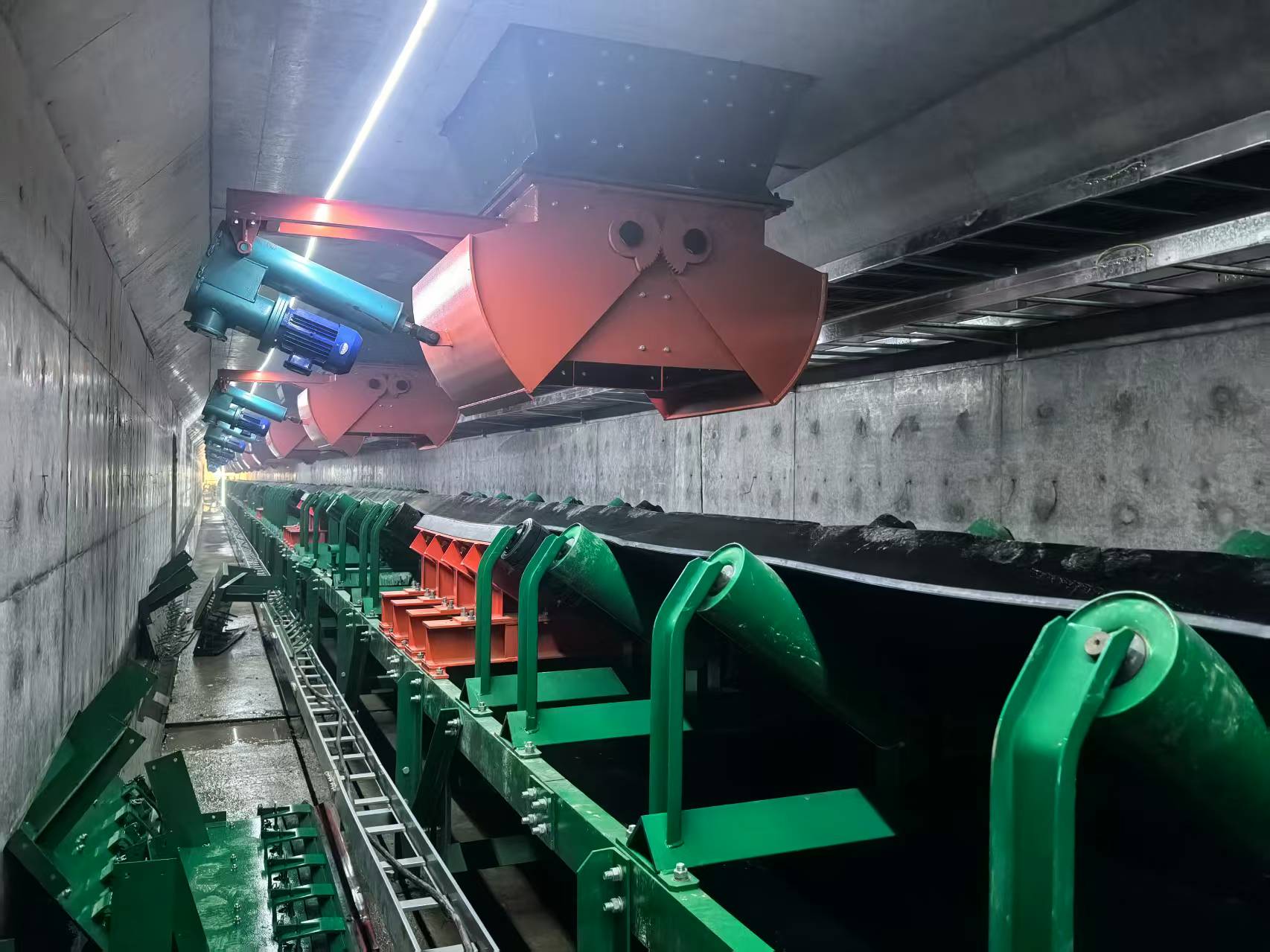
The journey of a premium conveyor roller begins long before the first weld is struck, in the quiet deliberation over raw materials. Mills that supply the steel tubing for these components operate under strict metallurgical controls, ensuring each batch meets exacting standards for tensile strength and concentricity. Once the cold-drawn or hot-rolled tubes arrive, they pass through a rigorous incoming inspection where surface imperfections are flagged, and wall thickness is verified with ultrasonic equipment. This initial gatekeeping matters because even a microscopic void can seed premature fatigue under the relentless rotation and load of a large-scale conveyor system. The better manufacturers keep detailed heat-number logs, connecting each finished roller back to its material pedigree, a quiet reinforcement of accountability that reveals itself years later when the roller still turns true.
Shaping and assembly follow a choreography that blends heavy stamping with precision turning. The tube ends are often swaged or machined to accept bearing housings—a process that demands careful alignment tolerances measured in fractions of a millimeter. Simultaneously, the shaft undergoes multiple grinding passes until its surface finish and diameter achieve a fit that balances low friction with minimal play. When the bearings are pressed into the housings, it's not a crude force-fit but a monitored operation where insertion sensors track load-displacement curves to catch any misalignment instantly. In the world of premium rollers, lubrication is treated as a design parameter rather than an afterthought. High-performance grease with synthetic base oils and extreme-pressure additives may be metered into sealed bearings, with the quantity optimized through fatigue testing rather than guesswork. A common oversight in ordinary rollers—excessive grease causing churning heat—is entirely avoided here.
Welding the end discs to the tube body is where many rollers reveal their true character. Automated robotic welders maintain consistent torch angles and travel speeds, but the real distinction lies in the pre- and post-weld procedures. Induction heating brings the joint region to a controlled preheat temperature to minimize thermal shock, and post-weld stress relief via gradual cooling helps preserve the roundness of the shell. After welding, the assembled roller isn't immediately shipped; it enters a test cell where it's spun at simulated operational speeds while a laser micrometer maps its radial runout. Any unit exceeding a tight TIR (total indicator reading) threshold is rejected or reworked. Finally, a protective coating—often a fusion-bonded epoxy or a specialized polyurethane—is applied, not just for corrosion resistance but also to provide the exact friction coefficient needed between the roller and the conveyor belt. This layered attention to detail, from steel selection to final dynamic testing, is what separates a commodity roller from one that quietly performs in a mining overland conveyor for a decade without intervention.
How Proper Roller Design Extends Conveyor Lifespan
Rollers are the heartbeat of any belt conveyor system, yet their role in longevity is often underestimated. Instead of treating them as passive rotating cylinders, engineers now tailor roller specifications to the unique stresses of each application. For instance, selecting shell thickness and material based on load per roller and impact severity helps prevent early deformation. Even more critical is the precision of the bearing housing seal arrangement—labyrinth and contact seals, when correctly matched to dust or moisture levels, keep contaminants out without generating excessive drag or heat. A well-chosen roller naturally reduces friction along the belt line, which means the motor, reducer, and belt splice all experience less daily fatigue.
Another overlooked factor is the roller's dynamic balance and concentricity. Even minor eccentricity can introduce vibrations that pulse through the belt carcass and splice joints, accelerating fatigue cracking. By specifying tighter runout tolerances and multi-pass balancing, vibration is subdued before it can spread. This subtle refinement becomes especially important in high-speed or overland conveyors where resonance can amplify small imperfections into costly, repetitive belt repairs. The drum or wing design on return rollers also matters: a self-cleaning profile prevents sticky carryback from accumulating unevenly, which would otherwise cause the belt to mistrack, wearing edges against the structure.
Ultimately, extending conveyor life through roller design is about managing energy loss and load distribution. When each roller spins with minimal internal resistance and provides consistent support across the belt's width, there's less strain on splices, idler frames, and take-up systems. Maintenance teams notice the difference not just in longer replacement intervals, but in more predictable, quieter operation. Staggered trough angles, engineered shell coatings for corrosive environments, and lubrication-for-life bearings all quietly work together to keep the conveyor running true, turning a simple component into a long-term reliability upgrade.
Common Failure Points and How Top Suppliers Overcome Them
When production lines grind to a halt, it’s rarely because of one catastrophic event. It’s the quiet, nagging issues that erode trust: dimensional drift across batches, hidden corrosion that only appears after assembly, or a supplier’s tendency to “overlook” a non-conformance until someone screams. The suppliers who’ve earned commodity-category leadership treat these not as inevitable quirks but as process failures they can design out. One aerospace fastener partner we tracked replaced its entire incoming inspection workflow with automated optical probing and a statistical process control dashboard that flags any shift above 0.2 sigma well before parts leave the loading dock. It’s a mindset shift from “we’ll fix it when you complain” to “we’ll spot the pattern when there’s still time to rerun the lot without you ever noticing.”
Another systemic failure point is the data vacuum between a supplier’s shop floor and the customer’s MRP system. Even a technically competent plant can turn into a liability if its delivery promises are built on spreadsheets nobody updates. The best operations don’t rely on emails or weekly reports; they give you live access to WIP queues, tooling availability, and carrier tracking with role-based visibility. During the post-pandemic logistics squeeze, a tier-one electronics manufacturer we work with integrated a lightweight API that pushes real-time production completion data directly into their customers’ supply chain platforms. The anxiety didn’t magically disappear, but the constant second-guessing did—because every stakeholder could see exactly which bottleneck was being cleared right then.
Customization requests are where many otherwise solid suppliers fall apart. They treat an engineering change notice as a disruption rather than a normal part of the relationship. Top performers flip that around by pre-building flexibility into every contract. They’ll offer a shared materials bank for your revised resin grade, or keep a small buffer of unetched circuit blanks so a trace redesign doesn’t add fourteen weeks. One industrial supplier we’ve seen renegotiate the terms so that modest changes under a pre-agreed complexity score automatically flow through without a formal re-quote, protecting both margin and momentum. It’s not about being a yes-man; it’s about removing the friction that turns a minor adjustment into a month of dead air.
Choosing the Right Return Idler for Heavy-Duty Applications
In mining and quarry settings, return idlers take a beating from abrasive materials, off-centre loading, and relentless operating hours. Rather than defaulting to a standard steel roll, you need to audit the shell thickness and bearing size. A thicker shell—at least 6 mm—resists folding under impact, while larger bearings (think 6300 series or equivalent) distribute load and cut down on raceway Brinelling. Look for idlers with labyrinth or taconite sealing; these keep fines out and grease in, even when conveyors run in wet, dusty conditions. Matching the idler's CEMA or ISO rating to your belt speed, load, and lump size prevents premature failure that can shut down an entire circuit.
Belt training becomes surprisingly critical when a return side runs empty or carries sticky carryback. Self-aligning return idlers with a central pivot and guide rollers sense belt wander and nudge it back toward centre before edge damage occurs. For particularly harsh applications, consider using rubber disc return idlers. The discs shed wet or sticky material that would otherwise build up on a flat roll and throw the belt offline. However, ensure the rubber compound suits your operating temperature and chemical exposure; natural rubber grips well in wet environments, while urethane offers better resistance to oils and cutting wear.
Don't overlook the frame and bracketry. In heavy-duty service, the idler frame must withstand vibration and twisting forces without cracking. Welded steel frames with reinforced gussets hold alignment longer than cast or stamped versions. Adjustable mounting slots give you room to square the idler to the belt path, which reduces scrubbing and power draw. Finally, verify that lubrication intervals and greasing points are safely accessible—idlers tucked behind guarding or buried in a gallery often get neglected, leading to seized rolls that act like sanding blocks against the belt cover. The right combination of robust components and maintenance-friendly design turns return idler selection from a commodity buy into a critical reliability decision.
Real-World Performance: Case Studies in Conveyor Reliability
At a major automotive assembly plant, unplanned stoppages on the body shop’s main feed conveyor were clocking in at nearly 90 hours a year. The culprit wasn’t a single catastrophic failure but dozens of minor snags—worn bearings, drifting belt tension, and mistimed transfers—that conventional inspections never caught in time. Instead of throwing more PMs at the problem, the team installed a simple vibration and speed monitoring kit on critical drive pulleys, feeding data straight into their existing CMMS with anomaly alerts. Within the first quarter, they’d eliminated 70% of those short-duration interrupts simply by catching deviations hours before they cascaded. The lesson wasn’t about high-tech sensors; it was about making the conveyor’s own operating signature the trigger for action, turning a reactive firefight into a predictable rhythm.
A port terminal handling bulk fertilizer faced a different beast: their 2-kilometer overland conveyor regularly ate through splice joints on the steel-cord belt, and every unscheduled repair cost them dearly in demurrage fees. Traditional rip-detection loops kept flagging false positives from material buildup, so the reliability engineer tried a low-cost acoustic approach—attaching a handful of magnetic microphones along the structure to listen for the distinct screech of cord pull-out. The pattern jumped out immediately. A specific low-frequency harmonic amplified during the final 15% of a splice’s life, giving a clean two-week warning window. Reworking the splicing procedure based on that acoustic fingerprint extended average joint life from 11 months to over 30, and the terminal turned a recurring crisis into a planned maintenance event that never again held a vessel at the dock.
In a high-speed distribution center for refrigerated foods, the real surprise came from motor current analysis on a network of accumulation conveyors. The facility was plagued by sporadic zone controller faults that left cartons jammed and product warming up, yet no mechanical issue could be found after the fact. By trending the current draw of each zone’s drive motor at 100-millisecond intervals, they spotted the telltale signature of momentary electrical noise coupling into the 24V control circuit from a nearby variable-frequency drive. A simple grounding tweak and a ferrite choke eliminated the phantom trips overnight. This case stuck with the team not because the fix was clever, but because it reminded them that conveyor reliability often lives in the blurry overlap between mechanical and electrical domains—where neither the mechanics nor the electricians typically have full visibility.
FAQ
Return idler rollers support the belt on its way back after material discharge. Without a solid set, the belt sags, tracks poorly, and wears out fast. They keep tension even and prevent costly spillage or mistracking that grinds operations to a halt.
Their rollers use labyrinth seals and thick-walled tubes that laugh off grit, water, and heavy impacts. The bearing housing is machined to keep out fines, so you're not swapping rollers every few months. In wet, abrasive mines, they just keep spinning without the usual squeal or seizure.
Absolutely. They build to your specs—tube diameter, shaft size, bracket placement—whether you're running a 24-inch gravel belt or an 84-inch overland coal line. Engineering team walks through load calculations so what arrives fits without field modifications.
You'll see them in aggregate quarries, cement plants, port terminals, and underground hard rock mines. Anywhere an unplanned shutdown costs thousands per hour. Bulk material handlers who can't afford belt drift or roller failure stick with these for years.
Crews report spending way less time greasing or replacing seized idlers. With sealed-for-life bearings and no re-lube needed, quarterly inspections turn into quick visual checks. That frees up the team for other urgent repairs and slashes annual roller replacement budgets by half or more.
Precision bearing alignment and low-friction grease keep heat minimal even when belts run over 800 feet per minute. The frame rigidity prevents wobble that generates friction. We've logged bearing temps that stay steady, avoiding the thermal expansion that trashes seals in cheaper units.
In an iron ore plant, they lasted triple the competitor's lifespan—nearly five years with zero unscheduled swaps. A limestone quarry got over 50,000 operational hours before any bearing play showed up. That's not luck; it's overbuilt steel and smarter sealing.
Conclusion
Durability in a return idler roller isn’t about a single feature—it’s the result of deliberate material choices and uncompromising production standards. Shell thickness, end disc welding technique, and bearing protection all contribute to how well the roller resists abrasive fines, moisture, and misalignment. A truly durable unit relies on carefully selected steel grades and labyrinth seals that keep contamination out without generating excess heat. Inside the factory, consistency matters: automated welding, dimensional checks after every machining step, and dynamic balancing drastically reduce the chances of premature fatigue. Rather than treating rollers as commodity items, top manufacturers run accelerated life-cycle tests that simulate years of load and environmental stress in a matter of weeks, allowing engineers to pinpoint weak spots before a product ever reaches a mine or quarry floor.
Thoughtful roller design goes well beyond meeting dimensional specs—it directly impacts the entire conveyor’s service life. When the return side is equipped with correctly spaced idlers designed to minimize belt wander, edge wear drops noticeably. Leading suppliers attack common failure points like bearing collapse and shell erosion by integrating oversized shafts, multi-stage sealing geometries, and reinforced ribs that hold concentricity under impact. In heavy-duty applications, matching roller diameter and wall thickness to the burden weight and belt speed becomes essential; otherwise, even a seemingly robust roller can degrade from excessive shell deflection. Real-world operations highlight the difference: iron ore terminals moving abrasive materials have extended idler change-out intervals by several times after switching to purpose-engineered return rollers, cutting both replacement parts spend and unscheduled downtime. That kind of field-proven reliability is what defines a company that truly delivers durable conveyor solutions, not just components that look good on a data sheet.
Contact Us
Contact Person: Jayce
Email: [email protected]
Tel/WhatsApp: 8615318787602
Website: https://www.yuphengbelt.com/