

Top Steel Pipe Tower in China: Exploring the Country's Leading Steel Tower Designs
2026-11-16
China's steel pipe towers aren't just utilitarian latticework—they're load-bearing sculptures shaped by typhoon zones, high-altitude ice loads, and unforgiving terrain. As the country pushes transmission capacity further, tower designs have evolved into a quiet art of weight reduction, joint fatigue resistance, and aerodynamic stability. This post unpacks the leading designs, the engineering trade-offs behind their silhouettes, and why Anbang keeps surfacing in projects where failure isn't an option.
Pushing Height Limits With Lighter, Stronger Steel
The quest for taller buildings has always run into a stubborn problem: the heavier a structure gets, the more steel it needs to support itself, and the more that steel adds to the load. Recent shifts toward advanced high-strength, low-alloy formulations break this cycle. By boosting yield strength to 690 MPa and beyond, designers can cut column and beam sections by a third or more while keeping the same load capacity. That weight reduction cascades through the frame, shrinking foundation demands and leaving more floor area for actual use rather than structural bulk.
Lighter steel also changes how buildings respond to lateral forces. Wind and seismic loads dominate at extreme heights, and a slender tower built with thinner, stronger members can be tuned more precisely. Damping systems become more effective when the building sways less from inertial mass, and erection crews spend fewer crane cycles hoisting components that weigh half as much as conventional equivalents. Some recent supertall projects have replaced bulky built-up box columns with single rolled shapes, simplifying welding and inspection while improving fatigue performance.
The practical payoffs appear in faster construction and longer clear spans. With floor-to-ceiling glass now possible without a forest of internal columns, developers can offer more flexible tenant layouts and better views. One mixed-use high-rise in Chicago cut its structural steel tonnage by 28 percent using a new 960 MPa grade, which allowed an extra 40 meters of height on the same foundation footprint. As mills refine thermomechanical processing and scrap-based electric arc routes, these lighter, stronger grades are moving from niche to mainstream, quietly redrawing the skyline.
How Wind Tunnel Testing Reshapes Tower Geometry
Wind tunnel testing doesn’t simply validate a tower’s form—it actively reshapes it. Scale models mounted on dynamic force balances reveal how wind pressure wraps around edges, where suction peaks concentrate, and how wake turbulence feeds back into structural vibration. These readings push engineers to round off sharp corners, introduce vertical tapers, or add localized setbacks that break up coherent vortex shedding. A tower that starts as a pure extrusion often ends with a subtly twisted or notched profile, each adjustment directly traceable to a pressure spike or acceleration measured in the tunnel.
Beyond the overall silhouette, the tests reshape local geometry as well: parapet height, balcony depth, and the angle of façade fins all get tuned to disrupt organized eddy formation. Repeated testing of modified physical models creates a feedback loop where each iteration trades a bit of floor area or visual simplicity for a calmer structural response. The result is a form that appears expressive but is, in fact, a highly rational response to invisible aerodynamic forces—geometry rewritten by air itself.
The Hidden Role of Galvanization in Coastal Durability
Coastal environments are notorious for accelerating corrosion, yet galvanized steel often survives decades where bare metal fails within months. What rarely gets discussed is how the zinc layer performs a kind of sacrificial choreography, corroding slowly and unevenly to shield the underlying structure. Salt spray, high humidity, and abrasive sand create a punishing microclimate, but the zinc's reaction with chlorides forms a dense, adherent patina that slows further attack. This is not a passive barrier; it is an active, self-healing shield that keeps working even after the surface is scratched or chipped.
Most engineers focus on coating thickness or alloy composition, but the hidden factor lies in the galvanic coupling between zinc and steel. When seawater infiltrates a breach in the coating, a small electrical cell forms, with zinc acting as the anode. This means the zinc corrodes preferentially, protecting the steel cathode from pitting and cracking. In tidal zones where structures alternate between wet and dry cycles, this electrochemical protection becomes even more critical, preventing the crevice corrosion that plagues uncoated fasteners and weld joints.
The real durability secret, however, is not the initial coating but how galvanization interacts with local weather patterns. On piers and boardwalks, zinc runoff can slightly alter the pH of adjacent concrete, creating a micro-environment that is less aggressive to embedded rebar. Meanwhile, the natural aging of the zinc surface shifts from bright spangle to a matte gray, which absorbs less solar heat and reduces thermal expansion stress. These subtle, site-specific adaptations are rarely documented in product literature, yet they often determine whether a coastal installation lasts twenty years or fifty.
Precision Welding at the Heart of Every Joint
At the core of every high-performance assembly lies a weld that demands more than just melted metal—it requires exacting control over heat, filler, and timing. Precision welding treats each joint as a unique intersection where material properties, geometry, and service conditions must align perfectly. Unlike routine tacking or rough fabrication, this approach eliminates guesswork, ensuring that the bond formed is not merely strong enough, but exactly right for the load path it will carry.
Achieving that level of precision starts long before the arc strikes. Joint preparation, from edge beveling to surface cleaning, is executed with tolerances measured in thousandths of an inch. Welders rely on calibrated power sources, pulsed current profiles, and sometimes automated oscillation to deposit each pass with repeatable penetration. Real-time monitoring of voltage, amperage, and travel speed allows corrections in the moment, not after a failed inspection.
The payoff shows up in the finished product: seams that blend almost invisibly into the parent metal, minimal distortion that would otherwise demand costly straightening, and joints that hold up under fatigue and thermal cycling without micro-cracking. In industries where a single compromised joint can halt an entire assembly line or fail in the field, precision welding isn't a luxury—it's the quiet backbone of reliability.
Building Towers That Hold Steady in Earthquake Zones
Modern seismic design doesn't attempt to make towers rigid enough to resist every tremor. Instead, engineers embrace flexibility, allowing structures to sway and dissipate energy before it can tear joints apart. Base isolation is a prime example: thick rubber-and-steel bearings lift the tower off its foundation, so the ground moves but the building above stays relatively calm, like a passenger riding gentle waves on a ship's deck.
Another approach involves tuned mass dampers, which are essentially giant pendulums near the top of a skyscraper. When the building begins to oscillate, the damper swings out of phase, pulling the structure back toward center. Taipei 101 famously uses a 660-ton steel sphere for this purpose, and visitors can watch it move during typhoons and earthquakes. It's not magic—just a careful balancing of forces that keeps sway within tolerable limits.
For high-rise cores, performance-based design has become essential. Rather than following a one-size-fits-all code minimum, engineers simulate how a specific tower will behave under ground motions recorded from past quakes. They then reinforce weak points—such as coupling beams between shear walls or column splices—with ductile details that can yield without fracturing. The goal isn't a building that survives untouched, but one that remains upright and repairable after the shaking stops.
Why Compact Lattice Towers Are Gaining Ground in Cities
Urban planners once treated lattice towers as industrial eyesores, but the latest compact versions are changing that perception almost overnight. Their slim profiles and reduced footprints allow them to slip into narrow corridors between buildings, rail lines, and even parking structures where conventional monopoles or bulky lattice designs simply cannot fit. This spatial efficiency means cities can upgrade power or communication infrastructure without waiting years for large-scale rezoning or public pushback.
Beyond the practical savings in land acquisition, compact lattice towers offer a kind of visual honesty that heavy monopoles lack. The open framework lets light and sky pass through, making the structure feel less like a solid wall and more like a piece of functional sculpture. Municipal review boards increasingly favor this lighter touch, especially in historic districts or near parks where a hulking steel cylinder would trigger immediate opposition.
Maintenance crews also appreciate the difference. A compact lattice tower can be climbed and inspected without special cranes or wide work zones, which translates into shorter lane closures and less disruption for residents. For cities juggling tight budgets and rising demand for wireless coverage, that combination of lower installation costs and simpler long-term upkeep makes the compact lattice hard to ignore.
FAQ
They offer a high strength-to-weight ratio, which reduces foundation loads and allows taller, more slender structures. Their circular cross-section also performs well under wind loads, especially in coastal and mountainous regions.
Coastal areas like Zhejiang and Jiangsu, along with mountainous provinces such as Sichuan and Yunnan, have pushed innovation because towers there must handle typhoons, corrosion, and difficult terrain.
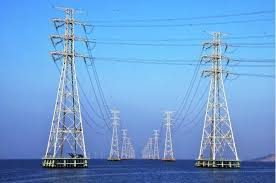
The Zhoushan Island Overhead Crossing includes one of the tallest electricity pylons in the world, with towers reaching around 380 meters. They use high-strength steel tubes and special vibration dampers to cope with strong sea winds.
They often use hot-dip galvanizing plus additional protective coatings like epoxy or polyurethane, and in severe marine environments they may specify weathering steel or stainless steel for critical sections.
Automated submerged arc welding and ultrasonic testing are widely used to ensure consistent weld quality, especially for thick-walled main legs and flange connections that carry the highest loads.
They are also used for telecommunications, radio and television broadcasting, wind measurement masts, and even observation towers, although power transmission remains the largest application.
There is a move toward more modular and bolted connections to speed up assembly in remote areas, plus the use of high-strength Q420 and Q460 steel to reduce weight without losing capacity. Digital modeling and drone inspection are also becoming standard.
Conclusion
China's leading steel pipe tower designs now routinely exceed older height benchmarks by using lighter, higher-strength steel that reduces foundation loads without sacrificing stiffness. Wind tunnel testing has become a standard step, not an afterthought: engineers run scale models through multiple turbulence profiles, then reshape tower cross-sections, leg spacing, and bracing angles to minimize galloping and vortex shedding. Along the coast, galvanization plays a hidden but critical role. Specifiers adjust zinc coating thickness, add duplex systems, and seal overlapping joints to resist decades of salt-laden air and monsoon humidity. At every node, precision welding—often performed with robotic assistance and then checked by ultrasonic or radiographic methods—ensures that a single flawed joint cannot compromise the entire lattice.
In seismic zones, Chinese steel pipe towers rely on more than heavy sections. They incorporate energy-dissipating connection details, slotted bolt holes, and carefully tuned brace buckling sequences, allowing the structure to sway and return to plumb after strong ground motion. Meanwhile, compact lattice towers are finding new life in crowded urban settings, where planners value their narrow footprint, lower visual clutter, and easier transport through tight streets. These city-friendly variants often use pre-assembled modules that reduce on-site welding and speed erection next to active roadways. The overall direction is unmistakable: steel tower engineering in China has moved beyond simple strength and height, embracing wind science, corrosion control, weld integrity, seismic behavior, and urban fit as equally important design drivers.
Contact Us
Contact Person: antor khan
Email: [email protected]
Tel/WhatsApp: 8613863903569
Website: https://www.qdabtower.com/