

Walk in Freezer Company Guide to Choosing the Right Cold Storage Solution
2026-11-25
Most cold storage guides read like spec sheets, but a walk-in freezer is a long-term operational decision. The right box temperature, door configuration, and floor load can save a facility thousands—or cost it just as much. This guide from ART strips the selection process down to the factors that actually matter, so you can move past guesswork and into a system built for your product, your space, and your daily workflow.
How Much Space Can Your Walk-In Freezer Actually Take?
Most people start with the footprint of the room and assume the freezer will slide right in. That rarely holds up once you account for the gap behind the panels, the swing of the door, and the space a technician needs to reach the refrigeration lines. A unit that looks compact on a spec sheet can easily demand an extra two to three feet around one or two sides.
Inside, the usable storage area is smaller than the exterior dimensions suggest. Four-inch insulated panels, interior shelving, and the required air gap around stored product eat into the space quickly. If you plan for pallets or rolling racks, measure those loaded rather than empty, and keep at least a few inches between the top of the product and the ceiling evaporator.
Height matters just as much as floor area. Low ceilings can interfere with the door opening, evaporator clearance, or even heat rejection from the condensing unit if it sits on top. Before you commit to a size, walk the path where the panels and floor kit will travel during installation—tight hallways and turns can force you into smaller sections or a different layout.
What Temperature Does Your Cold Storage Inventory Really Need?
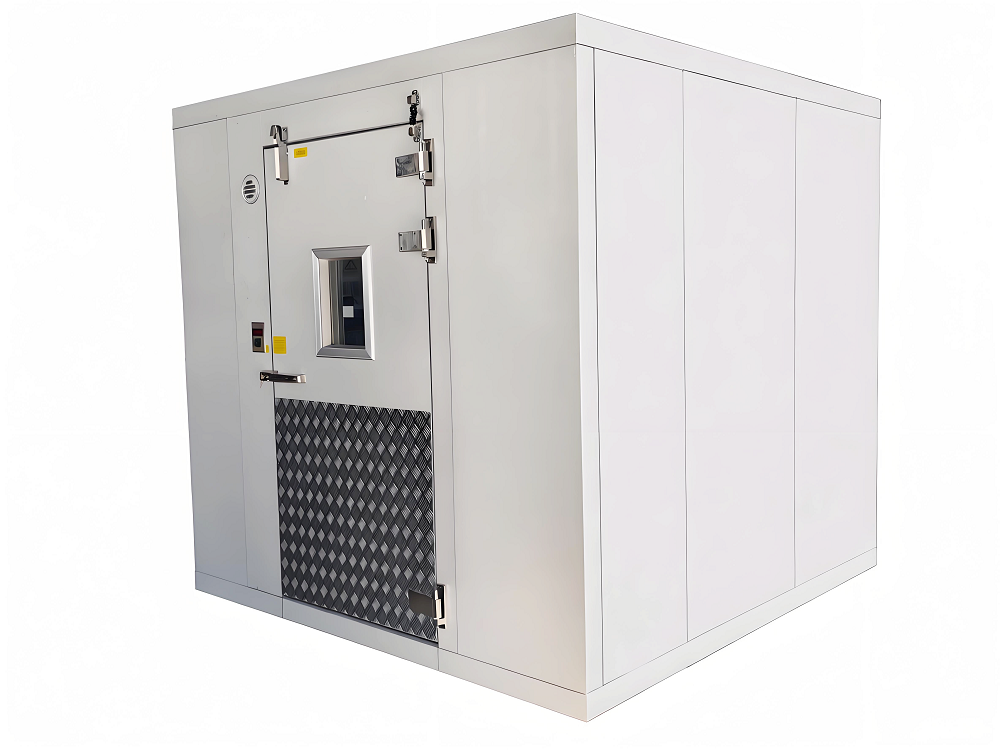
Cold storage temperature is rarely a single number you can set and forget. The ideal range depends heavily on what you actually keep inside: frozen meats, fresh dairy, leafy greens, pharmaceuticals, and certain chemicals all demand different thresholds. Storing everything at an arbitrary “cold” setting often leads to unnecessary energy costs or, worse, premature spoilage of sensitive items.
A more practical approach is to group inventory by thermal tolerance and assign zones accordingly. For example, frozen goods typically need -18°C or lower to maintain texture and safety, while many fresh vegetables hold best between 0°C and 4°C. Temperature fluctuations matter as much as the average reading—door openings, defrost cycles, and poor airflow can create warm pockets that compromise products even when the display says otherwise.
Regular verification with calibrated sensors placed near the warmest and coldest points of the storage area gives a clearer picture than a single thermostat. Adjusting based on actual measured conditions, rather than a fixed industry standard, helps prevent both freezer burn and thaw damage. In the end, the right temperature is the one that matches your specific inventory mix while keeping energy use from climbing unnecessarily.
How Often Will the Door Swing Open in a Normal Shift?
A busy coffee shop will see the front door move far more often than a small boutique. In an eight-hour stretch, it is not unusual for a high-traffic convenience store to log several hundred open-and-close cycles, while a quiet showroom might see only a couple dozen. The rhythm changes with the clock, too: crowds bunch up around the morning rush, lunch, and the end of the workday, leaving long lulls in between.
Weather and layout also push the number up or down. A door that faces the street catches more walk-ins, and a heavy, slow-closing model gets held open during deliveries or when someone is wrestling with a stroller. Staff habits matter as well. A kitchen side door used for smoke breaks and trash runs may actually open more often than the main entrance during certain parts of the day.
Rather than guessing, many building owners ask a technician to pull the cycle counter from the operator or install a simple data logger for a week or two. That gives a realistic count across slow Mondays, payday Fridays, and everything in between, which is far more useful than a single shift’s average.
Should Your Cold Storage Be Modular or Built In?
The choice usually comes down to how permanent your space really is. A modular unit gives you room to change your mind: it can be disassembled, moved, or expanded without tearing into the building shell, which makes sense in leased facilities or operations that expect shifting inventory. Built-in cold storage, by contrast, fits the roofline and electrical layout of the building more cleanly, but it asks you to commit early to door locations, insulation depth, and floor slope before the surrounding space is finished.
Day-to-day use also favors different setups. Modular walk-ins tend to arrive with their own panels and refrigeration, so commissioning is faster and replacement parts are easier to isolate. However, thresholds, door seals, and drainage often need more attention because the unit stands independently from the floor. A built-in room can be tailored to loading patterns and staff movement, with recessed drains, better air circulation, and fewer seams for frost to gather, but only if those details are locked in during construction.
Cost is rarely just the price tag. A modular system may carry a higher upfront purchase, yet it holds value if you relocate or resell it. Built-in construction can be more energy-efficient over a long stable run because it becomes part of the building envelope, but changing or removing it later is disruptive and expensive. If your temperature range or layout might shift within three to five years, modular is usually the safer call; if the room is fixed and used daily, building it in often ages better.
What Does It Cost to Run the Freezer After the Purchase?
The running cost depends more on the unit's age, size, and placement than most people expect. A mid-size chest freezer kept in a cool basement might draw around 300 to 450 kWh in a year. At an average residential rate of 15 cents per kilowatt-hour, that lands somewhere near $45 to $70 annually, or roughly $4 to $6 added to the monthly bill. Older upright models with automatic defrost tend to run higher, while a compact manual-defrost chest freezer can stay surprisingly cheap to operate.
Where the freezer sits changes the math quickly. A garage that turns hot in summer or cold in winter forces the compressor to work harder and shortens its rest cycles. Keeping the temperature setting at 0°F rather than much colder, and leaving a little air space around the cabinet, helps avoid unnecessary strain. Worn door gaskets and heavy frost buildup are also silent cost drivers because they let the unit cycle more often without storing food any better.
A practical way to view the expense is as a small monthly habit rather than a fixed annual fee. Replacing an aging seal, defrosting before ice gets thick, and choosing a capacity that matches actual household needs often matter more than the sticker's energy rating alone. Compared with the cost of losing a full load of food during a summer outage, the everyday electricity use is usually modest and well within your control.
Who Services the System Before You’re Stuck Without Cold Storage?
Cold storage equipment rarely fails without warning. Compressors run longer, defrost cycles drift, door seals lose their grip, and small leaks quietly change system pressures weeks before a shutdown. The person who catches those signs is not the warehouse manager with a clipboard. It is a licensed refrigeration technician who knows what normal superheat sounds like, what a failing contactor smells like, and when an oil sight glass is telling you something the gauges are not.
A dependable service provider works from a schedule, not from panic calls. They clean condenser coils before head pressure climbs, check crankcase heaters before winter, test defrost termination before ice builds into a block, and calibrate temperature sensors before a drift becomes a product loss. None of this is dramatic work. Most of it happens during normal operating hours while the system is still running. That is exactly the point: the best service is the kind you never have to explain to an insurance adjuster.
When choosing who will handle that work, ask about their experience with your refrigerant, their response time for after-hours failures, and whether they keep written service records. The better technicians will also show your team what to watch for between visits, because a puddle under the unit or a change in compressor sound can be reported early. If a provider cannot explain what they are checking and why, find one who can. The real cost is not the maintenance visit. It is the morning you open the door and find the cold gone.
FAQ
Start with the pallet or shelving dimensions you actually use, then add at least 18 to 24 inches of clearance around the perimeter for air circulation and door swing. A common mistake is sizing only for current inventory, but you will want room for seasonal spikes and staging without blocking the evaporator.
Most frozen food operations run well at -10°F to 0°F, but the right set point depends on how often the door opens and what you are storing. Ice cream, for example, stays firmer at -20°F, while general frozen goods can tolerate 0°F if the box has good airflow.
If the freezer sits on an existing concrete slab at ground level, a floorless design can save money and simplify cleanup. Insulated floors become important when you are placing the unit upstairs, over a heated space, or anywhere condensation and frost can form under the slab.
Self-contained systems mount the compressor and evaporator together, which makes installation quicker and works well for smaller boxes. Remote systems place the compressor outside or on a roof, keeping heat and noise out of the workspace, which is worth it for larger freezers or hot kitchens.
Leave at least 24 to 30 inches above the unit for evaporator service and condensation drainage, and roughly 2 to 3 feet on at least one side if you have a remote compressor that needs access. Tight installations often work, but they turn routine maintenance into a painful job.
Look for a self-closing hinge, an interior safety release, and a heated door frame or pressure-relief vent to prevent vacuum lock after warm air rushes in. If staff are carrying trays or pallets, wider doors or sliding options reduce damage and speed up entry.
Yes, but you need a weatherproof roof, reinforced panels for wind load, and a floor that handles ground moisture. Outdoor units should also use a refrigeration system rated for ambient temperature swings, otherwise the compressor can struggle on very hot days.
Budget for coil cleaning, door gasket checks, drain line clearing, and a professional inspection of refrigerant pressures at least twice a year. Most early failures I see come from blocked condenser coils or cracked gaskets, which are cheap to fix if caught before the compressor runs constantly.
Conclusion
Choosing a walk-in freezer rarely comes down to a single spec, but the most practical decisions start with physical space and real workflow. Measure the available floor area against not just the box dimensions but also door swing clearance, ventilation gaps, and the path staff use during a busy shift. A freezer that fits on paper can become a bottleneck if the door opens constantly or if racking leaves no room for air circulation. Temperature needs are equally specific: frozen meat, dairy, and prepared ingredients may hold quality at different set points, so matching the system to the actual inventory prevents both spoilage and wasted energy.
Beyond the initial layout, look hard at how the unit will live in your operation. Modular panels make sense when the location might change or access is tight, while built-in construction can offer better sealing and insulation for permanent placements. Operating cost deserves as much attention as the purchase price because compressors, defrost cycles, and door usage shape the monthly bill long after installation. Finally, clarify service response before anything fails. Knowing who handles refrigeration repairs, gasket replacement, or emergency calls keeps a minor fault from turning into a full loss of stock.
Contact Us
Contact Person: Ellen
Email: [email protected]
Tel/WhatsApp: +86-535-2229725
Website: https://www.artrefrigeration.com/