

Waxed Corrugated Boxes Manufacturer Reveals How to Choose the Right Box Strength for Your Products
2026-08-24
Choosing the right corrugated box strength can feel like guesswork—too light and your products arrive damaged, too heavy and you're wasting money. But it doesn't have to be that way. As a leading waxed corrugated boxes manufacturer, ShiTeng Packaging has spent years helping businesses match box strength to real-world shipping demands. In this guide, we break down the factors that actually matter, from edge crush tests to moisture resistance, so you can protect your products without overspending.
The Real Cost of a Box That Fails Mid-Shipment
A carton that crumples halfway to its destination doesn't just bruise the product inside. It triggers a quiet chain of extra work: customer service tickets, reshipment fees, warehouse time lost to repacking, and the awkward phone call where you apologize for something you never intended. Unlike a defect caught on the loading dock, a mid-transit failure happens after your team has already moved on, so the real price includes the labor of untangling a problem you can no longer see.
There's also the less measurable damage. Recipients who receive a crushed, torn, or burst-open package tend to remember the mess more than the merchandise. That memory shapes whether they order again, leave a review, or quietly switch to a competitor whose boxes arrive intact. In industries where unboxing is part of the purchase, a collapsed corner can undo months of brand building in seconds.
Finally, consider the environmental and operational drag. Failed boxes end up as wasted corrugate, additional filler, and duplicate shipments that double fuel use and emissions. Every repack adds handling touches that disrupt throughput. What looks like a cheap carton on the front end often becomes an expensive, repetitive exception on the back end, one that never shows up as a single line item but steadily drains margin.
Why Waxed Corrugated Changes the Strength Conversation
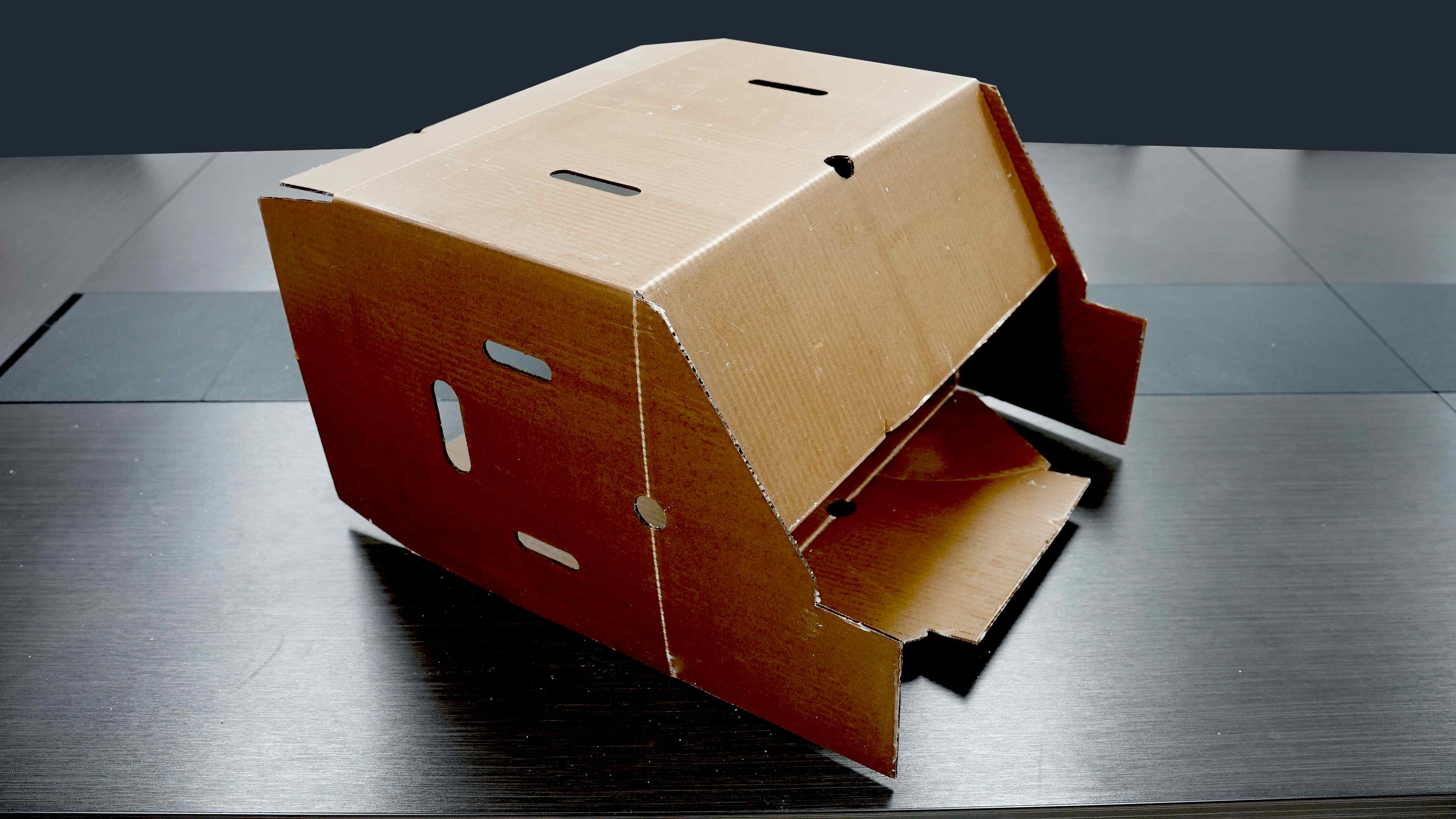
For years, the industry leaned on standard burst and edge crush tests to judge how tough corrugated really was. Those numbers look great in a dry lab, but they fall apart the moment a box meets condensation, a spilled pallet, or a humid trailer. Waxed corrugated flips that assumption on its head. It doesn’t just add a barrier—it changes what we mean by strength in the first place. The conversation shifts from “how much force before it fails” to “how long it holds up when conditions get ugly.”
What gets overlooked is how wax penetrates the fiber structure itself, not just the surface. That impregnation reduces fiber slippage and prevents the board from turning mushy under load. As a result, waxed boxes keep their stacking integrity in cold storage, wet environments, and rough handling where untreated corrugated would buckle or delaminate. Real-world logistics have become the new testing ground, and waxed board keeps outperforming specs that were written for a dry-warehouse world.
There’s also the durability angle that rarely makes it into the typical strength discussion. An untreated carton can be ruined by a single pass through a damp dock or a bit of abrasive contact, while a waxed one shrugs off repeated trips, washdowns, and rough returns. That extended service life rewrites the cost-versus-strength equation. Buyers who once focused on upfront price find that paying more for waxed corrugated actually reduces total spend, because the boxes aren’t being replaced after every wet cycle.
Matching Strength to Your Product’s Fragility and Value
A rigid box might seem like a safe default, but overengineering packaging often wastes material and obscures the product itself. The first step is to honestly assess how fragile the item really is: can it survive a drop from waist height, or does it need foam inserts and double-wall corrugate just to reach the customer intact?
Value shapes expectations too. A $200 bottle of perfume earns its rigid set-up box and magnetic closure; a $12 candle does not. Matching strength to both fragility and value means the unboxing feels neither careless nor excessive, but exactly proportional to what is inside.
That proportional approach also prevents returns from damage while avoiding the subtle disappointment of opening something that feels cheaper than it should. It is less about choosing the strongest material and more about choosing the right amount of protection for the specific object, price point, and journey.
Stacking, Humidity, and Time: The Underrated Stressors
Stacking rarely gets the attention it deserves. A pallet loaded with slightly too much weight on one corner, or a warehouse row where boxes lean against each other for weeks, introduces slow, uneven compression. What begins as a minor deflection in packaging can become permanent deformation, crushed edges, or micro-cracks in protective barriers. The real danger is that the damage doesn't announce itself; it accumulates quietly until the product inside is compromised.
Humidity acts as an accelerator. In high-moisture environments, corrugated fiberboard loses up to half its stacking strength, meaning a load that was stable at 40% relative humidity may collapse at 70%. It also invites mold, weakens adhesives, and causes metal components to corrode even before they leave the storage facility. The effect is rarely linear — a few percentage points of moisture can tip a marginal stack into failure.
Time turns both factors from nuisance into threat. A box that could easily hold its contents for a week might buckle under the same load after three months of sustained pressure. Creep, the slow deformation under constant stress, is almost invisible until it's too late. Together, stacking, humidity, and time form a quiet trio that undermines even the best-designed packaging when they are ignored during storage planning.
A Simple Field Test to Confirm Supplier Claims
A quick way to separate bold promises from reality is to run a small side-by-side trial under normal working conditions. Take the supplier's claimed performance figure—durability, absorbency, battery life, tensile strength—and recreate that exact scenario using off-the-shelf items from the shipment. Instead of leaning on lab reports or polished demos, let the product sit in the same environment it will face on the job. Snap photos and jot down notes at the start, midpoint, and end; that gives you a record harder to argue with than any spec sheet.
Keep the variables to a minimum so the result points clearly at one thing. If a supplier says a coating resists 500 hours of salt spray, expose a coated coupon and an uncoated control side by side. If the claim involves cycle life, run the item through its stated duty cycle and log every failure or deviation. The point isn't to punish the supplier—it's to confirm whether the claims hold up without special handling, cherry-picked samples, or ideal conditions that rarely show up in the field.
Share the results only after you have your own baseline. A credible supplier will welcome the test and might even help fine-tune the method. One that pushes back, blames your setup, or suddenly lowers the claimed numbers is telling you something useful about the partnership.
When Single-Wall Isn’t Enough: Reading the Warning Signs
A single-wall construction often works fine until it doesn't. The first signs of trouble rarely arrive as dramatic failures; instead, they show up as subtle cues that get dismissed too easily. You might notice hairline cracks running from window corners, a persistent chill near the floor even with the heat on, or the faint smell of mildew that comes and goes with the weather. These aren't quirks—they're the wall telling you it's reached its limit.
Pay attention to how the wall behaves after a heavy rain or a hard freeze. If the paint begins to bubble, the drywall feels spongy, or the doors start sticking in frames that used to close smoothly, the single layer is struggling to manage moisture and movement. Another telltale sign is sound: when you can hear conversations from the next room as if the wall weren't there, the acoustic and thermal barrier is already compromised.
Rather than waiting for visible damage to spread, treat these warnings as a clear prompt to assess the structure. Adding insulation, sealing air leaks, or upgrading to a double-wall assembly can turn a failing barrier into a resilient one. The goal isn't just to patch the symptoms but to address why a single wall was never going to be enough in the first place.
FAQ
It starts with understanding the total weight your box will carry and how it will be handled. Then you look at the box construction—single wall, double wall, or triple wall—and match that to your product's fragility. Waxed boxes add moisture resistance, but the strength still comes from the flute and liner combination. If your items are heavy or your boxes will be stacked high, go up a grade rather than relying on extra tape or cushioning.
The number refers to the bursting strength of the board. A 200# box works for lighter products under 40 pounds with minimal stacking, while 275# holds up better for heavier items or when boxes sit in stacks for weeks. Think about how your product gets from your facility to the customer—if there's rough handling or long storage, the higher rating is worth the few extra cents.
ECT stands for Edge Crush Test, which measures how much weight a box can withstand before the edges buckle. It matters more than bursting strength when your boxes are stacked vertically. A 32 ECT box is common for standard shipments, but if you palletize and stack three or four high, you might need 44 ECT or even double wall. The wax coating doesn't add much compressive strength, so don't count on it to fix weak board.
Mostly, no—wax protects against moisture, not crush. If your product leaks or you're shipping in damp conditions, the wax prevents the board from softening, which indirectly helps maintain strength. But you still need to pick a proper corrugated grade for the load. A thin single wall box with heavy wax will still collapse under too much weight.
Not necessarily. Weight is one factor, but also consider how the box will be handled. A 10-pound item with sharp corners or one that gets tossed by carriers may need a stronger board to prevent punctures and tears. If it ships in a small parcel with other packages on top, a 32 ECT box is usually sufficient. For fragile items, extra cushioning often matters more than board strength.
Single wall is fine for most products up to about 40 pounds and standard shipping conditions. Double wall adds a second fluted layer, which resists bending and stacking pressure much better. Choose double wall if your boxes weigh over 60 pounds, will be stacked high, or need to survive long transit times with multiple touches. Triple wall is for industrial equipment or very heavy parts.
They focus only on the box price and ignore the cost of damaged returns. Choosing a box that's too weak leads to crushed corners, ripped seams, and unhappy customers—far more expensive than spending a little more on the right ECT or double wall. Another common error is assuming all waxed boxes are the same; the base board matters just as much as the coating.
Yes. Fill a few boxes with your actual product, seal them, and stack them to the same height as your warehouse or truck. Leave them for 48 hours and check for bowing or crushed edges. You can also do a simple drop test from waist height. If the box shows damage or the sides buckle, step up to a higher ECT rating or double wall construction.
Conclusion
Most buyers only think about box strength after a pallet collapses or a customer files a damage claim. A box that crumples mid-transit costs far more than the price of the carton itself; you eat the replacement product, the reshipment, and often the lost goodwill. Waxed corrugated shifts that risk because the coating resists moisture and keeps the fluting from softening, which means the published burst and edge crush ratings hold up in conditions that would wreck an untreated board. When we work with brands shipping glass, electronics, or high-end cosmetics, we don't just pick a generic 200# test. We weigh the item's fragility and retail value against the real hazards of the lane, then build up from there.
Stacking pressure, humidity in a trailer, and time in a warehouse do more damage than most people realize. A box that feels strong on day one can lose a third of its compression strength after a few humid weeks, especially if it sits at the bottom of a stack. That's why we tell customers to run a simple field check. Load a sample box with the actual product, stack the same number of boxes you'd ship in a pallet, and leave it for 48 hours in the dampest spot you can find. If the corners soften or the sidewalls bow, single-wall isn't enough. Upgrade to a waxed double-wall or add reinforced inserts before your customers discover the problem for you.
Contact Us
Contact Person: Mr. Ge Man
Email: [email protected]
Tel/WhatsApp: 8613710506492
Website: https://www.shitengzx.com