
White Label Public Safety Drone Simulator Training for First Responders
2026-10-16
Every second counts when a drone is the only eye over a collapsed structure or a missing child. Yet most public safety teams still train on real aircraft, hoping weather and budgets line up. SRIZFLY changes that with a white-label drone simulator designed specifically for first responders—so your agency can build mission-ready skills without the risk, cost, or downtime. Trainees rehearse search patterns, fire scene assessments, and night ops until the movements become instinct. If you’ve ever wondered whether simulator hours actually translate to the field, the next section will make the case clear.
When Every Second Counts, Simulators Teach What Briefings Can’t
Briefings walk you through the steps, but real emergencies ignore the script. A simulator shoves the clock in your face and lets your pulse climb, your hands tremble—physiological reactions no conference room can reproduce. Only when seconds are bleeding away do you discover which actions have truly sunk into muscle memory.
Mistakes inside a simulation carry no real-world cost, yet they leave real scars. One blown intravenous line or a delayed emergency brake teaches more than ten pages of checklists. Simulators compress time, letting you accumulate months of crisis exposure in a single afternoon.
Team coordination bends under pressure, and assignments agreed upon in a briefing can fall apart silently. Simulations expose the communication gaps you never noticed, forcing everyone to deliver the most critical information in the fewest possible words. When the real moment arrives, you stop thinking about what to do—your body already knows.
Your Insignia on the Screen: Why White Label Changes the Training Conversation
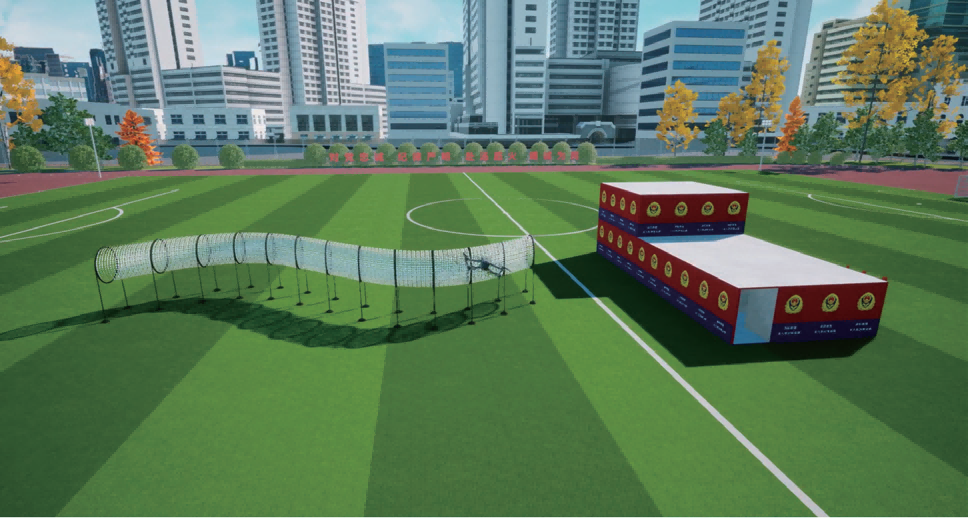
When a training platform carries your logo, your colors, and your brand voice, it stops being just another tool and becomes a natural extension of your organization. Learners log in and see a familiar environment, which lowers the mental barrier to engagement. They aren't visiting a third-party site; they're stepping into a space that feels like it was built for them, by the people they already trust. This shift in perception is subtle but powerful—it quietly signals that the learning experience is part of their professional home, not an outside obligation.
White labeling also changes how trainers and administrators talk about the platform. Instead of saying "the vendor's system," they can say "our academy" or "our learning hub." That ownership changes the tone of every announcement, reminder, and support message. It becomes easier to set expectations, celebrate milestones, and even address challenges because the platform is no longer a separate entity to be defended or blamed. The conversation moves from "how to use the tool" to "how to grow our people," which is where real learning conversations belong.
Over time, this branded presence builds a quiet sense of continuity. Learners begin to associate the training environment with the same quality and care they experience in other internal systems. That familiarity reduces friction and increases return visits. White labeling doesn't magically improve content, but it removes the invisible disconnect that often makes corporate training feel like an interruption. Instead, learning becomes woven into the fabric of the organization, and the platform becomes a true insignia—proof that development is a core value, not an afterthought.
From Virtual Wreckage to Real Rescue Coordination
Crash reconstructions once stayed inside the lab, where virtual metal twisted on a screen and only engineers watched. Then the same models began feeding live command posts. A simulated pileup on a highway interchange can now show which lanes block the first ambulance, where a fuel spill might spread, and how long a crew needs to reach the third vehicle from the left. The pixels are not what matters; the timing does.
After a scene is mapped with drone footage or CAD files, responders run it as a playable scenario before anyone rolls a truck. Dispatchers move units through the wreckage in a virtual space, adjusting for rain, darkness, or a sudden fire. That rehearsal exposes problems no checklist catches, like a guardrail that traps a stretcher or a hydrant too far for the first engine. By the time real lights hit the asphalt, coordination has already happened at least once, without paying for a wrong turn.
The shift is less about technology and more about rhythm. Virtual wreckage lets a team argue, reset, and try again until the sequence feels obvious. That quiet repetition carries into the field, where radio traffic stays calmer and handoffs happen without second-guessing. It turns a chaotic mess into something close to muscle memory.
Night Flights, Smoke, and Zero Visibility: Training for What’s Actually Out There
Night flying strips away the familiar visual anchors that pilots lean on during daylight. Instead of trying to fight the darkness, the training focuses on building a reliable cross-check between instruments and exterior lights. We practice setting specific pitch and power settings, then verify the result through the attitude indicator, vertical speed, and altimeter. This repetitive loop becomes the backbone of safe night operations because your inner ear will lie to you, but the gauges will not.
Smoke brings a different kind of pressure. Visibility can go from marginal to almost nothing in seconds, and it rarely behaves the way the textbooks suggest. In the simulator, we introduce smoke gradually and then without warning, forcing pilots to recognize the early signs—acrid smell, haze around panel lights, a shrinking visual field—before they become trapped. The goal is not to make anyone comfortable; it’s to make the decision to divert or declare an emergency feel routine rather than heroic.
Zero visibility removes every outside reference, leaving only the instrument scan and the voice of your crew. Here, training centers on trust: trusting the needles, the digital readouts, and the briefed procedure over the body’s false sense of climbing or turning. We run scenarios where spatial disorientation is deliberately induced, then walk the pilot back through the recovery step by step. By the time a real zero-visibility approach happens, the hands should move on their own while the mind stays ahead of the aircraft.
How a Controlled Crash in Simulation Prevents a Real One
Every physical prototype that gets destroyed in a test represents months of design work, material costs, and schedule delays. Simulation flips that equation: engineers can deliberately push a digital model past its breaking point, watch exactly where the structure folds or the material tears, and then tweak the design before any metal is ever cut. This isn't about avoiding failure altogether; it's about choosing where and how it happens in a zero-risk environment. A virtual crash costs nothing but compute time, so teams can run dozens of impact scenarios—different angles, speeds, and load paths—without wrecking a single physical part.
The real value comes from the unexpected details simulation reveals. A bracket that looks sturdy in CAD might buckle under a side load that no one thought to test physically. A weld seam might concentrate stress in a way that only shows up after repeated simulated impacts. By letting the model break, engineers learn the failure modes early and can reinforce weak spots or add energy-absorbing crumple zones. The final physical test then becomes a validation of a design that has already survived hundreds of virtual crashes, rather than a gamble with expensive hardware.
This approach also compresses the development calendar. Instead of building, crashing, redesigning, and rebuilding—a cycle that can take months—teams iterate inside the simulation overnight. They can compare multiple design alternatives side by side and pick the one that deforms the least or absorbs the most energy. In the end, the physical prototype survives its first real impact because it has already been broken, examined, and improved thousands of times in the digital world.
Simulator Metrics That Matter More Than Flight Hours
A pilot can log a thousand hours repeating the same cross-country route without ever facing a truly novel failure. Raw flight time tells you almost nothing about how someone handles a sudden hydraulic loss or a late runway change under gusty crosswinds. Simulator metrics like time-to-first-corrective-input, frequency of unstabilized approaches, and how often a pilot deviates from standard callouts during emergencies reveal far more about actual competence than the number in a logbook.
Eye-tracking data from modern simulators exposes scan patterns that traditional checkrides miss. A trainee who fixates on the primary flight display for more than four seconds after an engine failure is likely to miss the silent fuel imbalance. Metrics that measure decision latency under ambiguous weather—like choosing between a hold and a diversion when the destination visibility hovers near minimums—correlate strongly with real-world judgment. The speed at which a pilot corrects an altitude bust or reconfigures after a go-around often matters more than the total hours accumulated doing routine procedures.
Instructors who focus on these data points can tailor each session to attack weak spots instead of simply checking a box for hours flown. A pilot might leave the sim having flown only 45 minutes, but if they reduced their correction time by 30% and stopped missing the after-takeoff checklist, that's progress you can't see in a logbook. Flight hours are a poor proxy for the quality of practice, and simulator metrics are finally giving us a way to measure what actually separates a safe pilot from one who just has more time in the air.
FAQ
It means your agency can put its own logo, branding, and instructional text on the training platform. The interface ends up feeling like an in-house tool rather than a third-party product, which can reinforce familiar protocols and chain-of-command terminology during practice.
Fire crews, search-and-rescue teams, law enforcement, and emergency medical coordinators all use it differently. Firefighters might rehearse thermal imaging over a burning structure; police can practice overwatch for a missing person; EMTs can coordinate landing zones. Scenarios can be tailored to each unit's daily reality.
Realistic scenes like night operations, smoke-obscured visibility, urban canyons, rural search grids, active-shooter overwatch, hazardous material surveys, floodwater mapping, and multi-agency incident command. Instructors can vary wind, lighting, payload, and radio chatter to challenge decision-making under stress.
Not initially. Most white label simulators run on standard PCs or tablets with a game-style controller or touchscreen. That allows large classes to train simultaneously without risking expensive aircraft or dealing with airspace restrictions. Once basic flight skills are solid, agencies can transition to live flight with their own fleet.
It includes mission-specific tasks like reading maps, coordinating with incident command, maintaining visual line of sight, managing battery and fuel limits, interpreting sensor data, and writing post-flight reports. The goal is not only stick-and-rudder skill but also judgment and communication under real department policies.
Yes, because it is white label, the purchasing agency usually gets an admin panel. Instructors can add new buildings, terrain, call signs, local landmarks, and even department-specific checklists. Updates can be pushed without waiting for a vendor's release cycle, which matters when incidents reveal a training gap.
Detailed post-flight debriefs show path efficiency, altitude deviations, speed management, battery use, sensor operation, and time to complete objectives. Instructors can also mark soft skills like radio etiquette or decision points. The system can generate progress reports aligned with internal certification requirements.
Many smaller agencies find it cost-effective because they avoid crashing real drones during training, reduce instructor overtime, and can run recurrent training in any weather. White label packaging also removes the need to build custom software from scratch, so the upfront price is often lower than a bespoke in-house solution.
Conclusion
Emergency response doesn't leave room for hesitation. Traditional briefings walk teams through procedures, but they can't replicate the sensory overload of a collapsing structure or a vehicle pileup with injured civilians. White label public safety drone simulators push past that limit, letting agencies train with their own branding, protocols, and radio call signs on screen. That insignia isn't cosmetic; it turns a generic flight exercise into an extension of the department's chain of command. Operators practice coordinating virtual wreckage scenes, guiding ground units to victims while managing airspace, battery life, and shifting hazards. A controlled crash in the simulator becomes a lesson rather than a liability, revealing exactly where judgment failed before it happens with real hardware.
The scenarios that matter most rarely happen in clear daylight. Simulators build night flights, smoke-filled corridors, and zero-visibility conditions so responders learn to trust instruments and thermal feeds instead of instinct. Flight hours alone don't prove readiness. The more useful metrics are decision latency, search pattern efficiency, comms clarity under stress, and how often the pilot loses situational awareness. White label platforms log those details without treating every department like the same customer. Agencies see their own names on the screen, their own standard operating procedures in the debrief, and their own training gaps exposed. That changes the conversation from "can you fly?" to "can you lead a rescue from the air when seconds count?"
Contact Us
Contact Person: Niles Liu
Email: [email protected]
Tel/WhatsApp: 8619945009803
Website: https://srizfly.com/